Small packages but big benefits
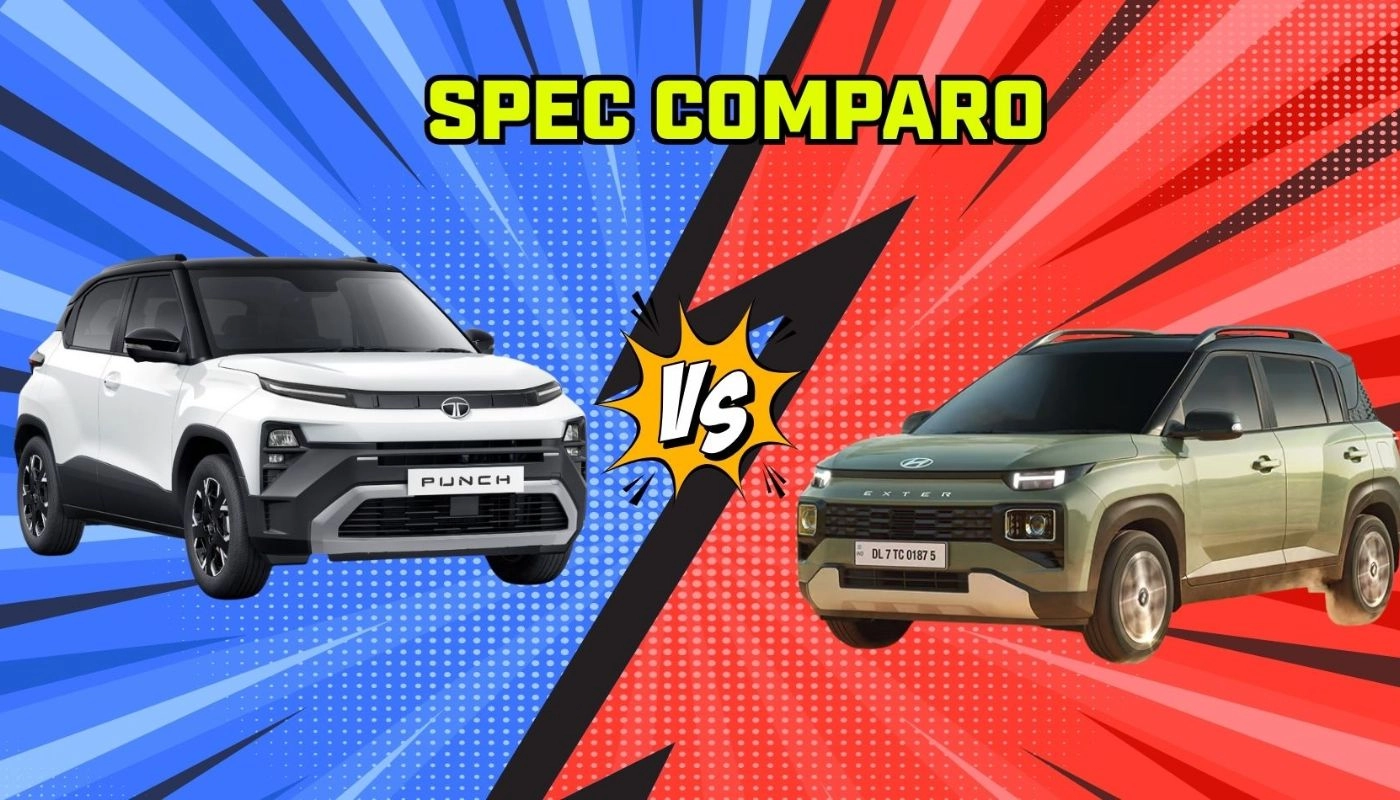
The micro-SUV segment is going ham over these two, presenting you the Tata Punch and the Hyundai Exter in a head-to-head for the top model in the petrol category and dissecting where each of them stands their ground!
Here's a detailed breakdown of what's important to consider between the two and the numbers.
How big do they look, and the presence?
The Punch and Exter stand a similar footprint but with minor differences which may not cause the deal to break between the two but the Tata Punch is longer by 61mm at 3876mm and wider by 32mm at 1742mm, the Punch also has better ground clearance at 193mm a benefit of 8mm over the Exter, meanwhile the Exter is taller by 16mm at 1631mm and sports a marginally longer wheelbase compared to the Punch by 5mm at 2450mm. There's a clear winner in the numbers game, although marginal, the Tata Punch punches the Exter out of the way.
|
Criteria |
Tata Punch |
Hyundai Exter |
|
Length |
3876mm |
3815mm |
|
Width |
1742mm |
1710mm |
|
Height |
1615mm |
1631mm |
|
Wheelbase |
2445mm |
2450mm |
|
Ground clearance |
193mm |
185mm |
Loading capacity and daily usage are pretty much the same, but the Exter takes the cake with its higher 391-litre boot capacity compared to the Punch’s 366-litre usable space. They share the same fuel capacity of 37 litres.
Design
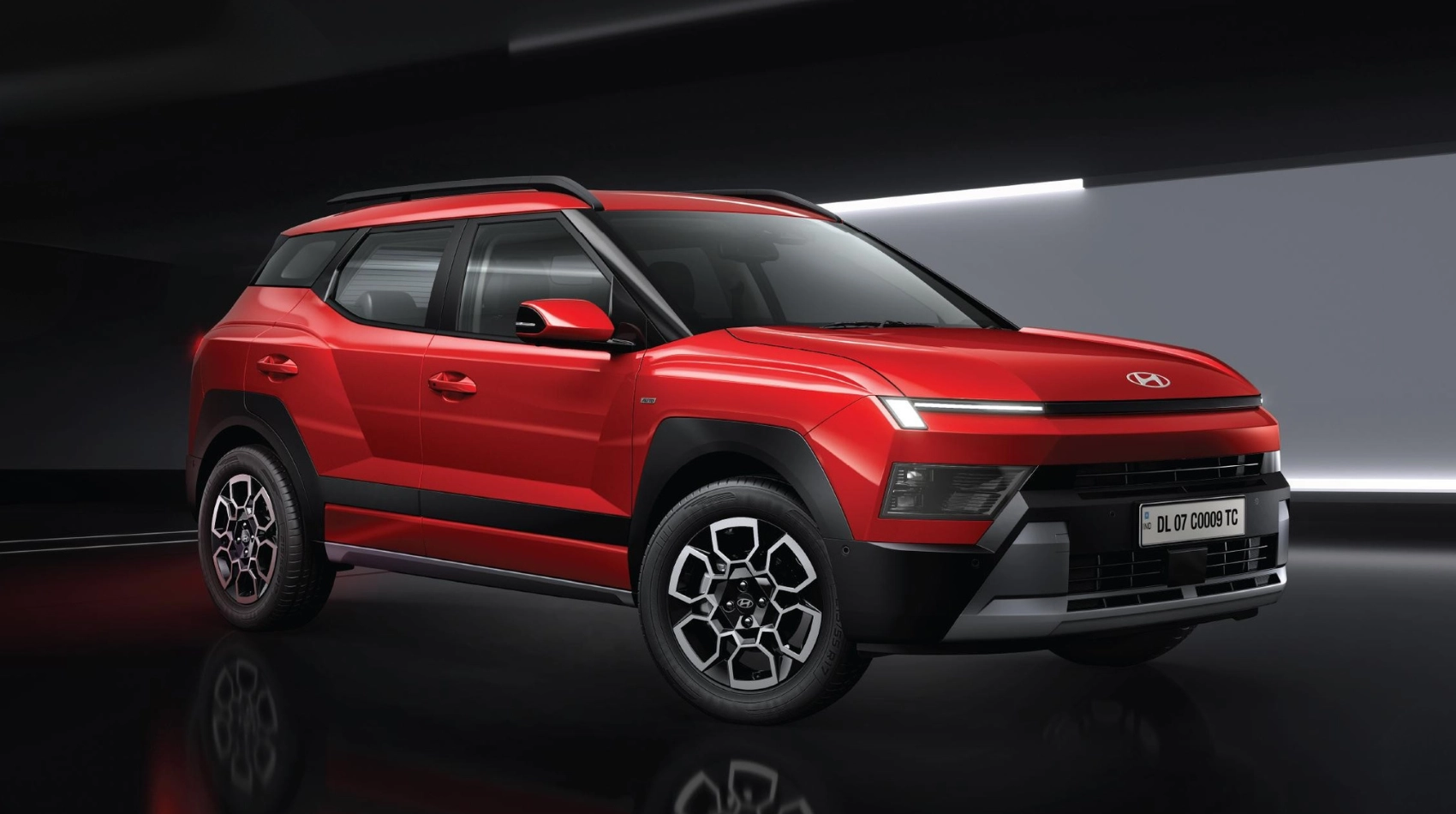
The Exter sports a cheek-to-cheek grill with recessed space for bumper-mounted projector headlights. It has a split-headlight setup, with the H-shaped LED DRLs sitting above the main headlight unit at both ends. It has a silver skid plate at both ends, squared wheel arches and blacked-out pillars. If you opt for the dual-tone model, you also get a blacked-out roof. The Exter has a tallboy design with right angles all across, and it demands quite the presence for a small SUV, complete with a floating C-pillar element. Lower variants of the Exter come equipped with 14-inch steel wheels that wear wheelcaps, but the higher trims are kitted with 15-inch alloys.
The Tata Punch, on the other hand, also gets a similar tall-boy design, although with more curvaceous and muscular elements. The facelift brings with it a new face that gets sleek LED DRLs at the front, connected by a slimmer blanked-off black piece. It also has a split-headlight setup and a bigger front silver skid plate. In profile, the Punch gets a new design for the 16-inch alloys (on higher trims), and its lower variants are shod with 15-inch steelies. At the back, the micro SUV has a full-width LED lightbar and an updated bumper with a cleaner design than before.
Main features
Voice-controlled sunroof, rear parking sensors, wireless charging, cruise control, keyless entry, and keyless ignition via a push button, but here’s where the Tata Punch overtakes the Exter as it has a variety of better features which are not available in a similar competitive variant. Some of the options that stand out in the Tata Punch are items like the 360-degree camera, a blind spot monitor, an air purifier, hill-descent control, ambient lighting and a fully digital dashboard.
The Exter sports a 7-inch infotainment display system while the Tata rocks a 10.24-inch display with wireless Apple CarPlay and Android Auto connectivity. It also has a better sound system with more speakers on the higher variants.
Safety
As you know, safety has come a long way in india and brands are recognisable for good ratings. Here is how these two models fare,
To start it off, they both come with 6 airbags as standard for maximum protection for the occupants
The Tata Punch rocks 5 stars in both front passenger and rear passenger safety (Bharat NCAP), has Isofix child seats, blind spot cameras and warning sensors.
As of early 2026, the Exter has not received a crash rating. But it has Isofix-mounted child seats and crash-sensing auto door unlock.
Powertrain
The Tata Punch facelift gets a new 1.2-litre turbo-petrol engine that’s offered with a six-speed manual gearbox, but that isn’t the one which will bring in the numbers for the brand. What will be the more popular option is the 1.2-litre naturally-aspirated 87bhp/115Nm engine. The Hyundai Exter also gets a 1.2-litre naturally aspirated engine, which produces 82bhp and 114Nm (5bhp and 1Nm lesser than the Punch).
|
Criteria |
Tata Punch |
Hyundai Exter |
|---|---|---|
|
engine |
1.2l revotron |
1.2l kappa |
|
Power |
87bhp |
82bhp |
|
Torque |
115Nm |
114Nm |
Verdict
Prices for the Hyundai Exter start at ₹6.41 lakh (ex-showroom, Delhi), the top-end petrol manual Exter SX (O) Connect 1.2 MT Knight Edition Dual Tone demands ₹10.33 lakh, and that makes it cheaper than The Punch at top model specification and cheaper than the Punch at base model specification, the Tata Punch range kicks off at ₹6.26 lakh and goes all the way up to ₹12.36 lakh. The top-end petrol manual Punch Accomplished Plus (S) Petrol Turbo 6 Speed Manual is priced at ₹11.11 lakh. And that’s about ₹78,000 more than the Exter. The Punch is a newer car, is better kitted and has more features, so the extra moolah is easily justifiable.
It is a very close battle but the extra creature comforts like the bigger screen, the 90-degree door hinge, armrests for all passengers and the cooled glovebox just elevate the Punch to a better specification and more bang for the buck. The Exter makes a lot more sense in the lower-end of the spectrum. while the Tata Punch punches it out of the water in an equal segment.