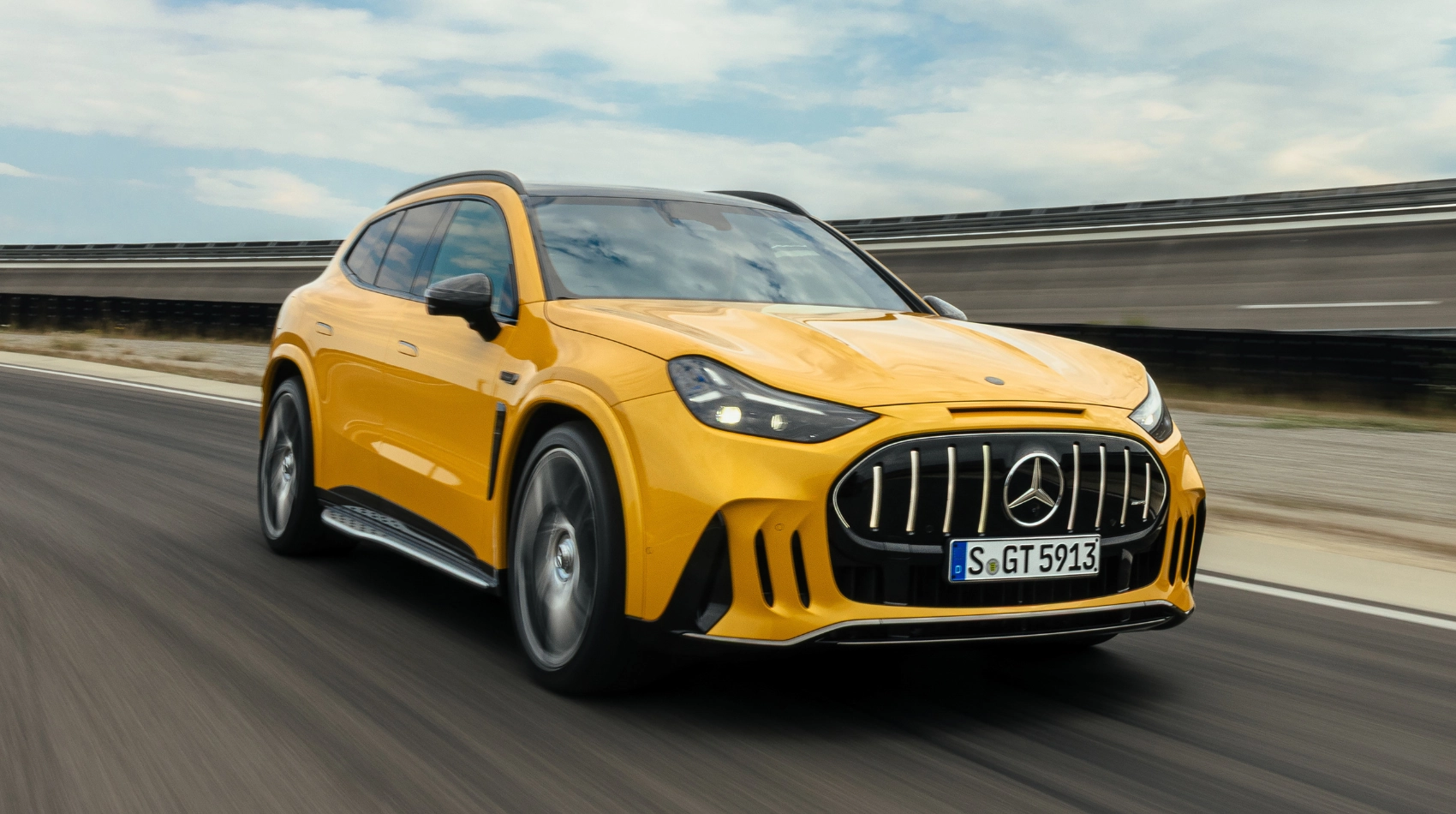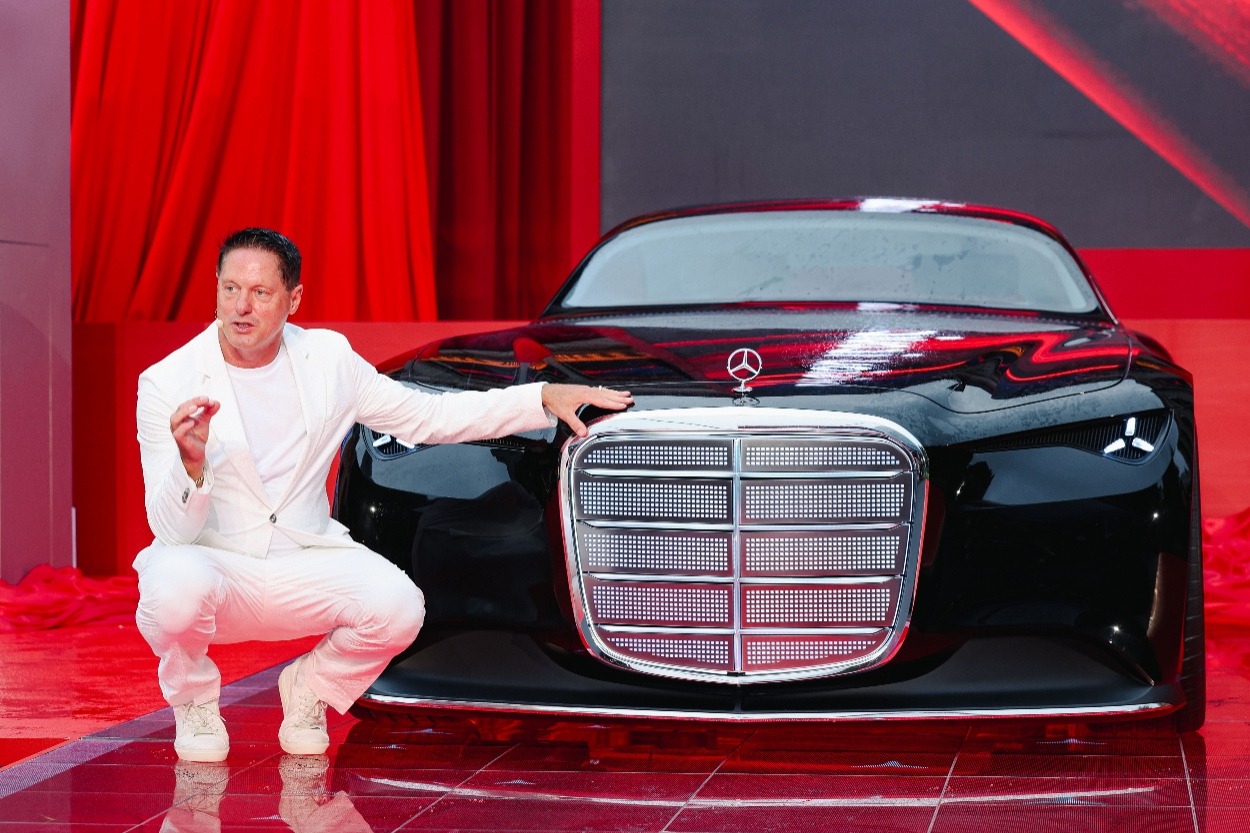
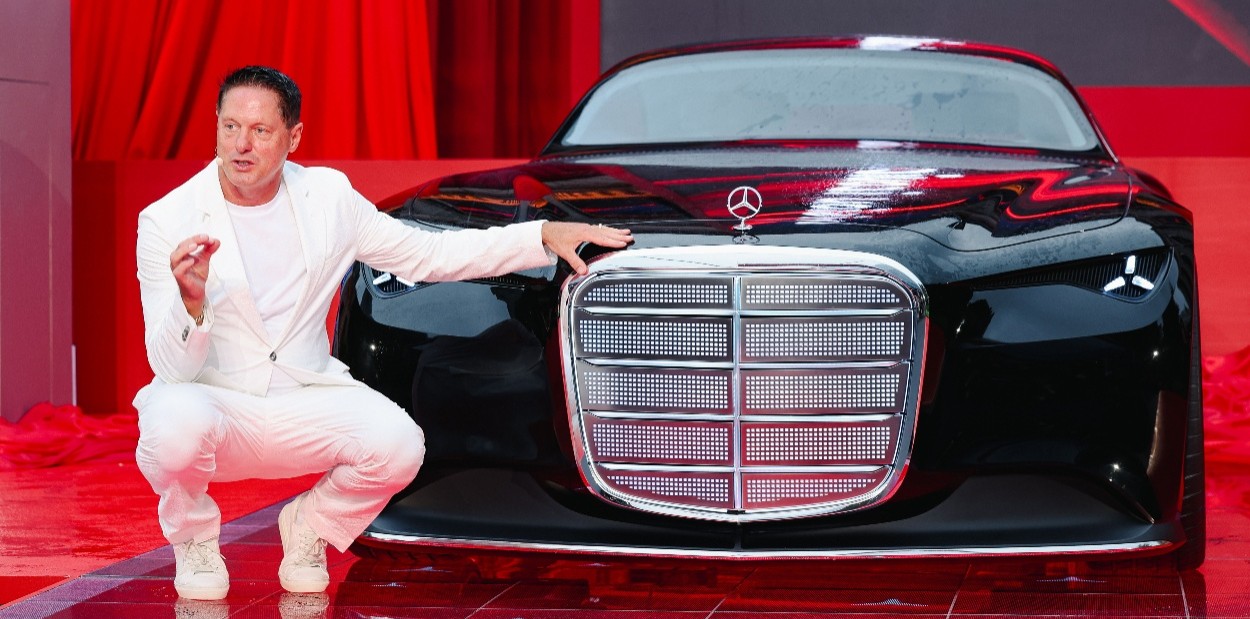
For nearly three decades, Gorden Wagener shaped how the world sees Mercedes-Benz. Joining the company in 1997 and eventually rising to become Chief Design Officer, Wagener oversaw one of the most transformative eras in the brand’s history. He moved Mercedes from conservative, engineering-driven styling to emotionally expressive, modern luxury. His work has defined an entire generation of cars and left a lasting imprint on the automotive design landscape.
Here are the most iconic designs that define Wagener’s legacy.
Mercedes-Benz CLS (First Generation)
The original CLS is widely regarded as Wagener’s breakthrough moment. Launched in the mid-2000s, it blurred the lines between sedan and coupe, introducing a dramatic four-door coupe silhouette that had never been seen in the luxury segment at scale.
With its sweeping roofline, frameless doors, and athletic proportions, the CLS challenged the traditional three-box sedan formula. It proved that Mercedes could be bold, stylish, and emotional without sacrificing prestige. The CLS didn’t just become a success; it created a new category that rivals rushed to copy.
Mercedes-Benz S-Class (W222)
Redesigning the S-Class is one of the toughest assignments in the car world, and Wagener handled it multiple times. Under his leadership, the flagship sedan evolved from formal and upright to sleek, flowing, and contemporary.
The W222 generation, in particular, showcased his “Sensual Purity” philosophy with smooth surfaces, restrained chrome, and a graceful stance. Inside, the S-Class became a benchmark for modern luxury, blending digital displays with ambient lighting and minimalist elegance. It set the design direction not only for Mercedes, but for luxury interiors across the industry.
Mercedes-AMG GT
The AMG GT is one of the most emotionally charged cars of Wagener’s career. Designed as a true sports car rather than a derivative model, it featured long proportions, a wide stance, and unmistakable road presence.
Its muscular hood, compact cabin, and aggressive rear haunches delivered a sense of power and drama that echoed classic grand tourers while remaining thoroughly modern. The AMG GT showed that Mercedes could create a halo sports car with its own visual identity, standing proudly alongside the world’s best performance machines.
Mercedes-Benz A-Class (Second Generation)
Wagener also played a crucial role in redefining Mercedes at the entry level. The modern A-Class marked a radical departure from earlier, upright designs and introduced sharp lines, sporty proportions, and youthful energy.
Perhaps even more influential was the interior. The widescreen digital cockpit and minimalist layout transformed expectations for compact luxury cars. The A-Class proved that advanced design and technology were no longer reserved for flagship models, helping Mercedes attract a younger, global audience.
Mercedes-Benz G-Class (Modern Update)
Updating the G-Class without losing its iconic identity was another defining challenge. Wagener’s approach was respectful rather than radical. The exterior remained unmistakably boxy and rugged, while subtle refinements improved proportions and detailing.
Inside, however, the transformation was dramatic. The utilitarian cabin gave way to a luxurious, high-tech interior that aligned the G-Class with the rest of the Mercedes lineup. This careful balance of heritage and modernity helped turn the G-Class into a global luxury icon beyond its original off-road roots.
Mercedes-Benz EQS
The EQS may be Wagener’s most debated design, but it is also one of his most significant. Built as a dedicated electric flagship, its smooth, aerodynamic shape prioritized efficiency and range above traditional proportions.
The exterior marked a clear break from Mercedes’ past, while the interior pushed boundaries with the expansive Hyperscreen dashboard. Whether praised or criticized, the EQS demonstrated Wagener’s willingness to rethink luxury design for the electric era rather than simply adapting existing formulas.
Gorden Wagener’s most iconic designs share a common theme: the courage to evolve. From redefining body styles with the CLS, to modernizing legends like the S-Class and G-Class, to pushing new territory with electric vehicles, his work reshaped Mercedes-Benz’s identity for the 21st century.
In addition to production models,, Gorden Wagener spearheaded the design of numerous Mercedes-Benz concept cars that showcased the brand’s vision for the future. These included the Vision Mercedes‑Maybach 6, F125, Vision One‑Eleven, Concept CLA, Vision Iconic, Vision EQ Silver Arrow, Vision EQXX, Vision AVTR, and Vision EQG. Each concept explored new proportions, materials, and technologies, from electric and hydrogen propulsion to futuristic interior layouts. These vehicles served as experimental platforms, allowing Mercedes to test bold styling and innovative ideas before translating them into production models. Collectively, they highlight Wagener’s commitment to blending emotion, performance, and forward-thinking design.
His influence extends beyond individual models. Wagener changed how luxury cars look, feel, and communicate emotion. As Mercedes prepares for a new design chapter, the visual language he established will continue to shape the brand for years to come.