Toyota finally enters India’s EV space, but is the Urban Cruiser Ebella merely a rebadge or a credible electric SUV in its own rig
6/10
For
Silky-smooth power delivery, a genuinely premium cabin and Toyota’s rock-solid ownership promise make the Ebella an EV you can actually relax with every single day.
Against
Rear-seat comfort is compromised by the knees-up posture, and that firm ride simply isn’t plush enough for our broken highways.
Toyota has never been one to rush headlong into new technologies. Hybrids? It pioneered them long before most. Full electrification, though, has been approached with far greater caution. While rivals jumped in early, Toyota waited and watched to learn and only now, in early 2026, has it rolled out its first mass-market electric SUV for India, the Toyota Urban Cruiser Ebella.
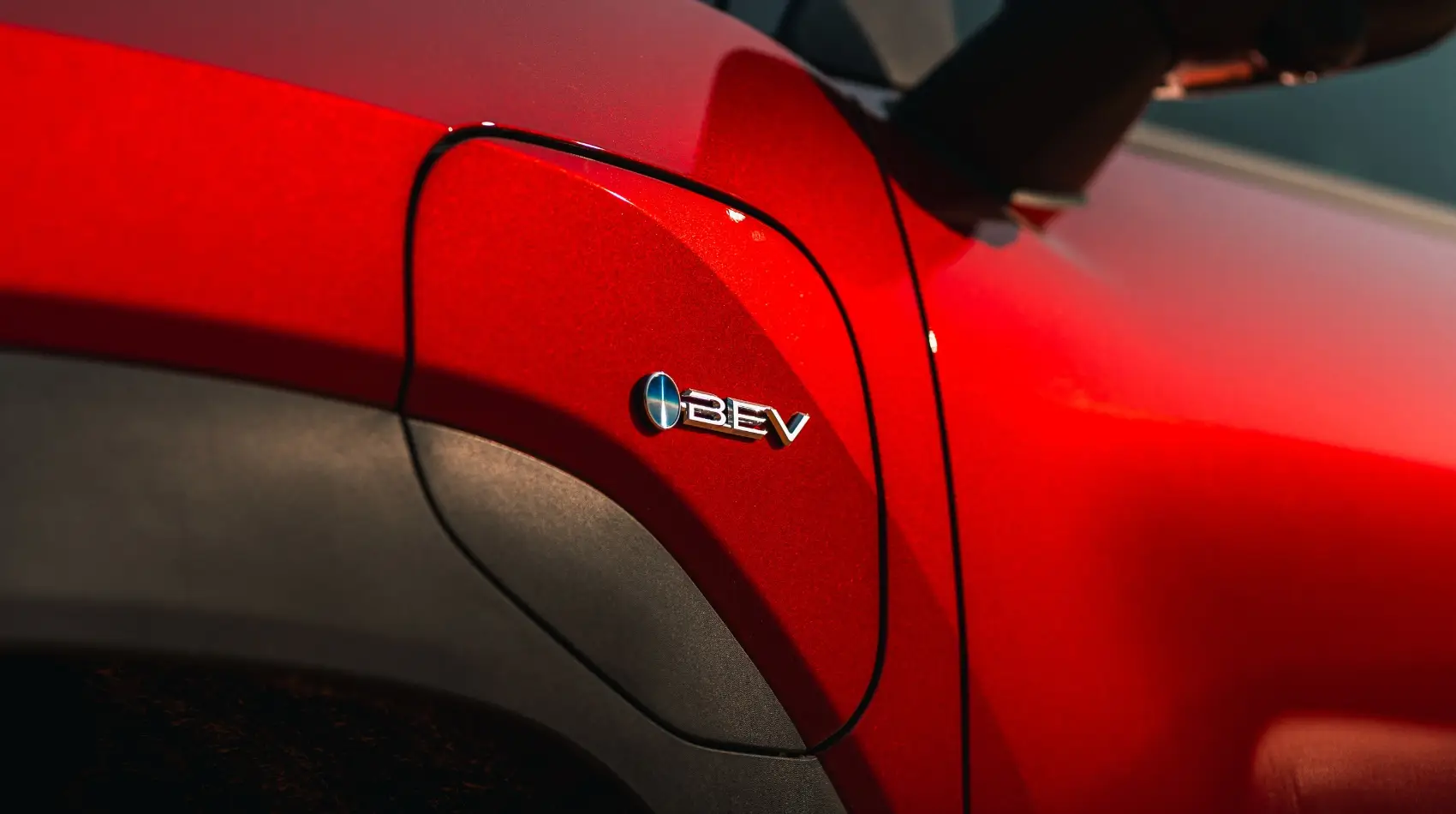
At first glance, if the Ebella feels familiar to you, you’re right because it is closely related to the Maruti e-Vitara. Both are built on the same underpinnings, share battery options, motors and much of the interior architecture. But Toyota insists this isn’t just badge engineering for the sake of it. The Ebella is meant to bring Toyota’s flavour of refinement, feature calibration and ownership assurance into a rapidly crowding midsize EV segment that already includes the Hyundai Creta Electric, Mahindra BE 6 and Vinfast VF 6.
We drove the Ebella on Indian roads to see whether Toyota’s cautious approach has paid off and whether this electric SUV feels engineered for India, rather than merely adapted to it.
Design
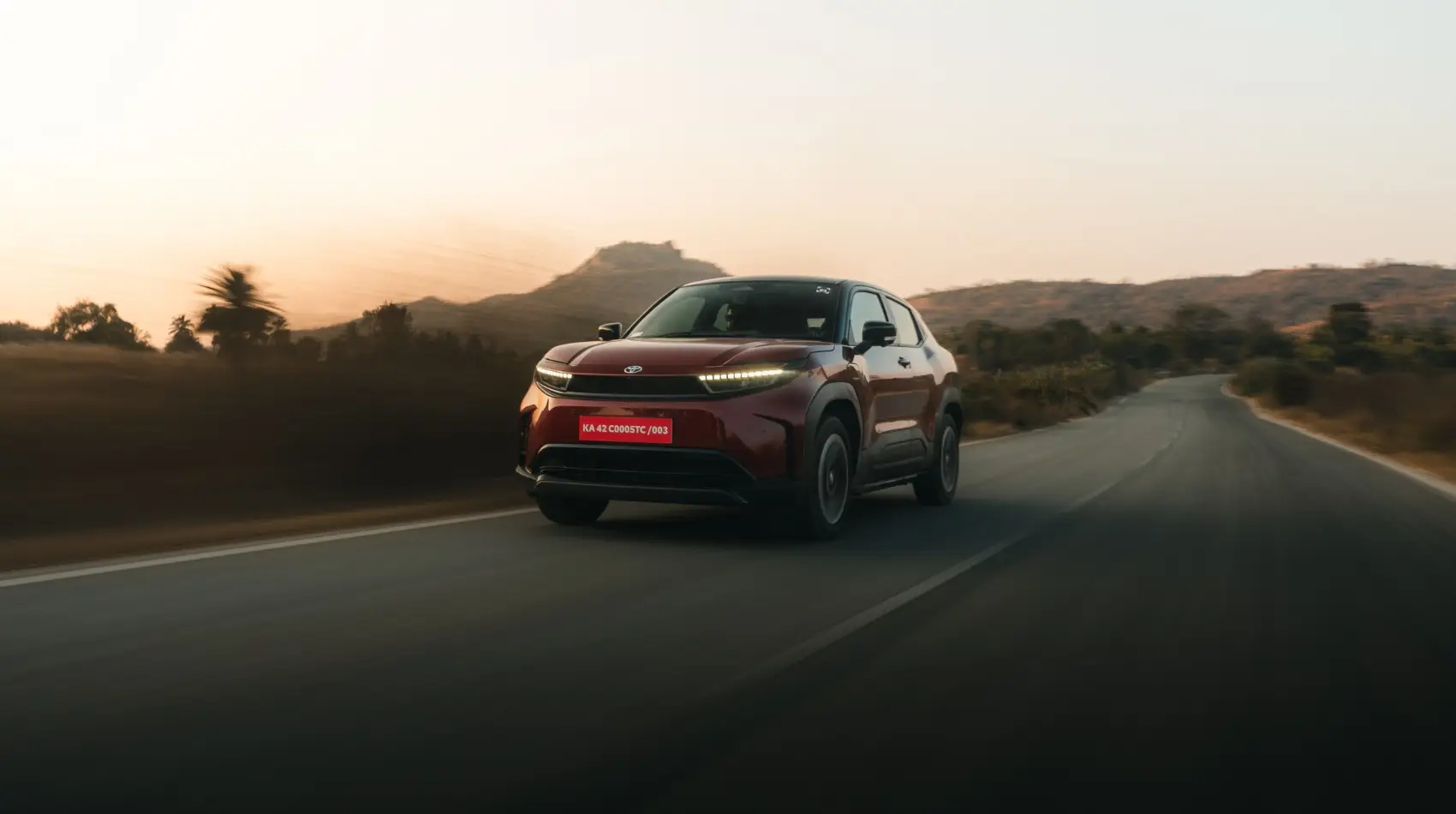
Toyota has resisted the temptation to go full sci-fi with the Ebella’s styling. Instead, what you get is a clean, contemporary SUV shape with just enough EV-specific detailing to mark it out as something different.
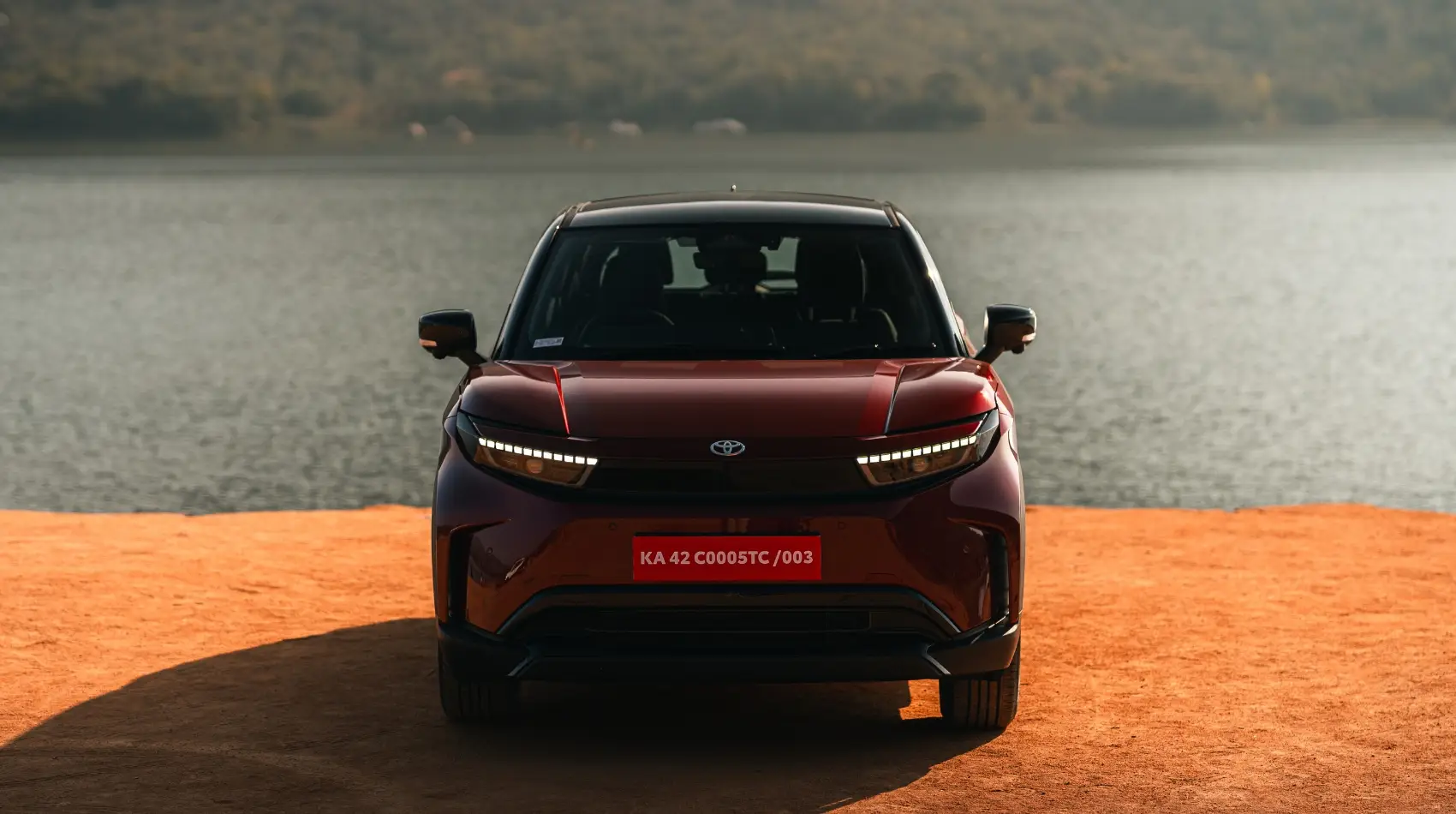
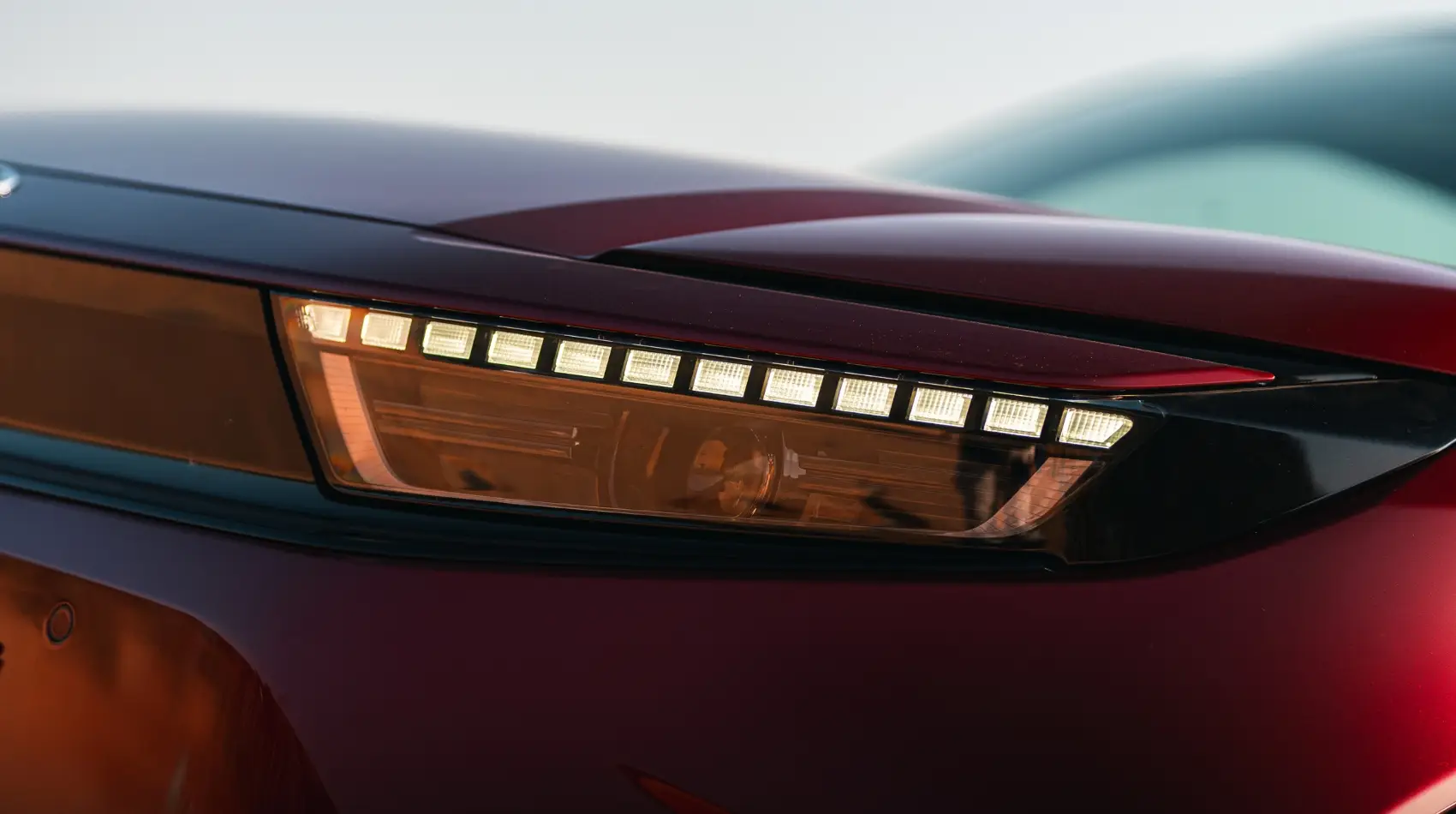
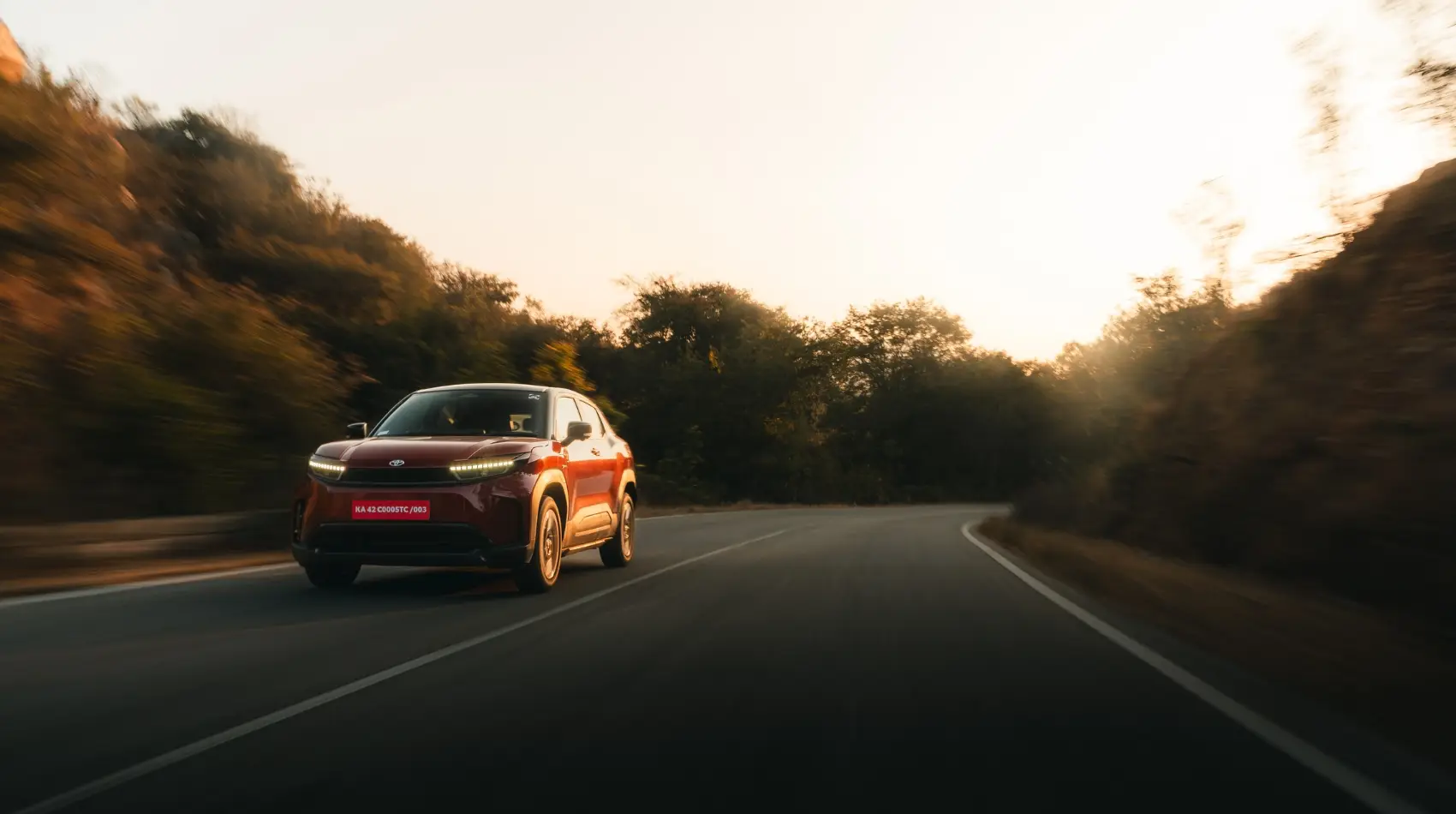
The front end is where Toyota has made its strongest visual statement. The segmented LED daytime running lamps and triangular headlamp housings give the Ebella a sharper face than its Maruti sibling. A thick black trim piece bridges the lamps, visually widening the car, while the bumper is smoother and more cohesive, flanked by vertical air vents that add some character without looking overdone.
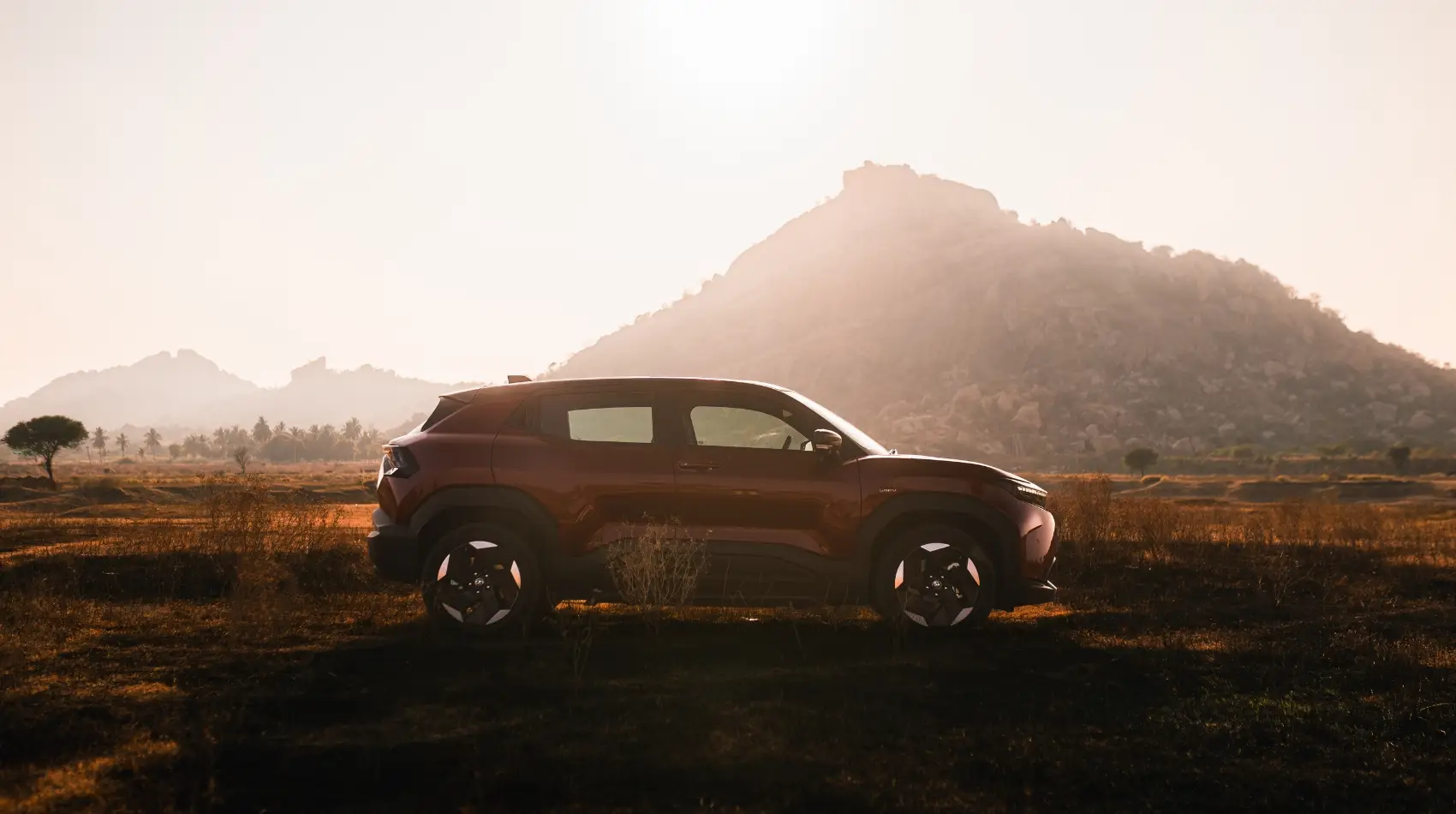
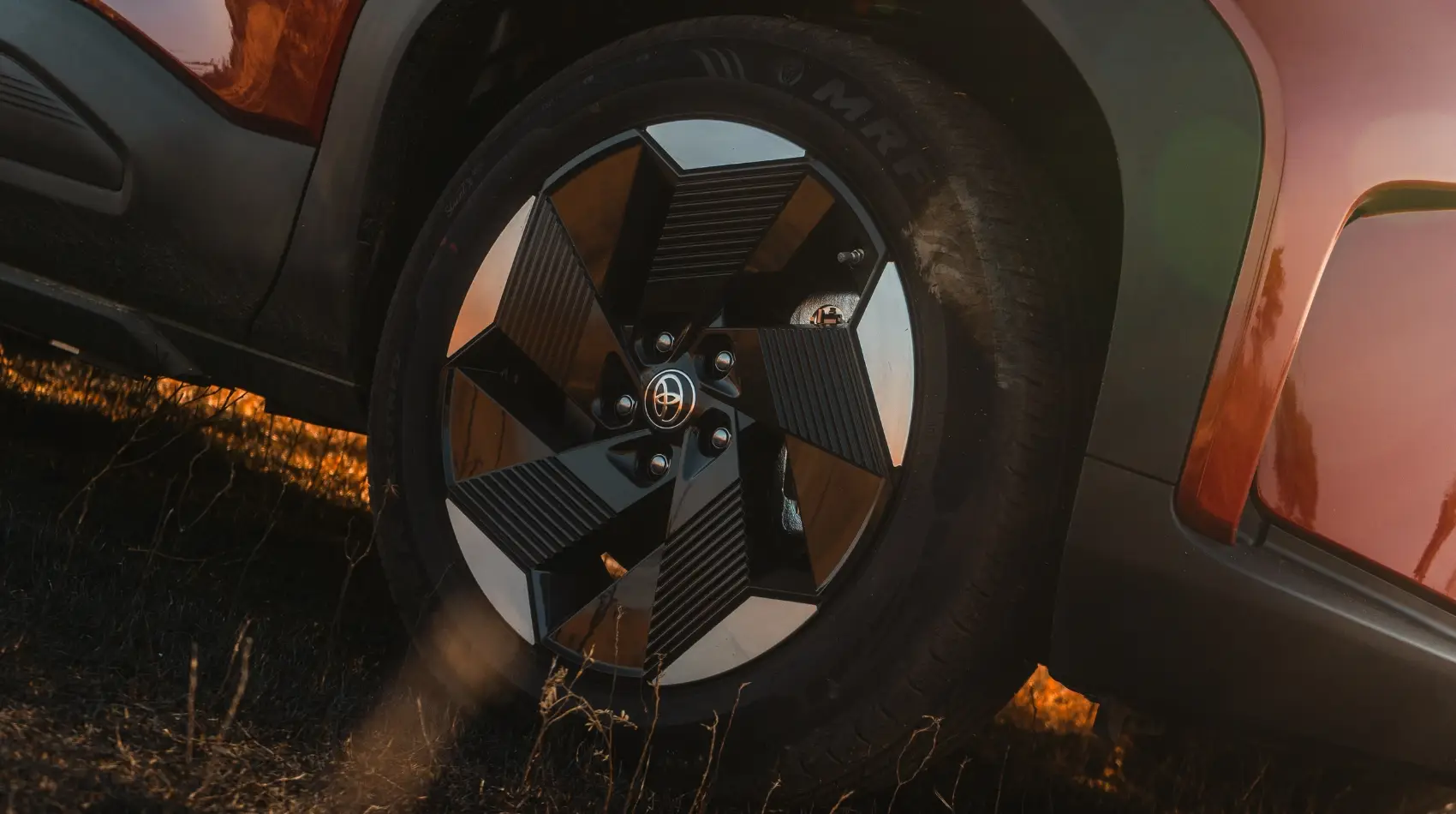
Viewed from the side, the family resemblance becomes obvious. There’s generous black cladding along the sills and wheel arches, aero-optimised 18-inch alloy wheels and rear-door handles integrated into the C-pillar. It looks purposeful, if not particularly adventurous. The roofline tapers gently towards the rear and the proportions are well judged for Indian roads as it is compact enough to thread through traffic, yet substantial enough to feel like a proper midsize SUV.
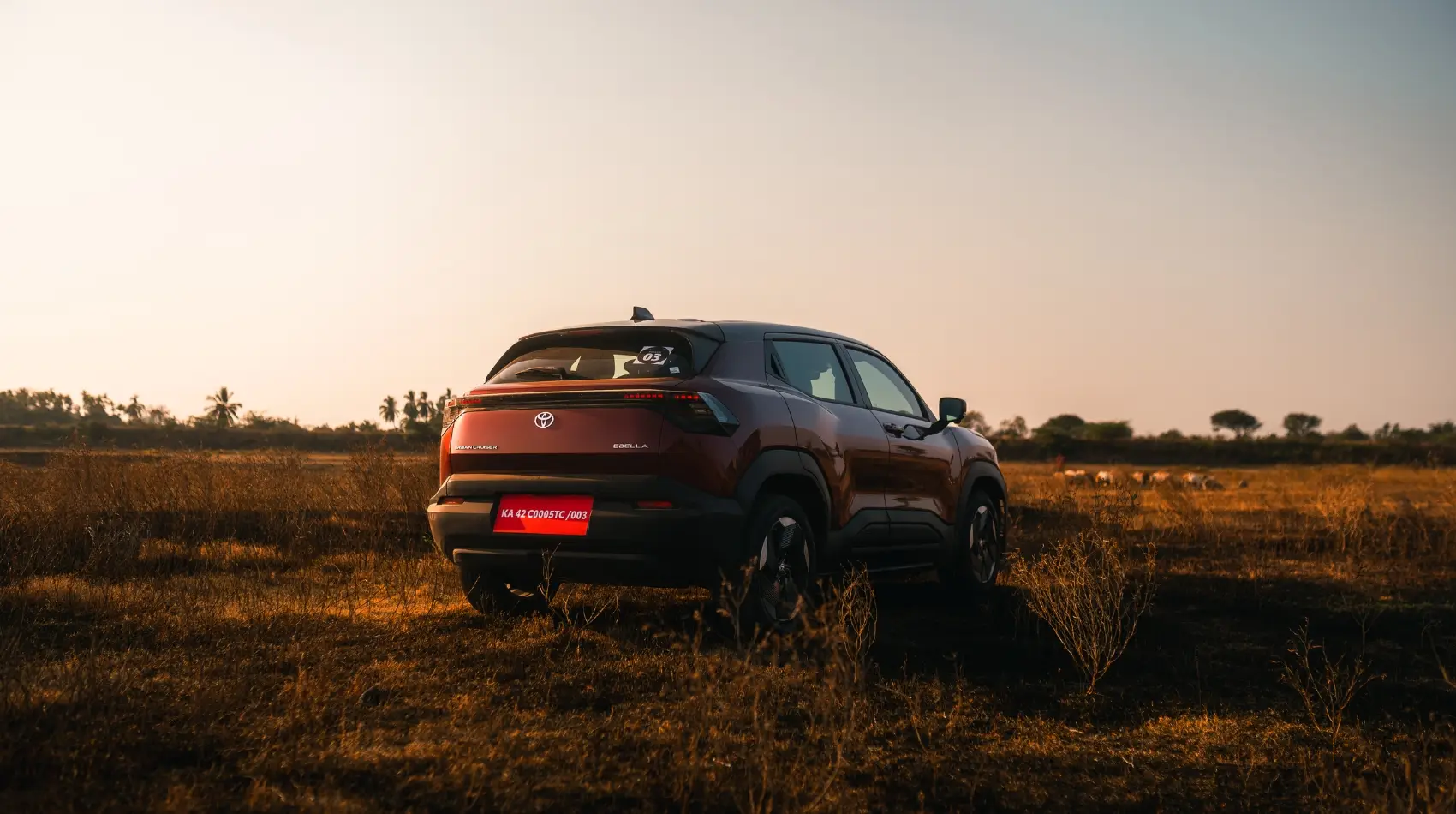
At the back, Toyota continues the segmented lighting theme with slim LED taillamps that mirror the front signature. There’s no connected light bar, which actually suits the Ebella’s restrained personality. The tailgate is upright, the bumper chunky and overall it presents a neat, squared-off stance.
Dimensionally, it measures just under 4.3 metres in length, 1.8 metres in width and about 1.64 metres in height, riding on a 2,700mm wheelbase. Ground clearance stands at 185mm, which should be sufficient for most Indian conditions. It doesn’t stand out, but it looks modern, cohesive and premium, a design that will age gracefully in my opinion rather than chase fleeting trends.
Ergonomics and cabin comfort
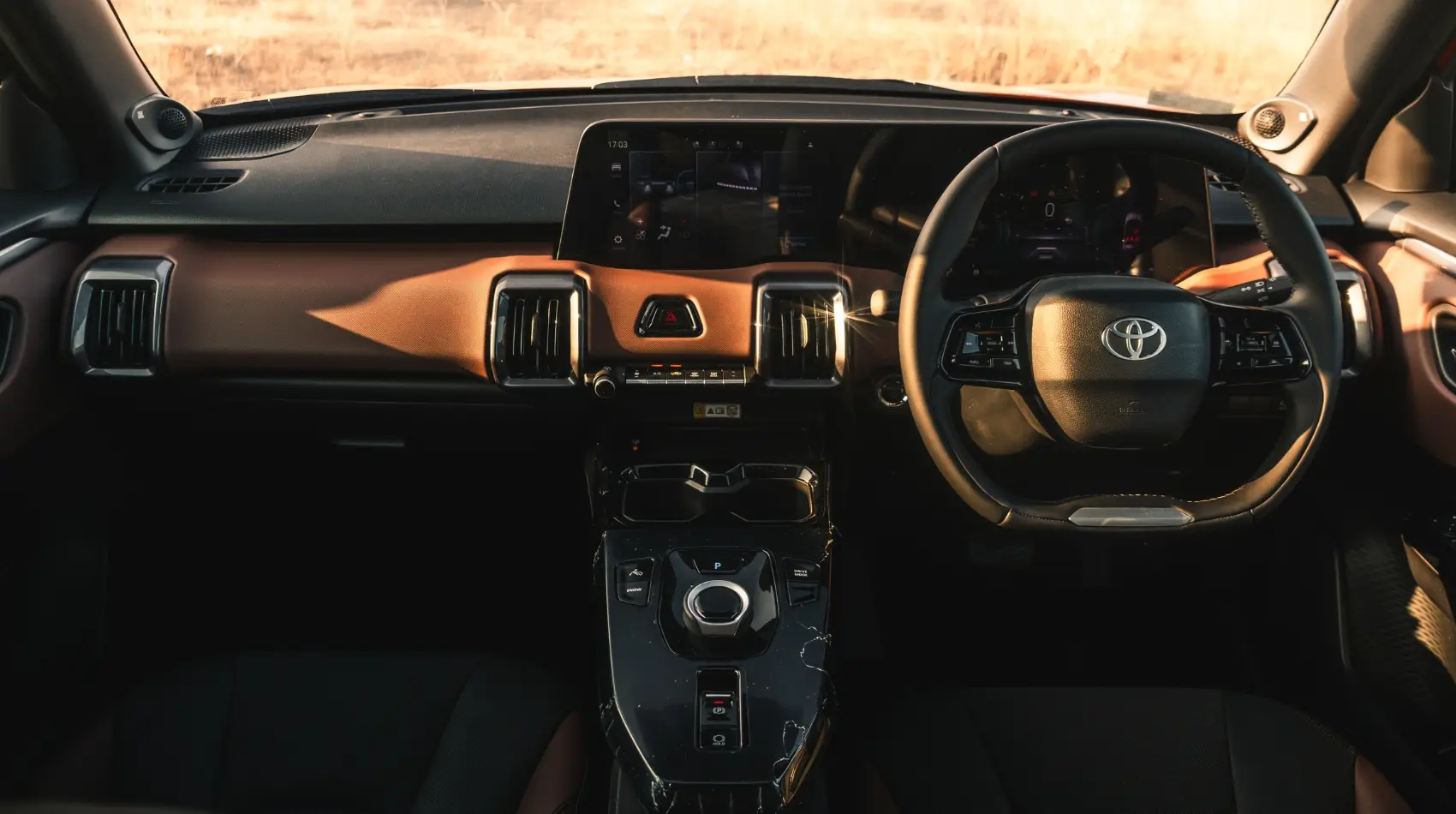
Step inside and the Ebella immediately feels more premium than most Toyotas we’ve experienced in this segment. The dashboard adopts an asymmetric layout, topped by a dual-screen arrangement, a 10.1-inch digital driver’s display and a 10.25-inch central touchscreen. The surfaces are finished in brown-and-black, with soft-touch panels in key areas and subtle silver accents around the air vents and door handles - very similar to its Maruti cousin.
Build quality is impressive. Panel gaps are tight, switchgear feels - yes! They have a physical button for the HVAC control centre that feels solid and nothing rattles or flexes when you press on it. This is easily among the best interiors Toyota has offered in a midsize SUV, electric or otherwise.
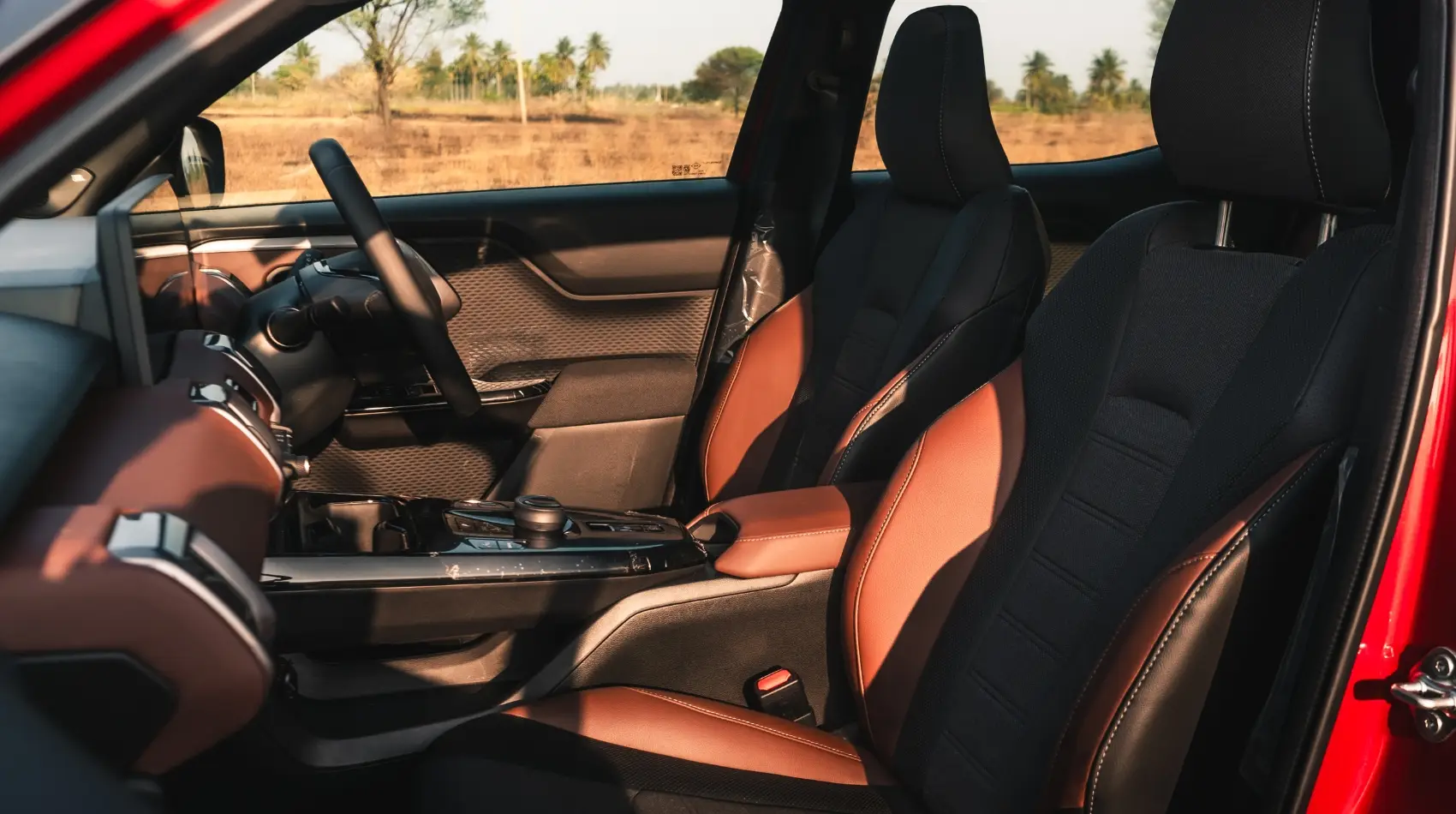
The front seats are generously cushioned and supportive and on higher variants, you get ventilation and a powered driver’s seat. The driving position, however, takes some getting used to. Because of the battery placement under the floor, you sit in a slightly knees-up posture. Even with the steering wheel adjusted for reach and rake, the seating feels higher at the knees than ideal. It’s not uncomfortable, but keen drivers will notice it.
Visibility is good, with a commanding view ahead and reasonably slim A-pillars. The bonnet edges are visible, which helps in tight urban manoeuvres and the light steering makes parking effortless.
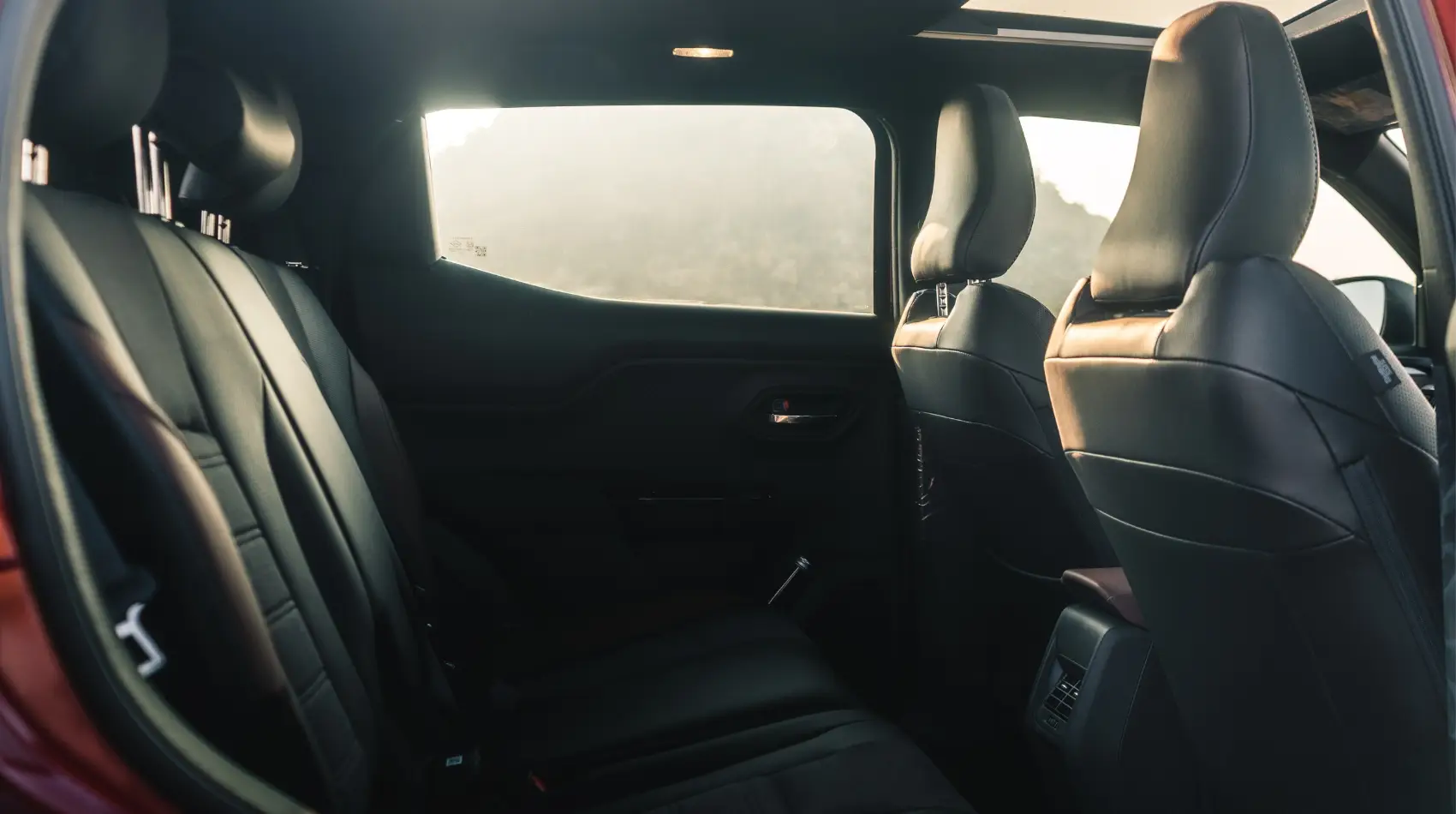
Move to the rear, and legroom is genuinely generous thanks to the long wheelbase. Three adults can sit abreast without feeling overly squeezed and the seat base is well-padded. However, here’s where the Ebella’s biggest ergonomic compromise becomes apparent: rear-seat under-thigh support is virtually non-existent. The battery pack raises the floor significantly, forcing occupants into a knees-up position and the seat squab simply doesn’t extend far enough to support your thighs. Taller passengers will also find headroom tight, especially with the fixed glass roof overhead.
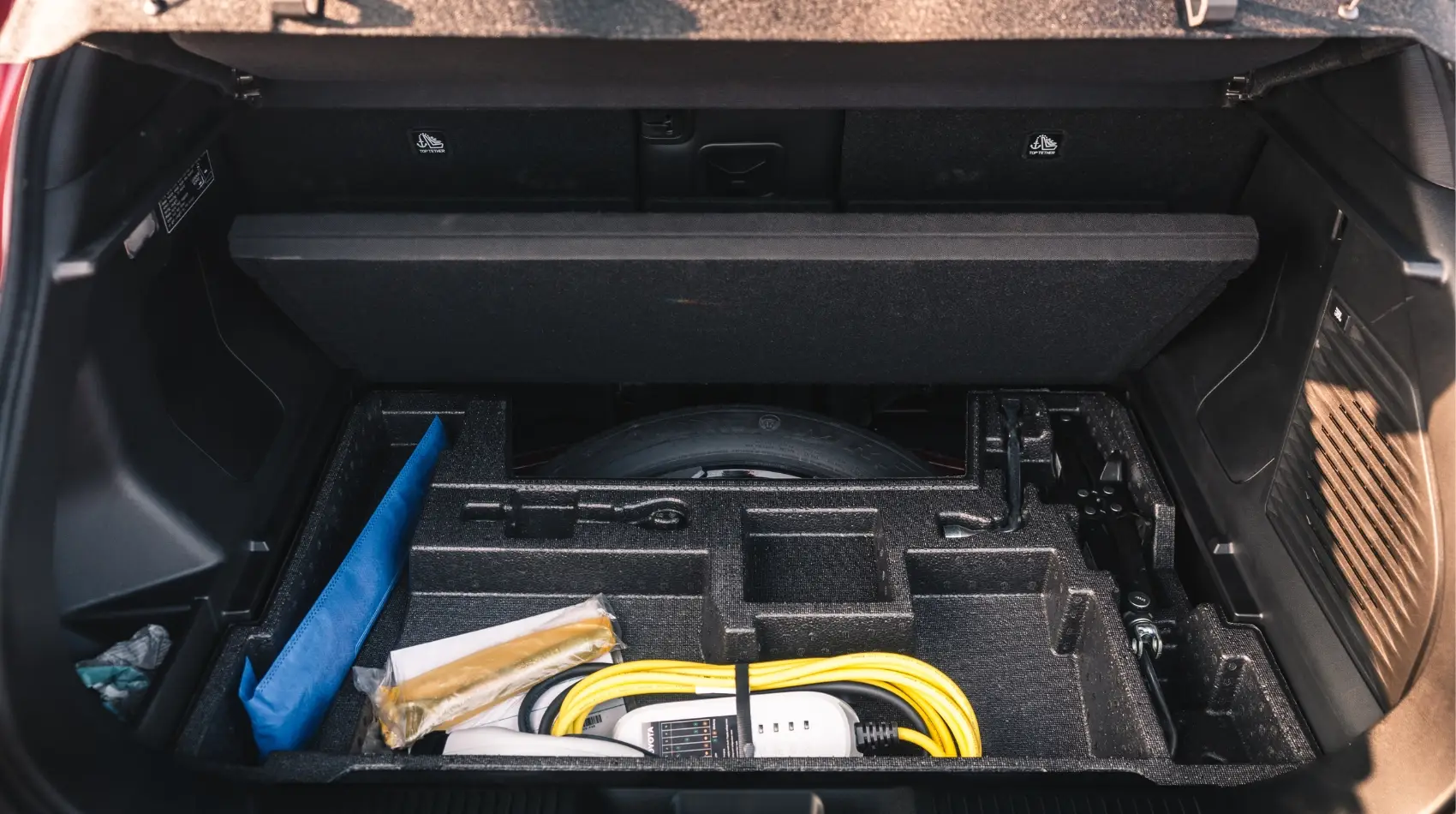
The backrest reclines and the bench slides fore and aft, which helps tailor the space between passengers and luggage. But even with the seat pushed forward, boot space remains modest for the segment. It’s shallow rather than long, though Toyota does provide a full-sized spare wheel beneath the floor along with a dedicated tray for charging cables.
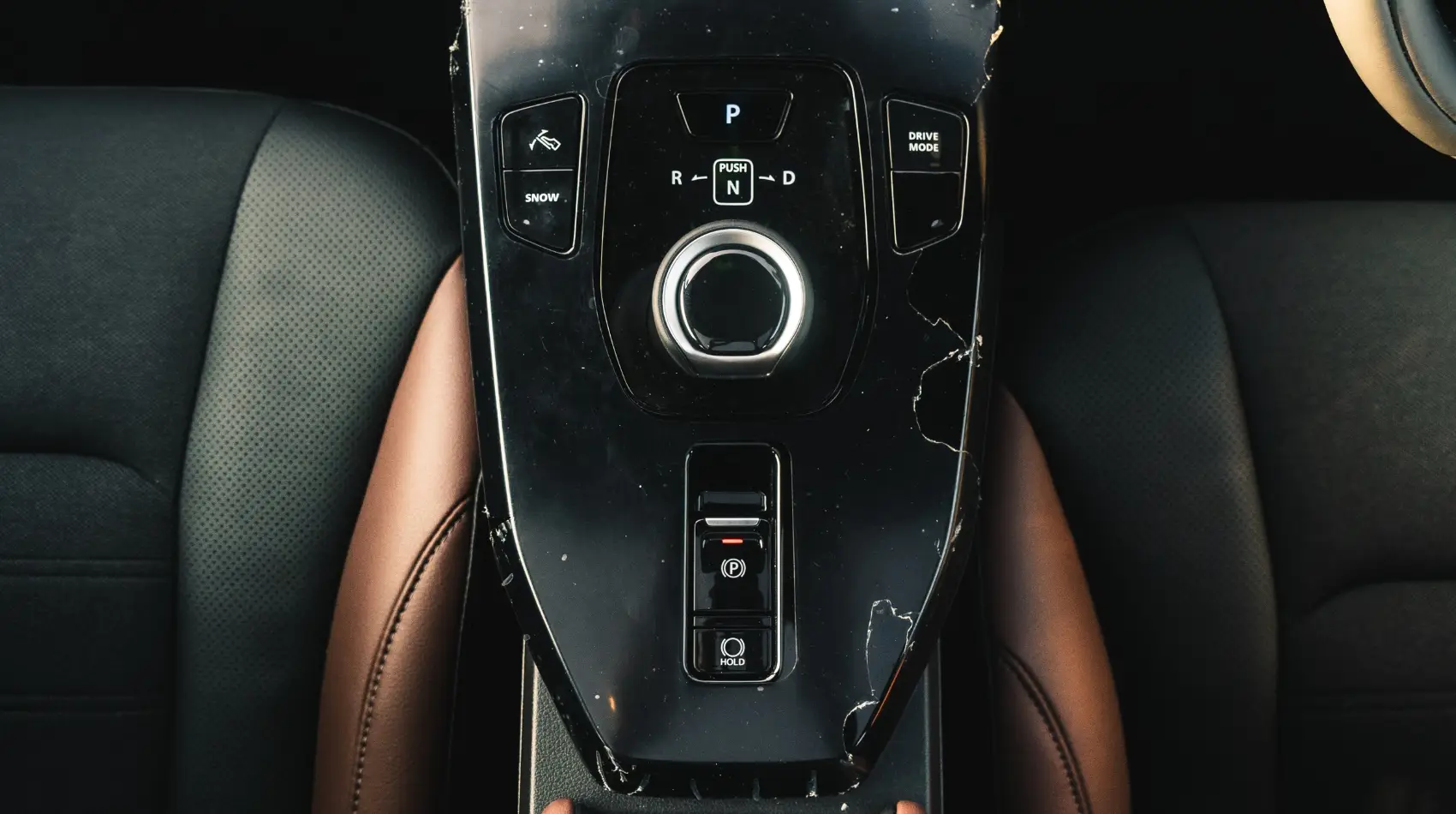
Storage up front is thoughtfully executed: a floating centre console with space underneath, cup holders, wireless charging pad, sizeable door bins and a usable glovebox. It’s practical, well laid out and designed for everyday use rather than showroom wow factor.
Technology and features
Toyota has taken a sensible approach to equipment levels. Rather than overwhelming you with gimmicks, the Ebella focuses on features that genuinely improve day-to-day usability.
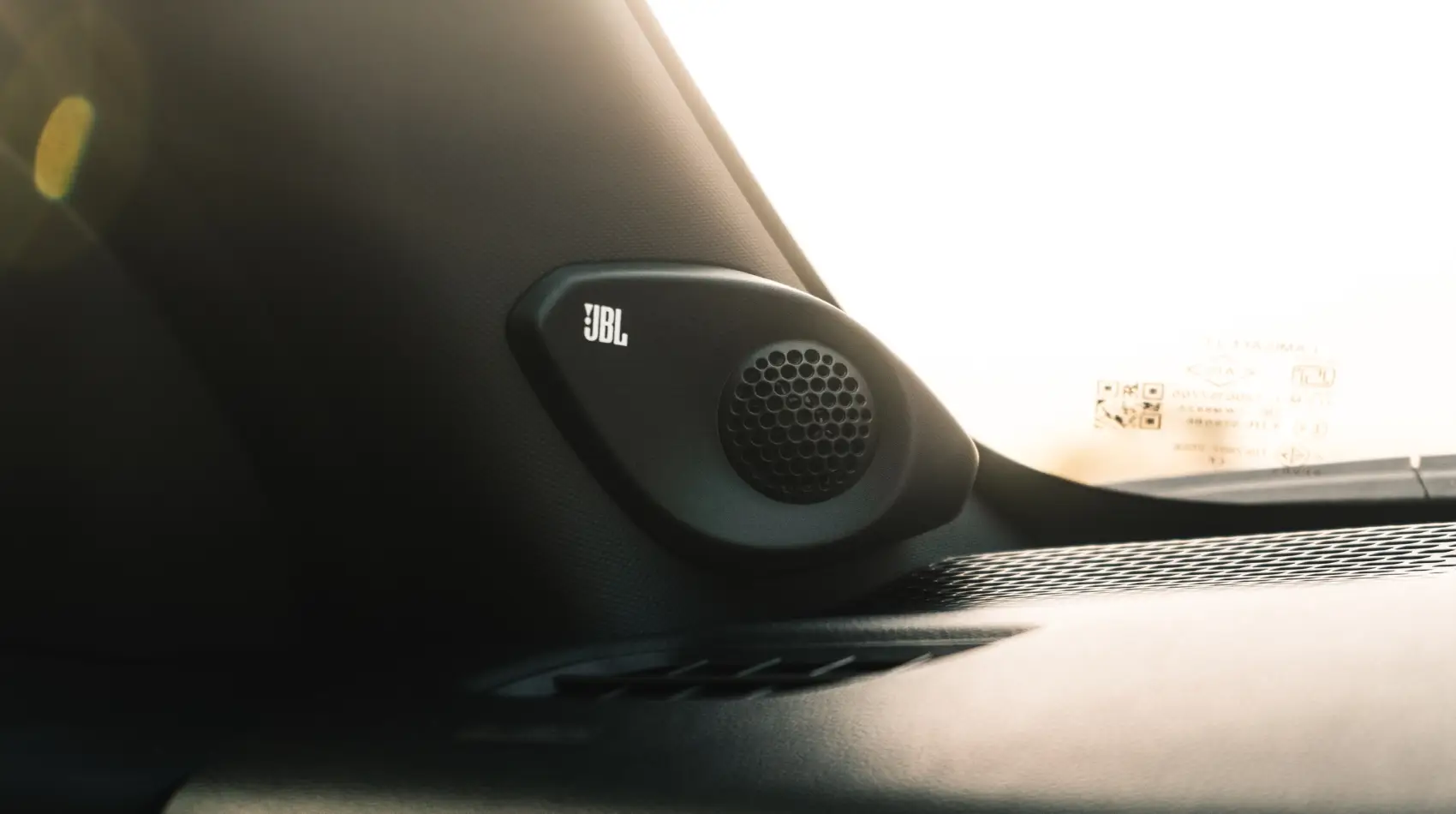
Highlights include wireless Apple CarPlay and Android Auto, single-zone automatic climate control, ventilated front seats, ambient lighting, a JBL sound system, and a 360-degree camera on higher trims. The digital instrument cluster is clear and easy to read, while the infotainment system responds quickly and has a logical menu structure.
The real talking point, however, is the availability of Level 2 ADAS on the top-spec E3 variant. This includes adaptive cruise control, lane-keep assist and autonomous emergency braking. Importantly, these systems are well calibrated for Indian conditions. During our drive, the lane-keep assist didn’t tug aggressively at the steering, the adaptive cruise maintained sensible gaps, and the AEB didn’t intervene prematurely. It feels like Toyota has spent time tuning these aids for our chaotic traffic rather than simply porting over European settings.
Safety is taken seriously. Seven airbags and disc brakes on all four wheels are standard across variants. There’s also an electronic parking brake with auto-hold, front parking sensors and an acoustic vehicle alert system to warn pedestrians at low speeds.
Beyond the hardware, Toyota is offering what may prove to be one of the Ebella’s strongest selling points: an eight-year battery warranty, more than 500 EV-enabled service touchpoints, Battery as a Service (BaaS) and a buyback assurance programme. For buyers hesitant about long-term EV ownership, these measures add a significant layer of reassurance.
Performance and driveability
The Ebella is offered with two battery options: a 49kWh pack producing 142bhp and a larger 61kWh unit with 172bhp. Torque is rated at 189Nm for both versions, and power is sent to the front wheels.
We drove the 61kWh variant, and Toyota’s tuning philosophy becomes clear within the first few kilometres. This is not an EV designed to impress with instant, neck-snapping acceleration. Instead, power delivery is smooth, linear and progressive. From a standstill, it gathers speed steadily rather than explosively, which actually makes it far easier to modulate in traffic.
In city driving, this character works beautifully. The Ebella feels calm and predictable, with none of the sudden surges that can make some EVs tiring to drive. Throttle response in Normal mode feels just right, while Eco dulls things too much unless you’re crawling through congestion. Sport sharpens reactions slightly, but the difference is subtle.
Toyota claims an ARAI range of up to 543 kilometres for the larger battery. Real-world figures will inevitably be lower, but on-board efficiency readings during our drive suggested respectable numbers in urban conditions, where EVs typically shine.
Refinement is a mixed bag. There’s virtually no motor noise, but wind and tyre roar become noticeable at highway speeds, especially on concrete surfaces. Without an engine to mask these sounds, they stand out more than they would in an ICE vehicle. Better insulation would have elevated Ebella’s perceived quality significantly.
Overtaking performance is adequate rather than exciting. There’s enough punch for quick highway manoeuvres, but this is clearly a powertrain tuned for relaxed progress rather than spirited driving.
Ride, handling and braking
The Ebella rides on a suspension setup that feels distinctly European in its firmness. At low speeds, sharp bumps and pothole edges are transmitted into the cabin more clearly than you might expect from a family SUV. It’s not uncomfortable, but you’re always aware of what the wheels are doing beneath you.
At higher speeds, the ride becomes busier. Over expansion joints and uneven surfaces, there’s noticeable vertical movement, and the car can feel unsettled on poorly surfaced highways. Long-distance passengers may find this mildly fatiguing.
Handling is safe and predictable. There’s body roll in corners, and the light steering doesn’t offer much feedback, but grip levels are decent and the Ebella never feels nervous. This is a car that prioritises stability over agility, which is entirely in keeping with Toyota’s conservative approach.
Braking performance is reassuring, thanks to discs all round. Pedal feel is consistent, and stopping power is more than adequate for the Ebella’s weight. Regenerative braking, however, is awkward to adjust. Instead of steering-mounted paddles, you have to dive into the touchscreen while stationary to change regen level, a clumsy solution that feels out of step with an otherwise thoughtfully engineered vehicle.
Verdict
The Toyota Urban Cruiser Ebella doesn’t try to reinvent the electric SUV formula and that’s precisely its strength.
Yes, it has shortcomings. Rear-seat under-thigh support is virtually absent due to the raised floor, headroom is tight for tall passengers, boot space is merely average, and highway refinement could be better. The ride, too, feels overly firm for Indian conditions.
But it also gets the fundamentals right. The powertrain is smooth and easy to live with, the cabin feels genuinely premium, the ADAS is well calibrated, and Toyota’s ownership ecosystem adds a layer of confidence that few rivals can match.
Ultimately, the Ebella isn’t about drama or disruption. It’s about dependability, usability and a carefully judged transition into electric mobility. If Toyota prices it sensibly, this could become the EV of choice for buyers who value peace of mind over performance figures and in India, that’s a very large audience indeed.
Toyota Urban Cruiser Ebella Battery options: 49kWh / 61kWh Motor output: 172bhp (unit reviewed) Torque: 189Nm Claimed range (ARAI): Up to 543km (61kWh) Charging: DC fast charging + AC home charging supported