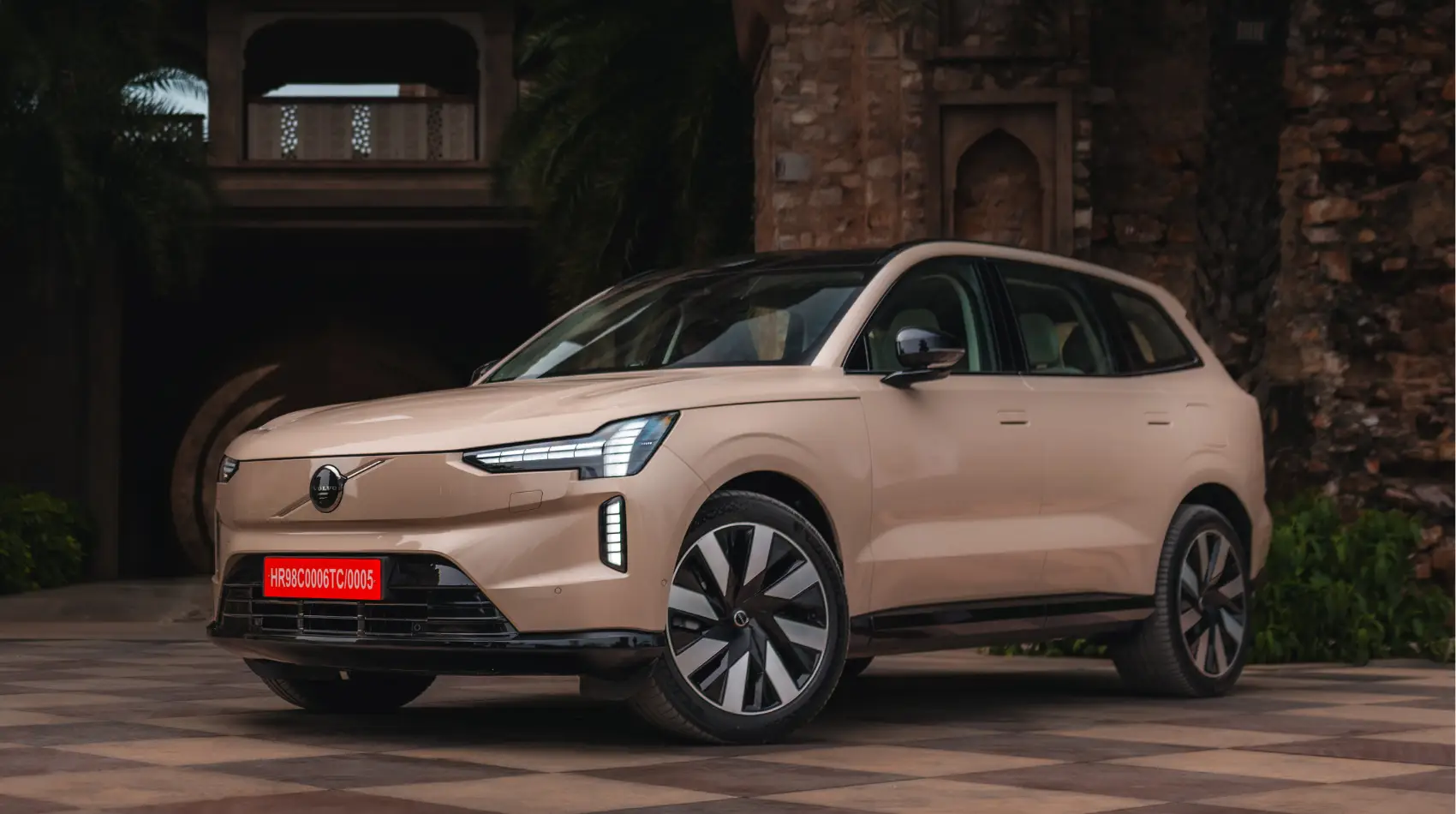
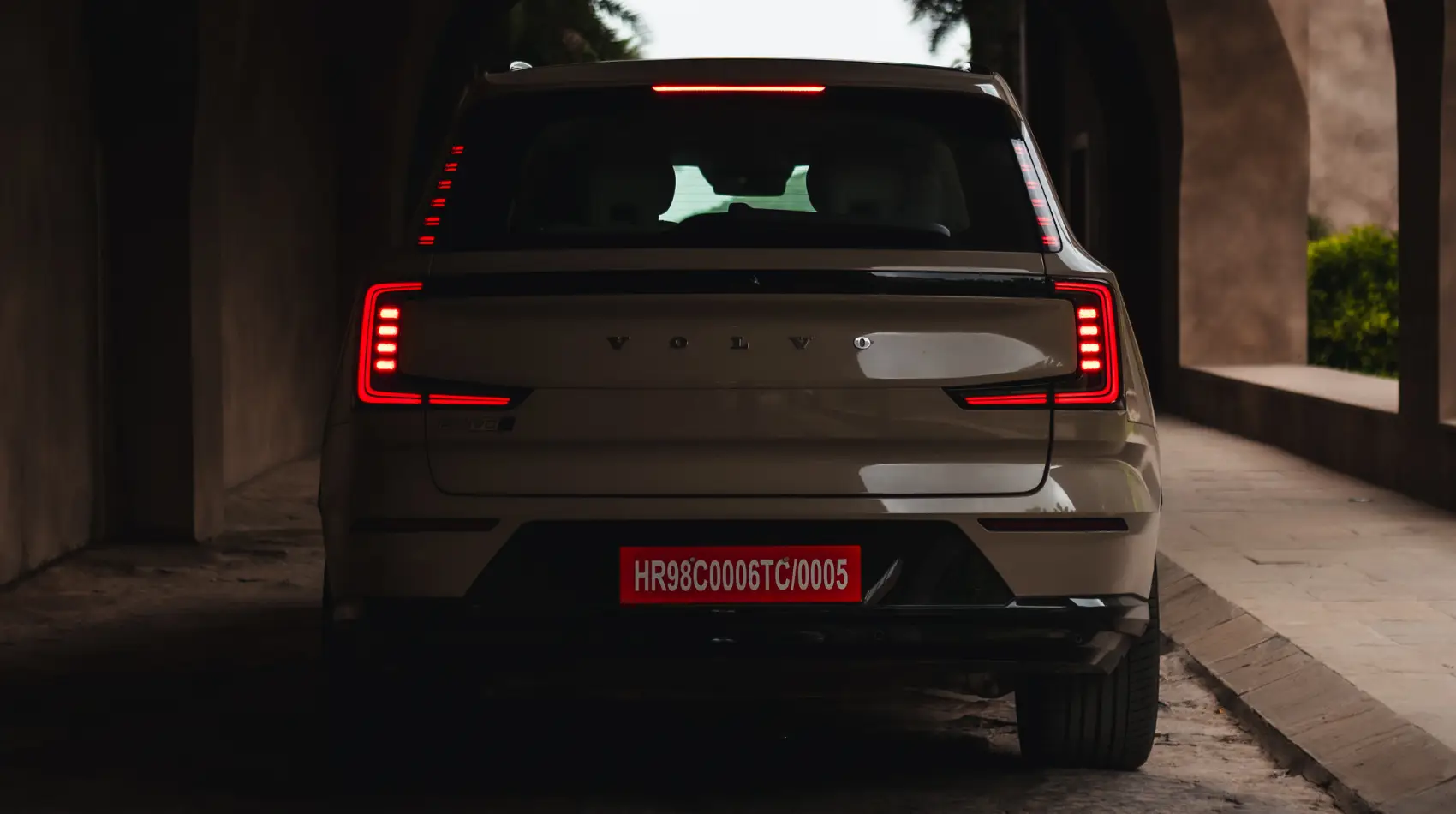
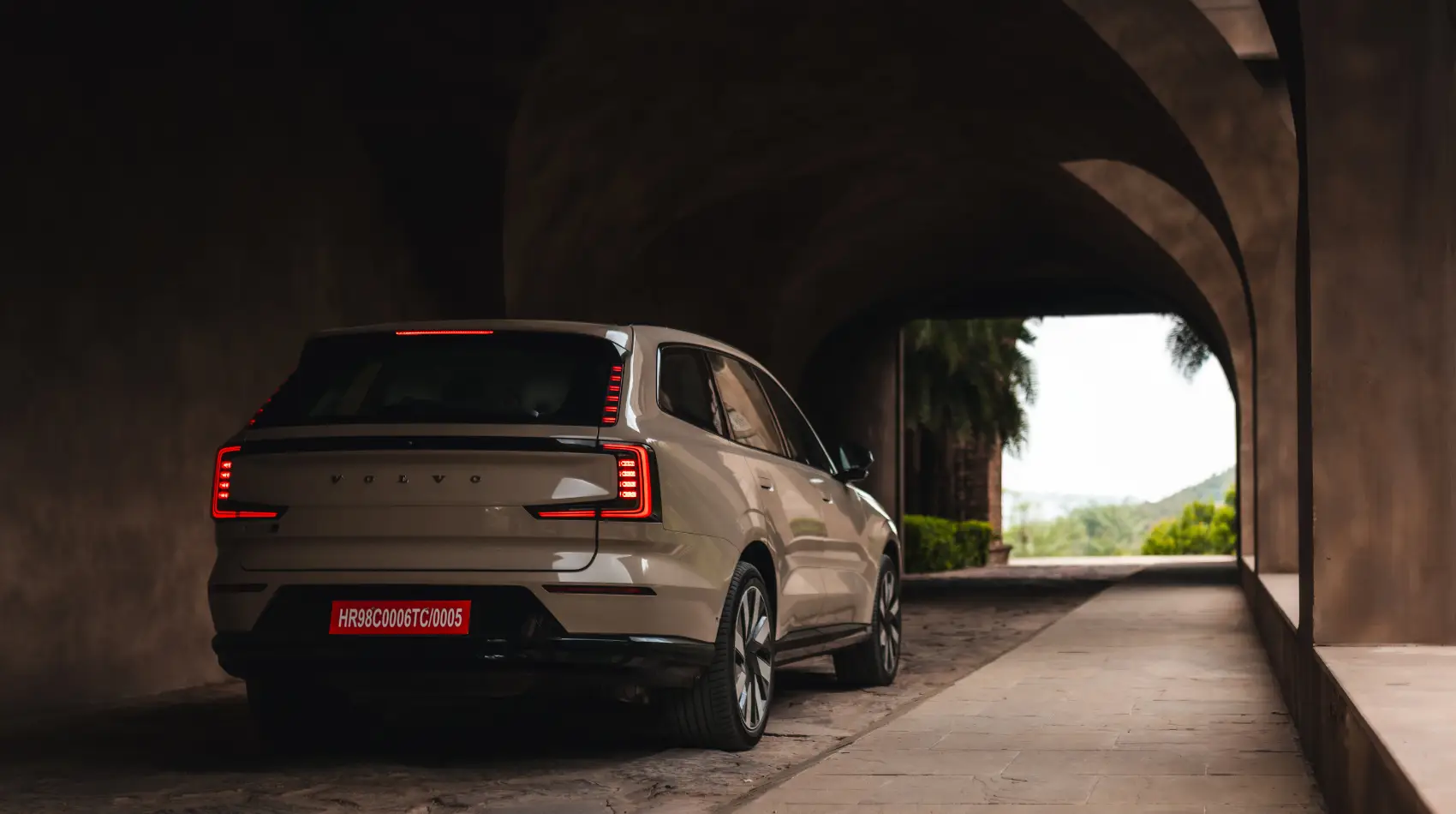
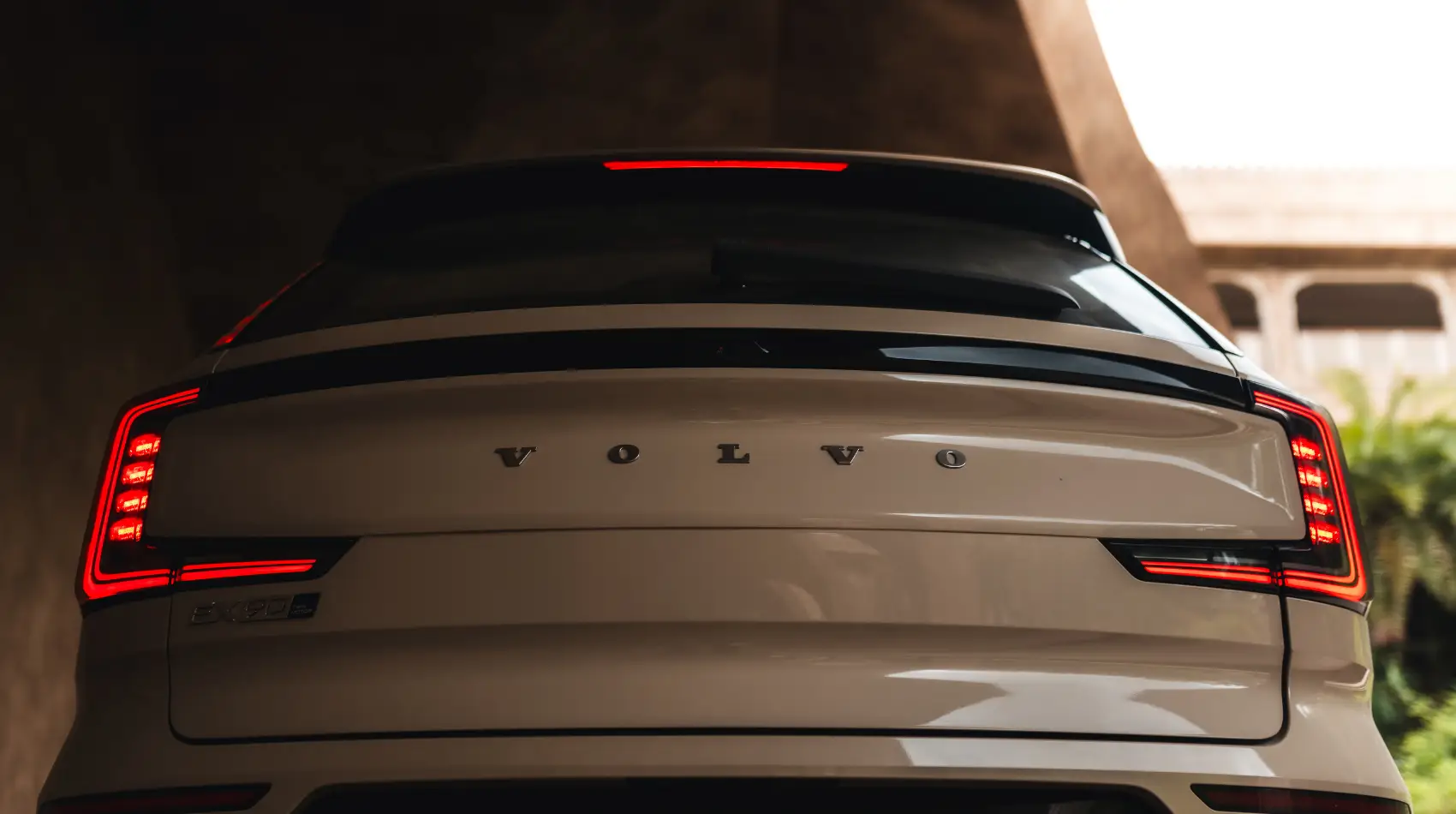
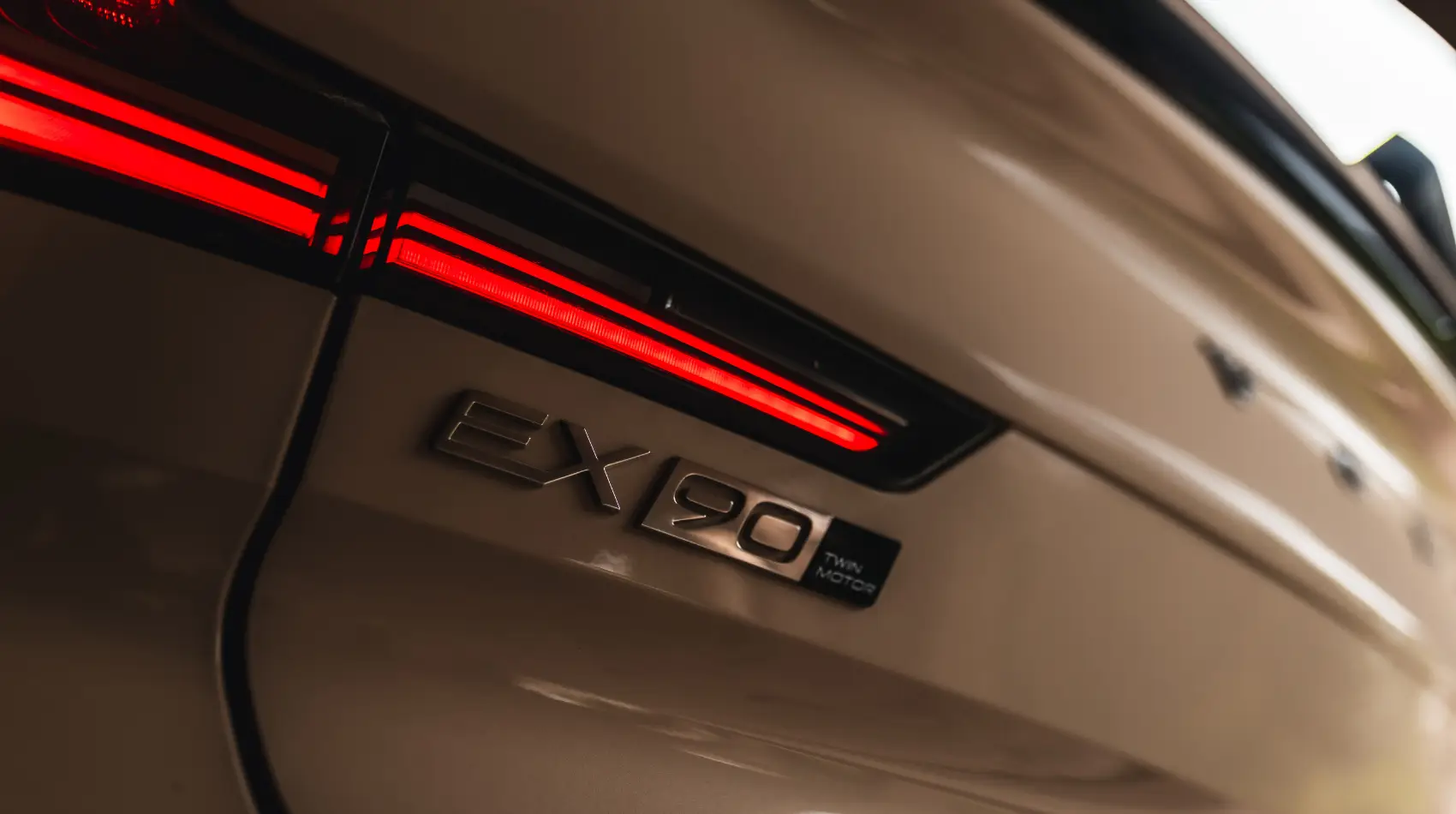
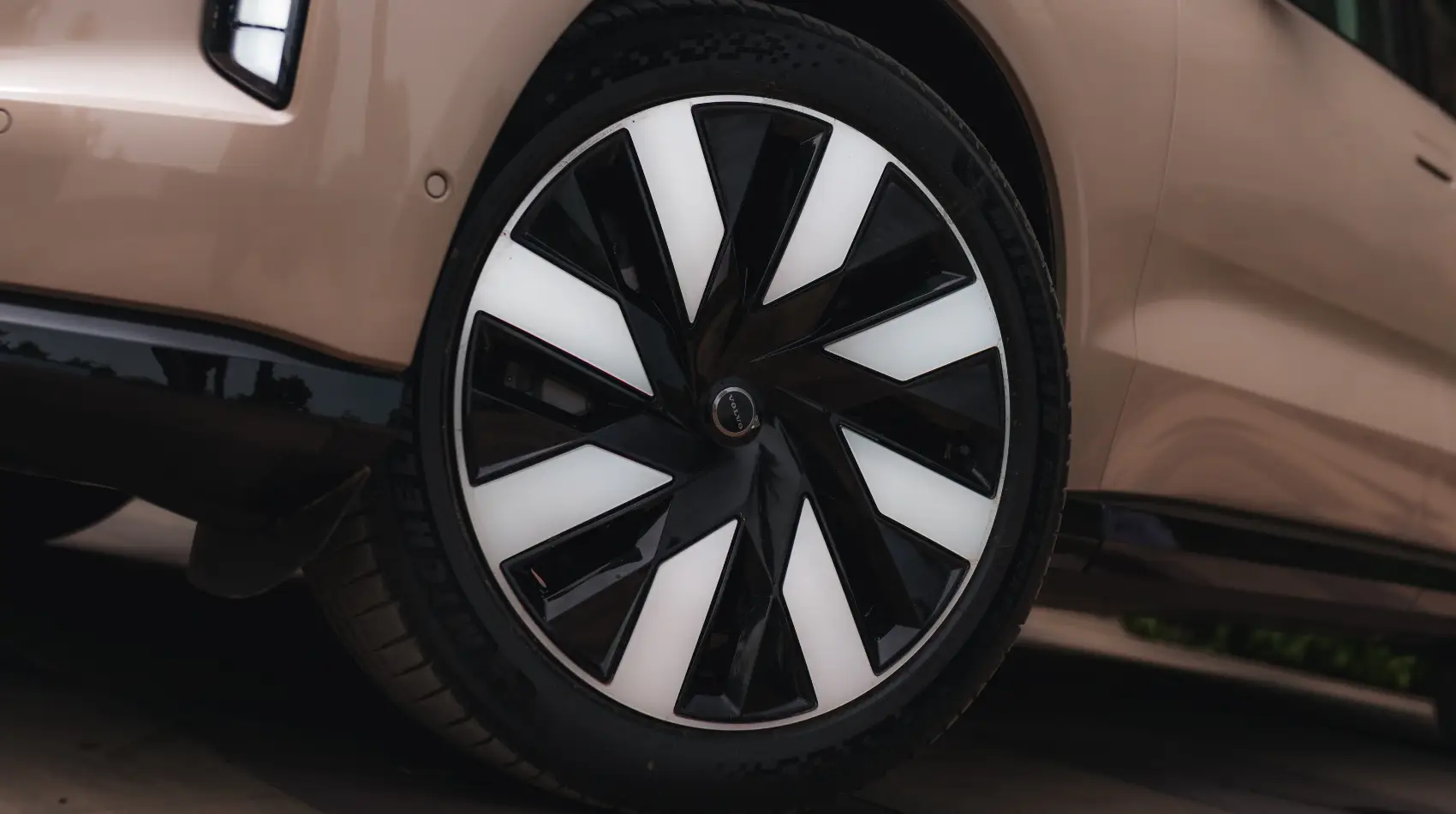
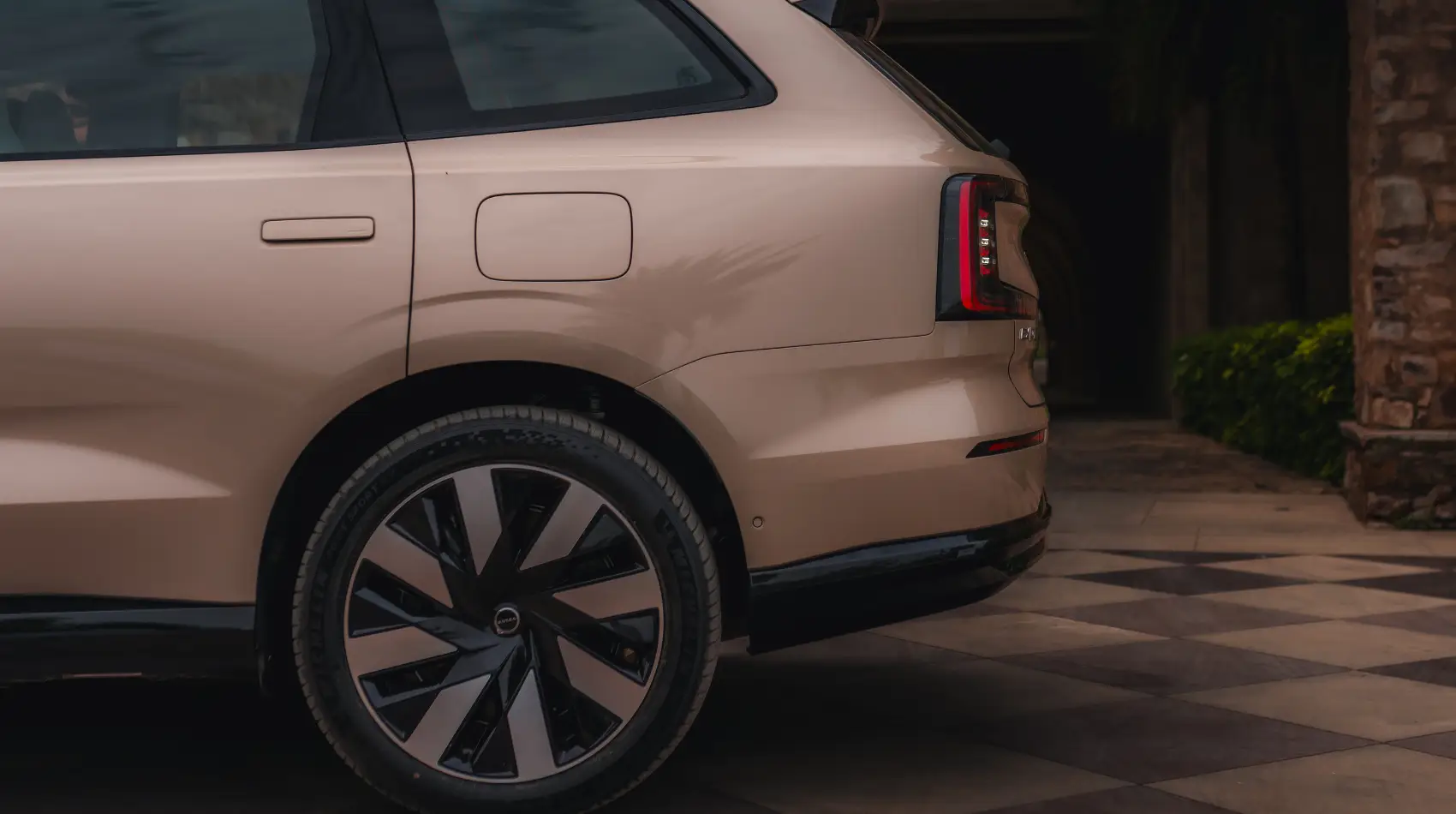
There are easier places to introduce Volvo's biggest and most technologically ambitious SUV than Rajasthan. Our first drive begins at Six Senses Fort Barwara, a beautifully restored 14th-century fort where centuries of history surround you, while sitting outside is a car that feels like it has arrived from several decades in the future. The contrast is almost too perfect. Ancient stone walls, the Rajasthan landscape and, parked outside, the Volvo EX90 with its cameras, sensors, software and a 106kWh battery.
From the fort, the drive towards Ranthambore takes us through exactly the kind of roads that can expose a luxury SUV's weaknesses. There are smooth stretches, broken tarmac, unexpected bumps, dust, heat and cows suddenly appearing on the road to test every bit of the ADAS hardware. Which makes this a rather interesting place to drive the EX90. This isn't simply a luxury EV being exercised on perfect tarmac. It is being asked to do what an SUV of this size and price will actually have to do in India.
This is Volvo's new electric flagship and effectively takes over the role occupied by the XC90, but approaches it from an entirely different direction. The EX90 is bigger, quieter and considerably more digital, but Volvo hasn't abandoned the basic XC90 philosophy. It is still fundamentally a large, comfortable family SUV designed to make long journeys easy rather than turn every drive into an event. The difference is that this one does it without an engine under the bonnet.
And in the EX90 Twin Motor Ultra we drove, there is plenty of hardware doing the work. The MY27 specification sheet lists a 106kWh battery, 456hp and 670Nm, with dual electric motors driving all four wheels through a single-speed transmission. Volvo quotes 0-100kph in 5.5 seconds, while top speed is limited to 180kph.
It looks like a Volvo from another timeline
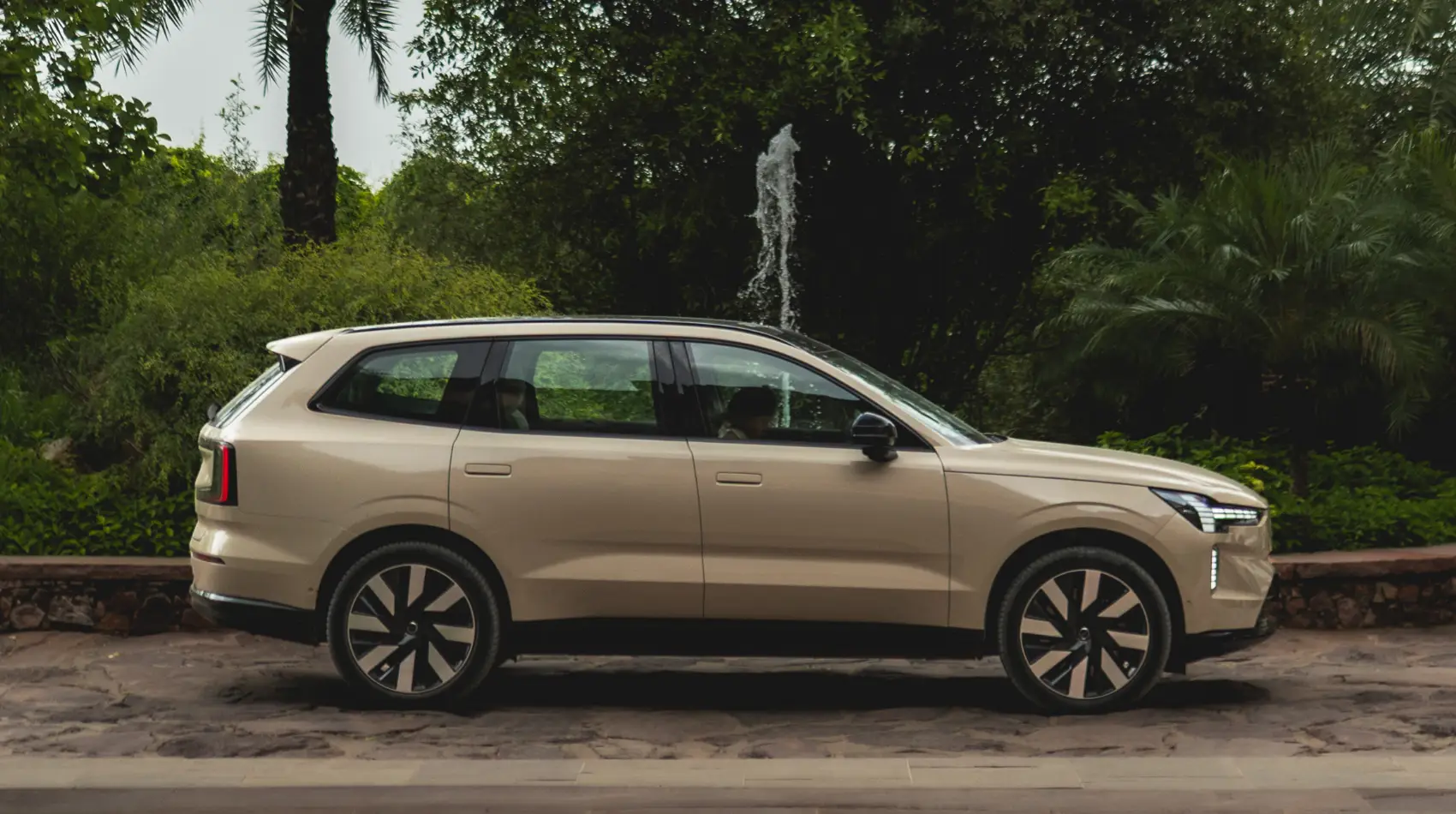
The EX90 doesn't look like an electric car trying desperately to prove that it is electric. There is no enormous grille, no collection of unnecessary aerodynamic flourishes and no science-fiction bodywork. Instead, Volvo has taken the familiar XC90 proportions and cleaned them up.
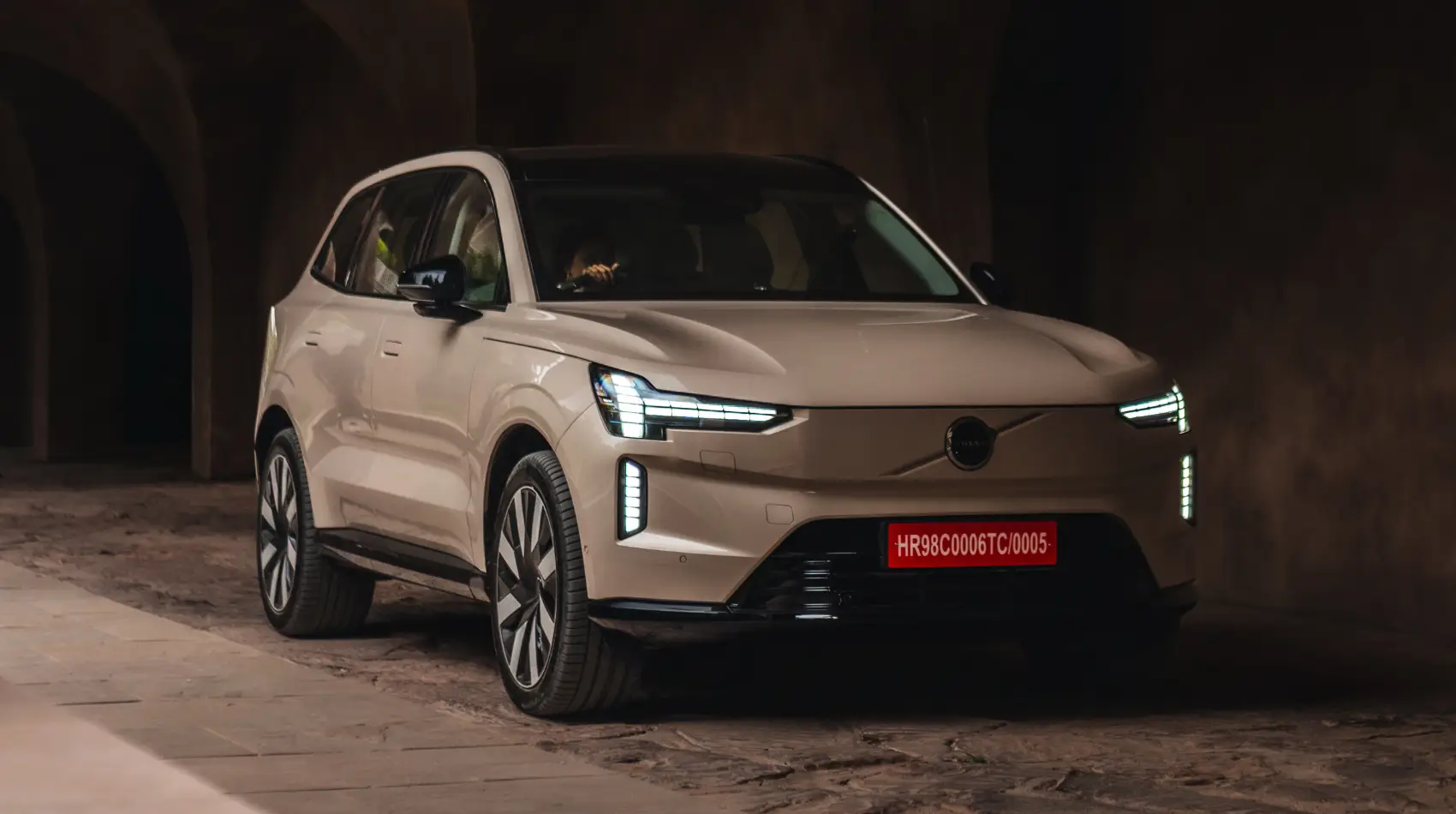
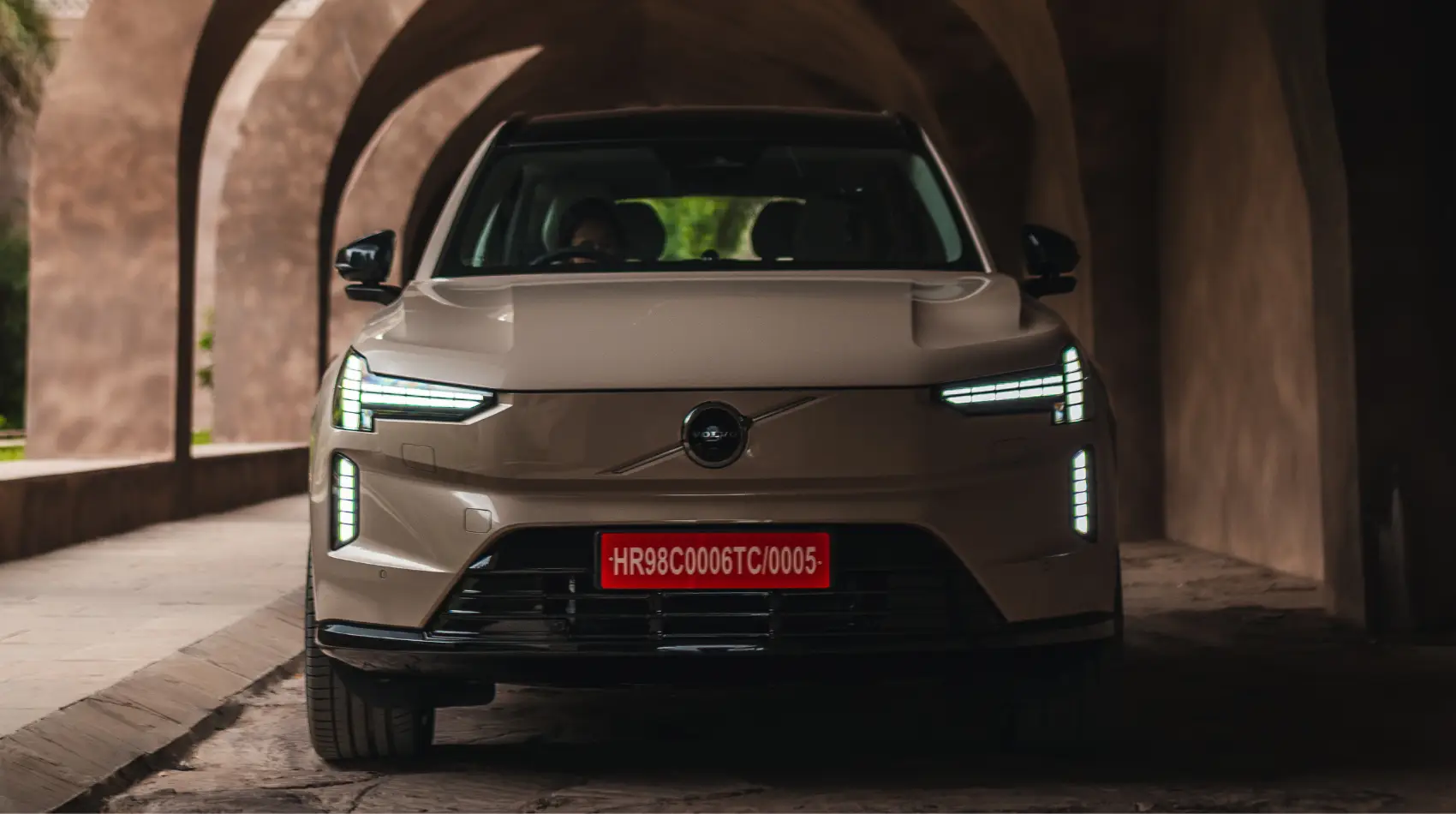
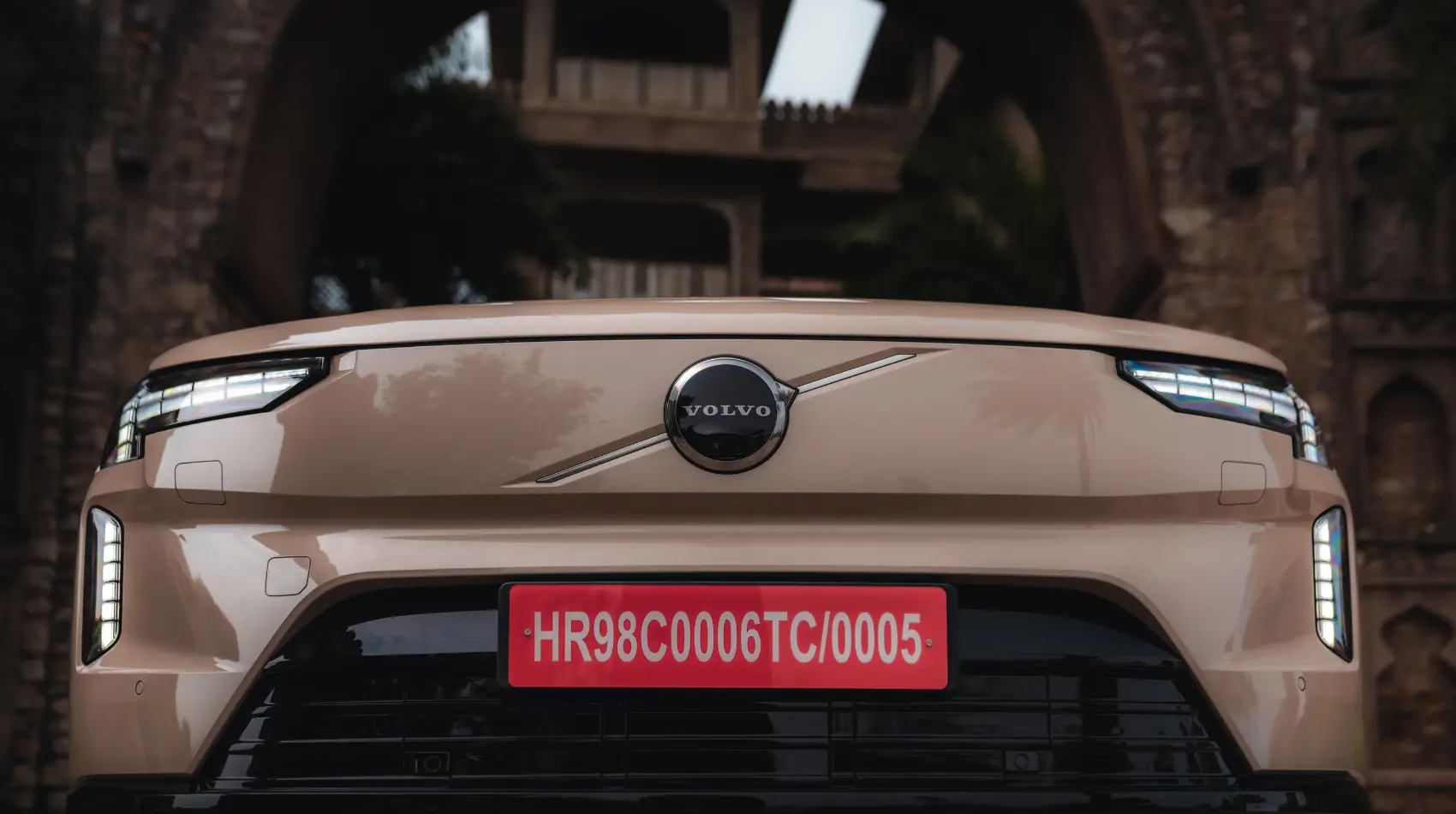
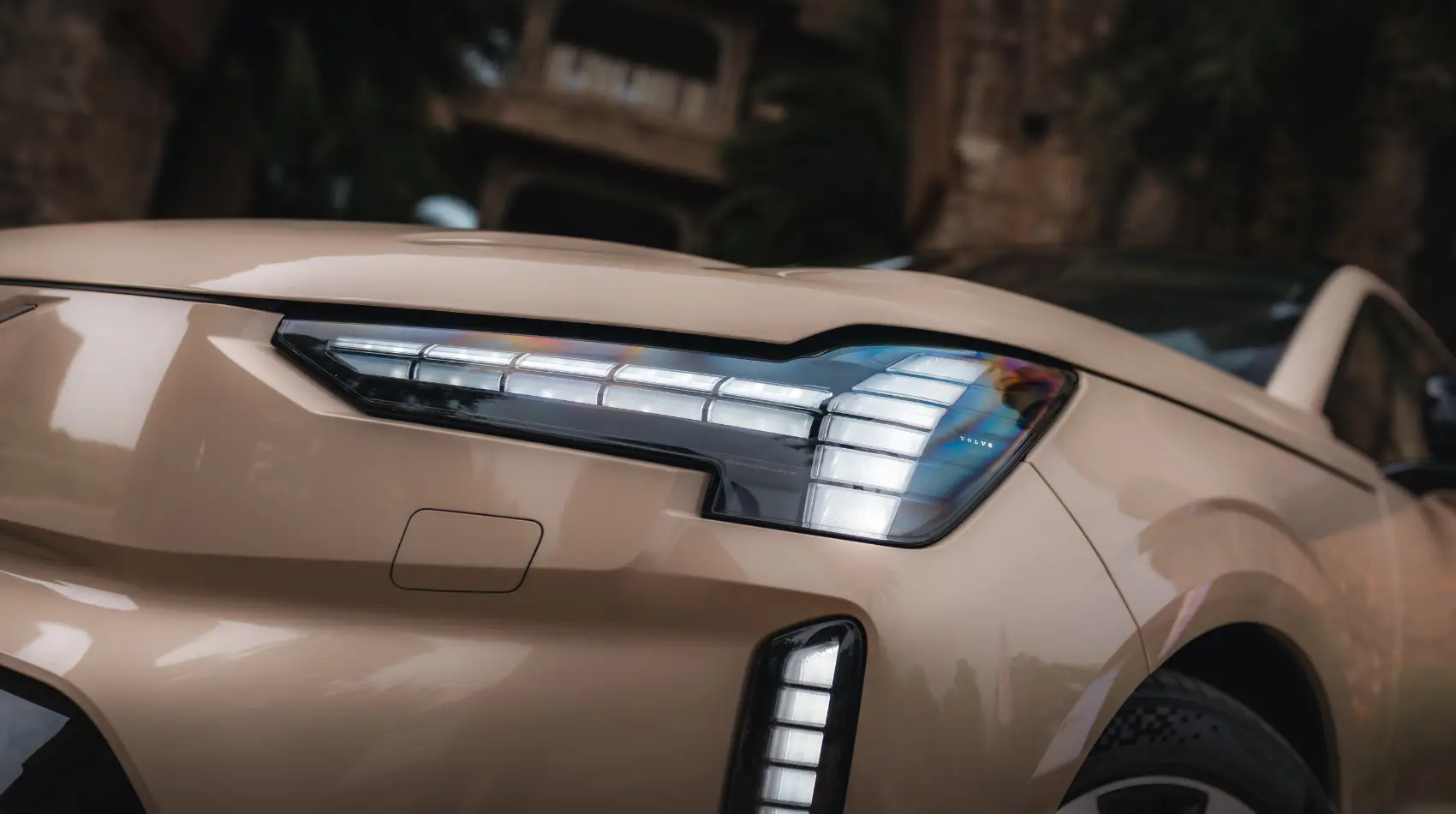
At 5,037mm long and 1,964mm wide, this is a substantial SUV, but the design hides much of that bulk surprisingly well. The closed-off front, clean surfaces and familiar Thor's Hammer lighting signature give it the kind of understated presence that has become a Volvo trademark.
It is a design that doesn't scream for attention. In fact, parked against the stone walls of Fort Barwara, it looks almost deliberately quiet. Then you start the car and the headlights come alive with their human-eye-like animation, adding a little character to what is otherwise a very restrained design.
456 horsepower. And that's plenty.
You might expect a 456hp electric SUV with 670Nm to be aggressive. It isn't.Press the accelerator and the EX90 moves with the effortless shove you expect from a large dual-motor EV, but Volvo hasn't tuned it to deliver the sort of neck-snapping acceleration that has become a party trick for electric SUVs. The 5.5-second 0-100kph time is quick enough for anything you are likely to need on a public road, and the instant torque makes overtaking almost comically easy.
More importantly, the EX90 doesn't constantly remind you that it can go fast. That is a good thing. This is a car that seems to understand its job. It is designed to carry six people in comfort, not to scare them into silence with every throttle input. The power delivery is smooth, predictable and almost completely drama-free. You could have considerably more power in a car like this, but it would add very little to the experience.
The road gets ugly. The cabin doesn't.
This is where the EX90 starts making a strong case for itself.The MY27 Ultra gets four-corner air suspension, and on Rajasthan's less-than-perfect roads, you appreciate it almost immediately. The suspension doesn't magically erase every bump, because nothing this large and heavy can, but it takes the sharpness out of rough surfaces and keeps the cabin remarkably composed.
There is a sense of isolation to the EX90 that suits the car perfectly. You sit high, the steering is light and the cabin is exceptionally quiet. There is no engine vibration, no gearbox shifting through ratios and very little mechanical drama. The EX90 simply gathers speed and gets on with the journey.
Push harder into corners and you are reminded that this is a large luxury SUV rather than a sports car. There is some body movement and you can feel the mass underneath you. But the steering is predictable and the car never feels nervous. And that is probably the best way to describe its dynamics: effortless rather than exciting.
Six seats, and a clever use of space
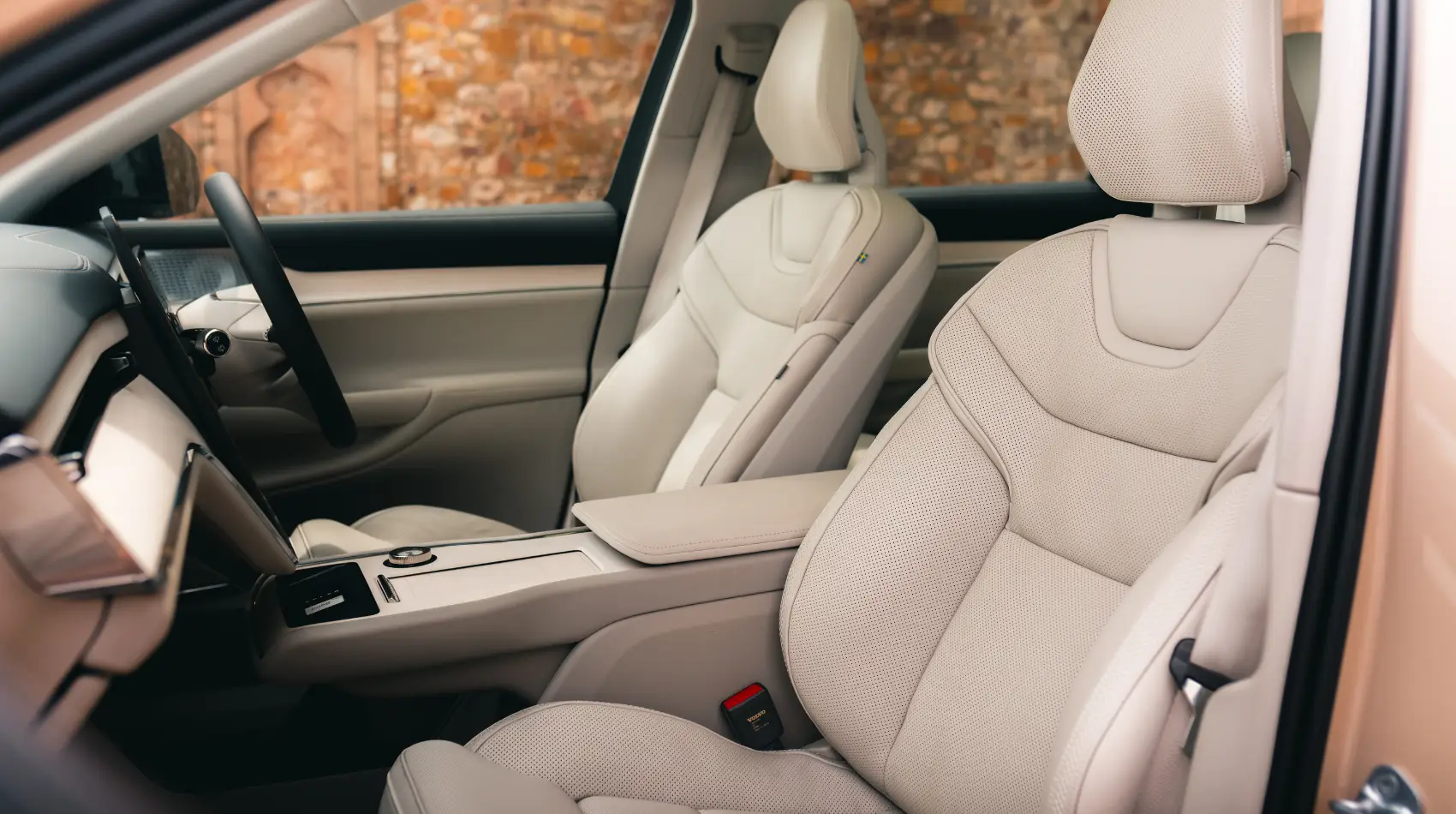
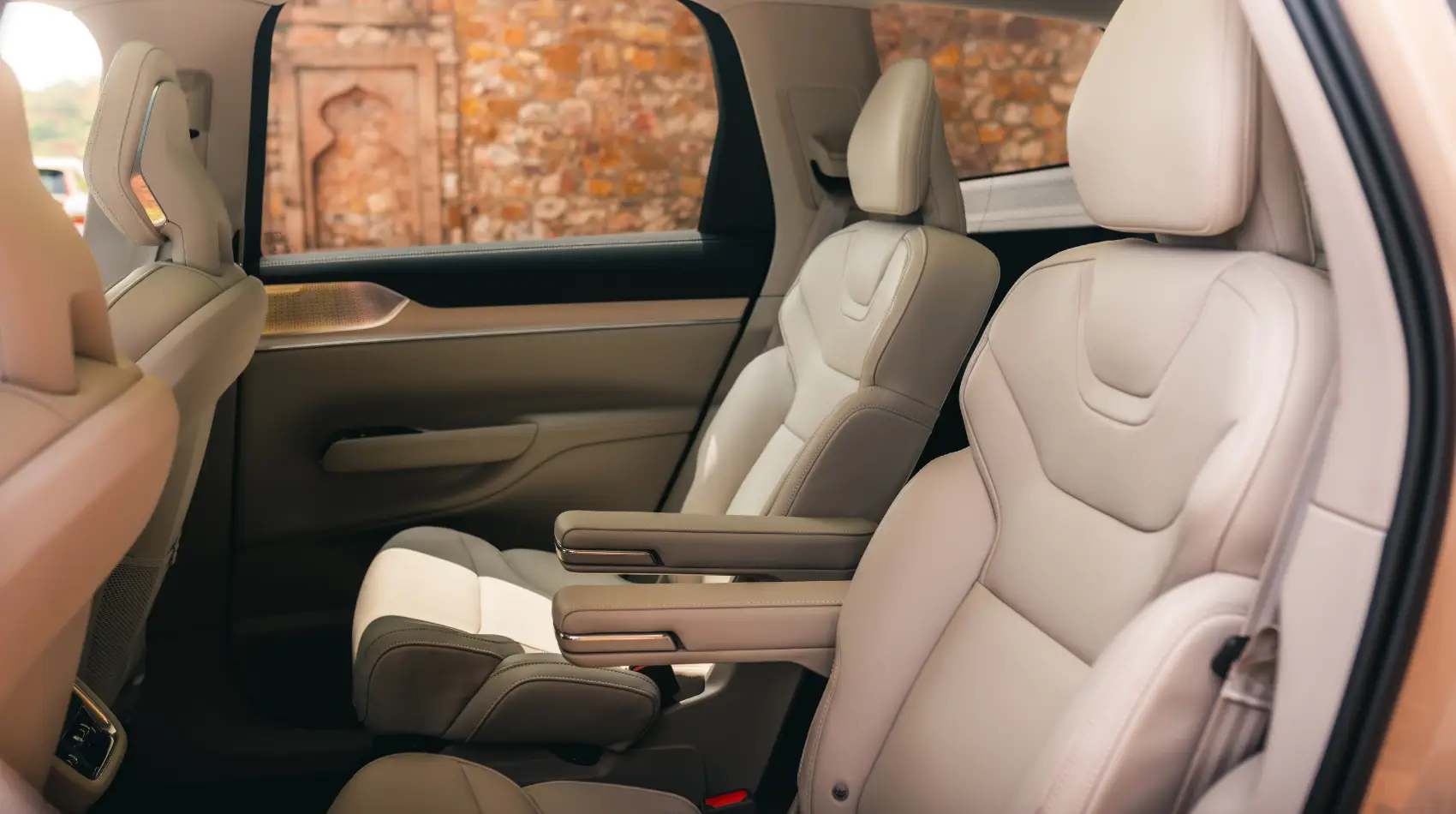
The cabin is where the EX90 really starts to separate itself from the XC90.Our car came in the 6-seat 2+2+2 configuration, with individual captain's chairs in the second row. The MY27 specification sheet confirms ventilated Nappa leather, front-seat massage, heating, powered adjustment and powered side support.
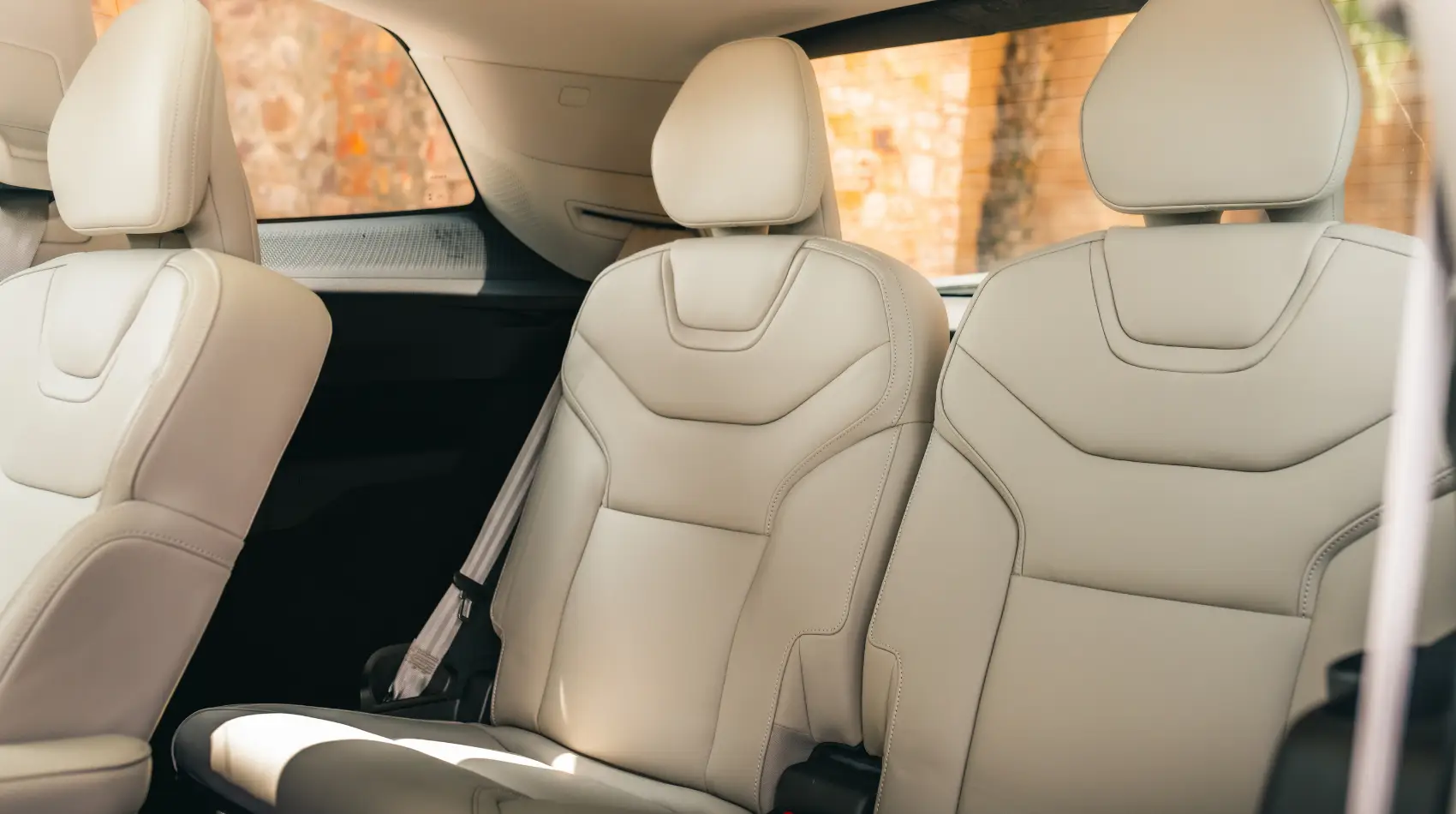
The second row therefore feels much more like executive-class seating than conventional SUV seating. There is space to stretch out, and the captain's chairs create a proper passage to the third row.
That third row is important because a six-seat luxury SUV has to justify the space it occupies. The EX90 does a good job of it. This isn't a third row that exists purely because Volvo wanted to put another couple of seats into the brochure. The packaging is genuinely useful, although adults will still prefer the first two rows for long journeys.
The result is a car that feels like it has been designed around passengers rather than simply around a battery.
The lounge with a 14.5-inch screen
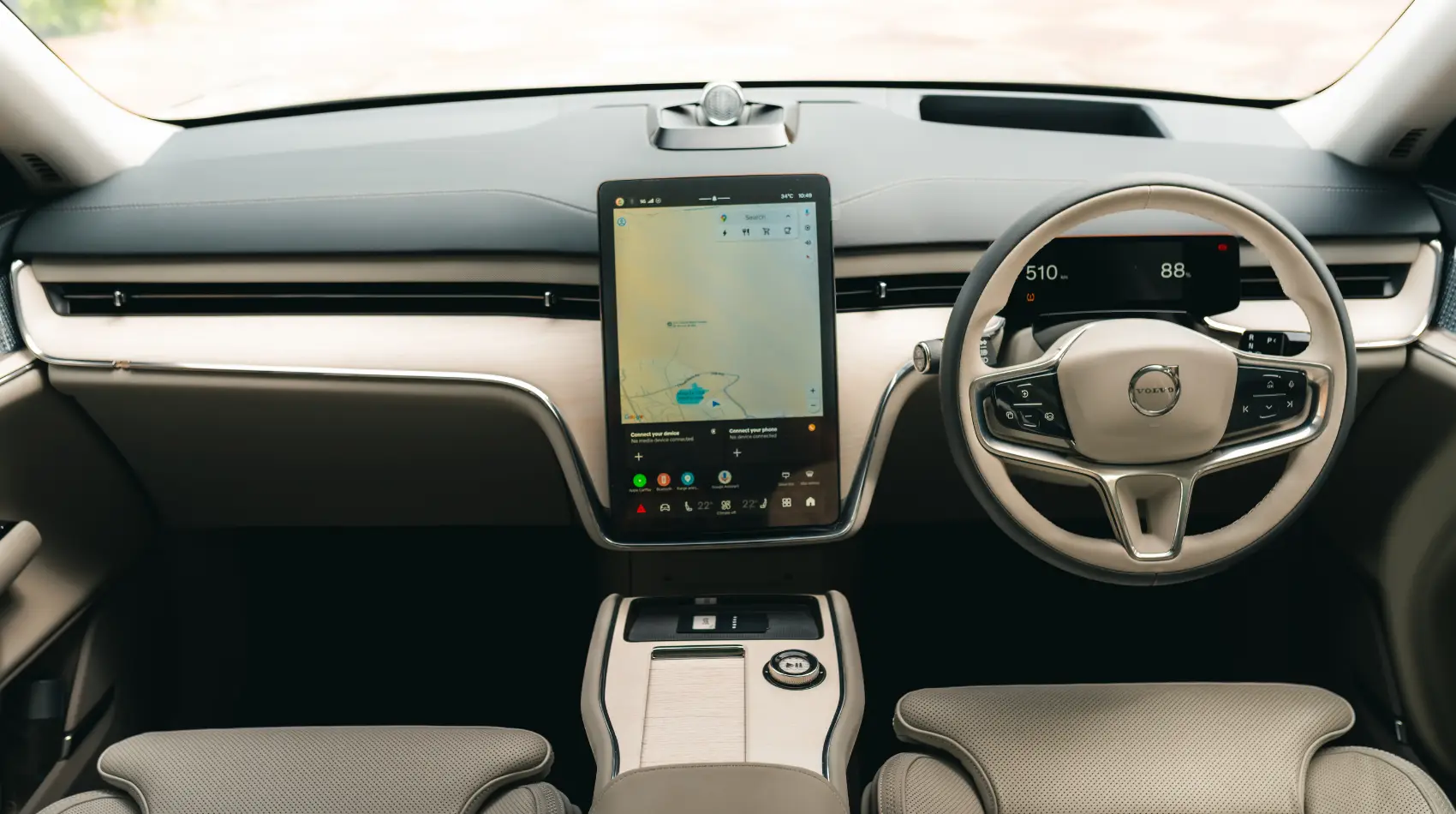
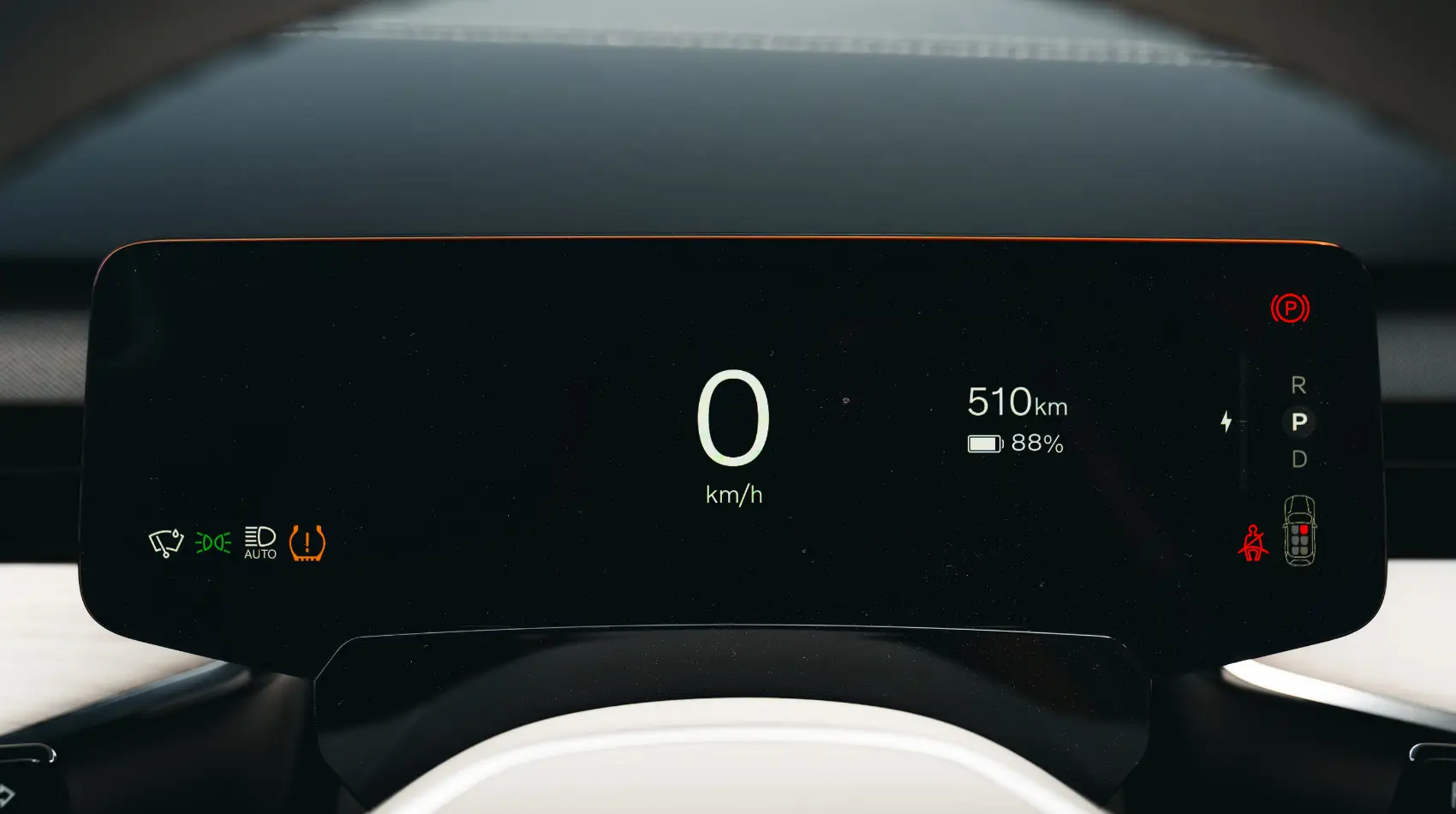
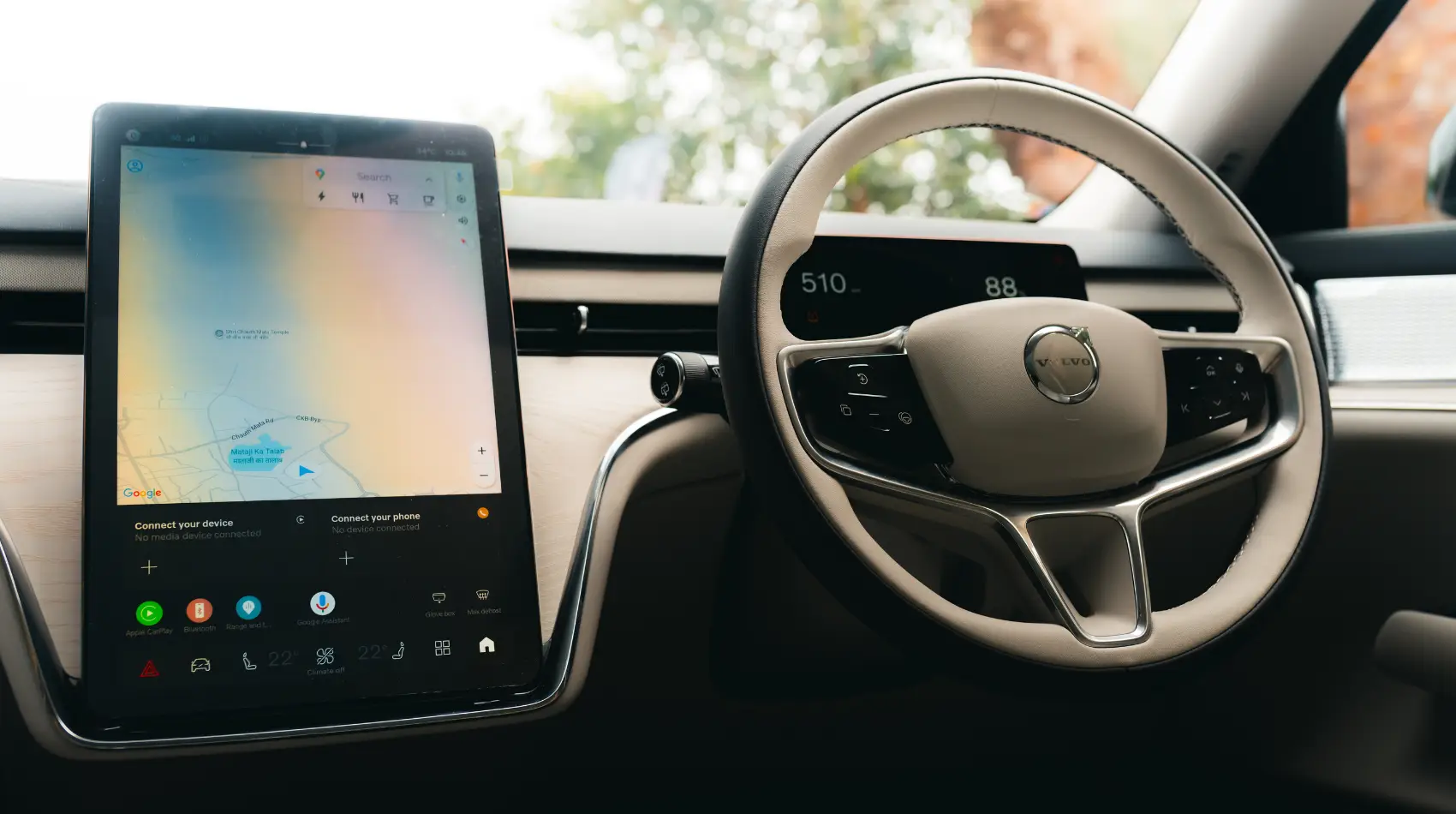
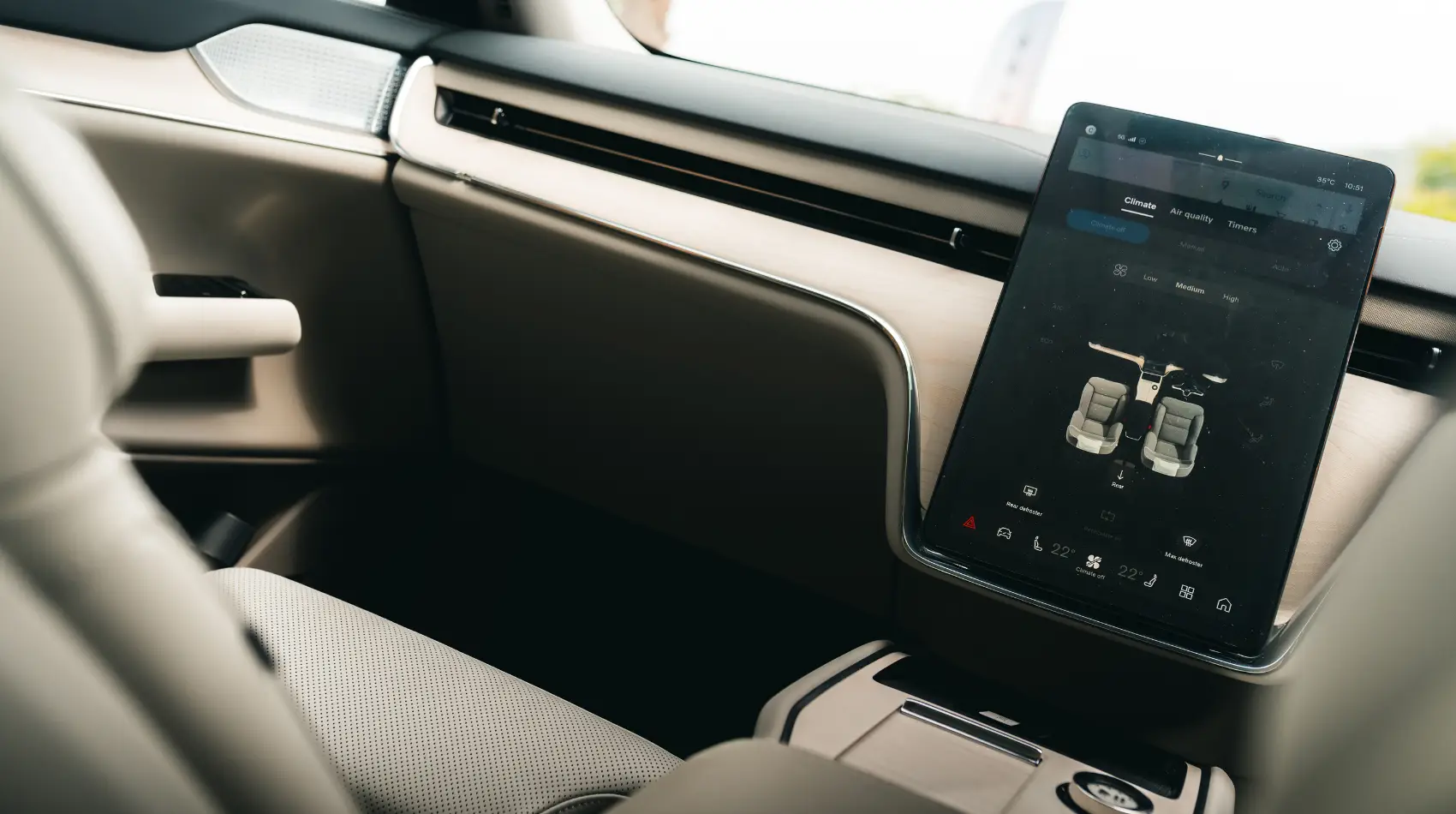
Volvo has taken its minimalist philosophy to another level with the EX90. The dashboard is clean, uncluttered and distinctly Scandinavian, with a 14.5-inch central display and a 9-inch driver display. Compared with the increasingly screen-heavy cars we drive, the driver display feels small. It does the job, but in my opinion it could have been bigger.
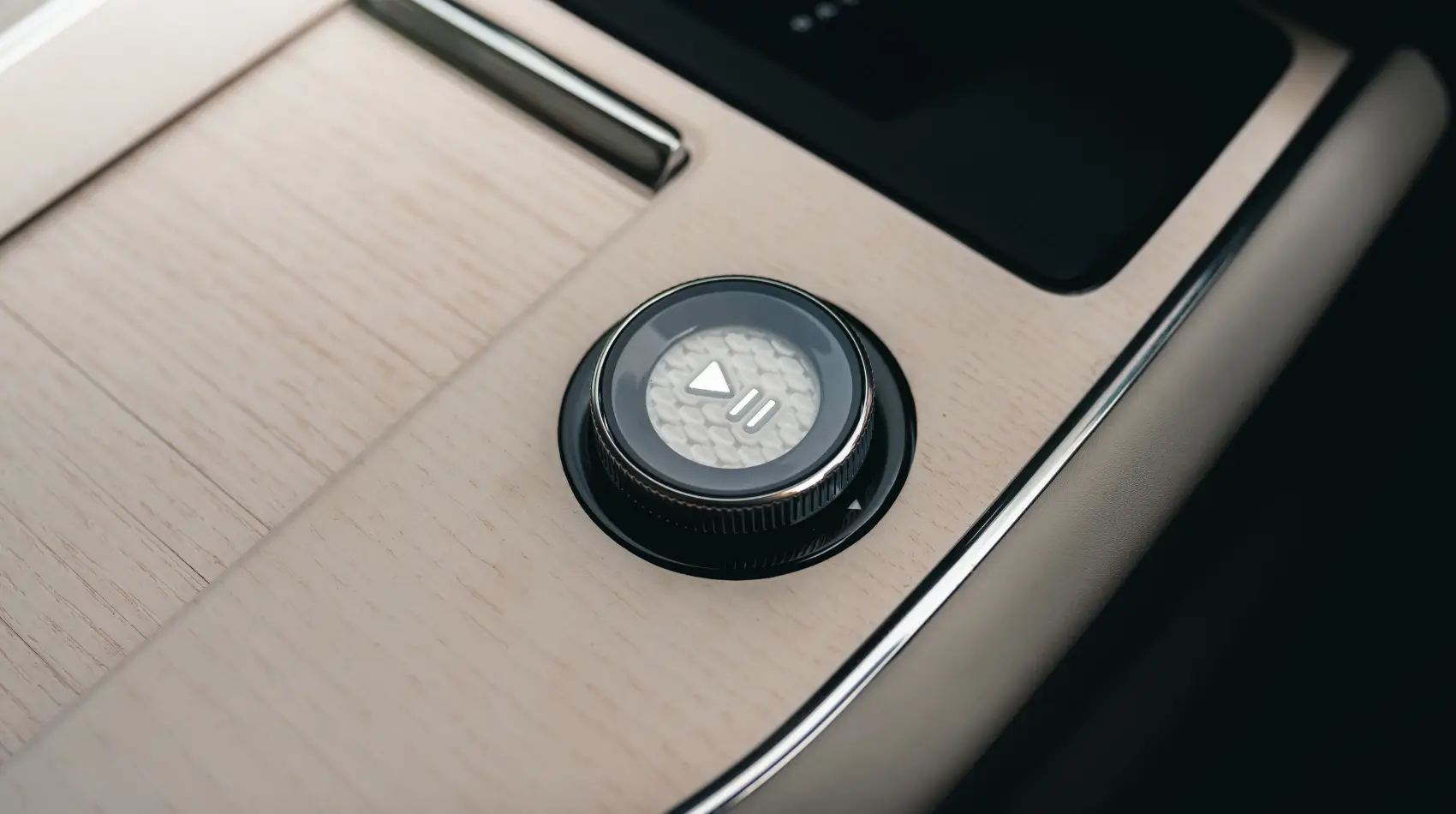
The cabin gets wood detailing, Nappa leather and a very restrained approach to luxury. There is no attempt to make the interior look like a nightclub. It is closer to a Scandinavian living room, which is exactly the right character for this car.
The seats deserve particular attention. Volvo has always understood seats, and the EX90 continues that tradition. The massage function is available on the front seats, and with ventilation and heating added to the mix, the front cabin becomes an exceptionally comfortable place to spend several hours.
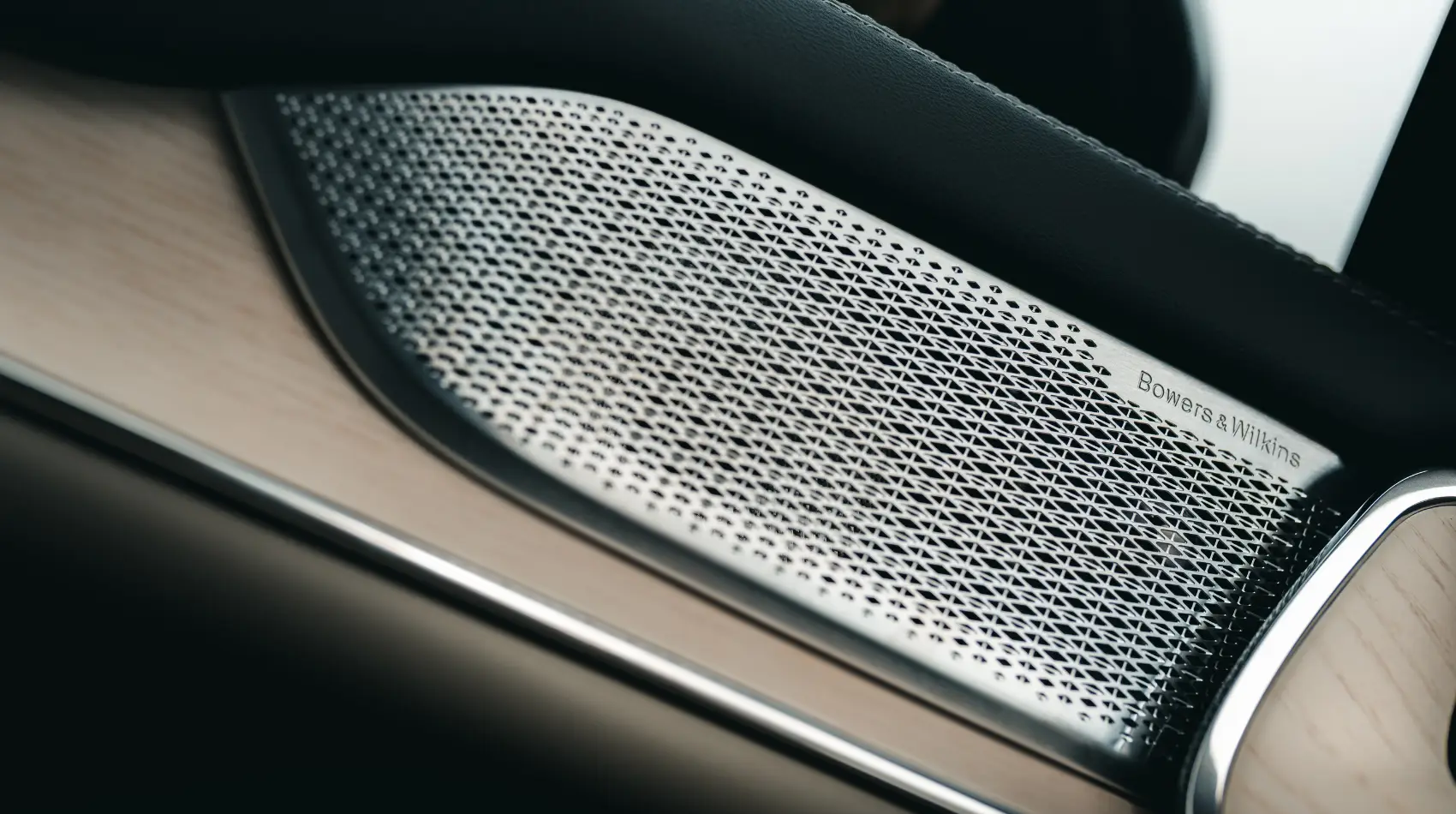
Then there is the Bowers & Wilkins audio system with 25 speakers and 1,610 watts. The hardware is impressive, but more importantly, it sounds superb. The EX90's remarkably quiet cabin gives the system the perfect environment to work in, and the sound quality is genuinely one of the highlights of the interior. It delivers excellent clarity and a rich, immersive presentation, making it one of those systems you notice even when you aren't trying to listen critically.
Not everything is perfect
For all the space the EX90 offers, there are a few areas where Volvo could have been more clever with the packaging. The second-row captain's chairs are comfortable and the space between them makes third-row ingress and egress easy, but considering the EX90 is more than five metres long, the rear seats could have been wider and some of that space could arguably have been used for the passengers themselves. The six-seat layout does, however, give Volvo an interesting advantage in this segment because it is the only one here to offer a proper 2+2+2 six-seat configuration. A conventional bench-seat option could make the EX90 even more appealing to buyers who prioritise maximum rear-seat width, but for now, the captain's-chair layout gives the car a distinct identity.
The EX90 also isn't intended to be the most involving SUV to drive, and its touchscreen-heavy interface can occasionally make simple functions more complicated than they need to be. None of these are deal-breakers, and some are deliberate choices, but they are worth remembering when you're looking at a flagship electric SUV.
It has more eyes than you do
Safety has always been Volvo territory, and the EX90 takes that philosophy into the digital age. The specification sheet lists Pilot Assist, a 360-degree camera, graphical head-up display, Driver Understanding System, collision avoidance and mitigation, lane keeping assistance, cross-traffic alert with autobrake, intersection autobrake and run-off-road mitigation. It also gets OTA updates and Volvo's latest computing architecture.
The EX90’s sensor suite comprises five cameras, five radar units and 12 ultrasonic sensors, all working together with the Driver Understanding System to monitor the car’s surroundings and the driver.
The impressive part is that most of this technology doesn't make the car feel complicated from behind the wheel. It simply sits quietly in the background, doing what modern driver assistance systems are supposed to do.
The big-battery question
The MY27 specification sheet lists a 106kWh battery and a 625km WLTP range. That number needs context rather than being presented as a simple real-world range claim, because actual range will depend on speed, temperature, air-conditioning use, road conditions and driving style.
That is particularly relevant in India, where highway speeds, Rajasthan's heat and the availability of charging infrastructure can have a substantial effect on how useful a claimed range figure actually is. The 106kWh battery does, however, give the EX90 the kind of energy reserve you expect from a flagship long-distance EV.
A wall-mounted charger is also being offered as a value addition with the EX90, which makes home charging a much more practical proposition for owners.
Meet the Brain
The EX90 isn't just Volvo's biggest electric SUV, it is also its most software-driven car yet. At the heart of it is an NVIDIA DRIVE AI platform using Xavier/Orin architecture with 280 TOPS of computing power. In simple terms, TOPS means trillions of operations per second, so 280 TOPS gives the EX90 the processing headroom to handle huge amounts of information from its cameras, radar, and other systems in real time. This is particularly important for the car's safety and driver-assistance functions, where multiple streams of information need to be processed simultaneously.
The brain is designed to keep evolving too. Over-the-air updates mean Volvo can improve the software and introduce new functions without requiring the car to visit a workshop. The infotainment side uses a Qualcomm Snapdragon 8155 cockpit platform, while Google built-in brings services such as Maps, YouTube and Amazon Prime Video directly into the car. There is also wireless Apple CarPlay and a digital key that can be shared through your smartphone's native wallet app. So while the EX90 may look like a very large luxury SUV from the outside, underneath it is increasingly behaving like a software platform on wheels.
Verdict: Quietly one of the most complete
There is something oddly appropriate about the EX90's journey from Six Senses Fort Barwara towards Ranthambore. Outside, there is history, wildlife, dust and ancient stone. Inside, there is a very different kind of future, one built around silence, software, sensors and an almost obsessive focus on making the journey effortless. And perhaps that is the EX90's biggest achievement. It doesn't constantly remind you how advanced it is. It simply gets on with the job of keeping its occupants comfortable, isolated and relaxed.
It isn't perfect. The rear seats could have been wider considering the EX90's enormous footprint, the touchscreen interface takes some getting used to and its sheer size can be intimidating in tighter spaces. But none of these compromises fundamentally change the experience. The six-seat configuration gives it a distinct advantage for buyers who want individual captain's chairs and easy access to the third row, while the exceptional ride quality, beautifully finished cabin and superb Bowers & Wilkins sound system make it a particularly compelling long-distance luxury SUV.
Spend a few hours driving from the calm of Fort Barwara into the chaos and character of Rajasthan, and the EX90's priorities become clear. It isn't trying to be the most exciting SUV in the segment, nor does it need to. It is trying to make a very large, very sophisticated luxury SUV feel completely effortless, and for the most part, it succeeds.
The EX90 doesn't try to make the future exciting. It makes the future comfortable. And after a few hours on Rajasthan's roads, that feels like exactly what a flagship Volvo should do.
Price will decide the story
Volvo is expected to announce the EX90's India pricing in October, with the SUV set to arrive in India on October 12. My expectation, however, is that it could land somewhere in the ₹1.15 crore to ₹1.40 crore range, depending on the final variant and positioning. If Volvo can keep it within that bracket, the EX90 could make a very interesting case for itself against the established luxury electric SUVs in India. The combination of its six-seat layout, comfort, technology and distinctly different character could give it a fairly unique position in the segment.