A proper comeback with standout design, great ride comfort and a cabin that finally feels premium.
Against
Steering feel and brake pedal feedback could be sharper for enthusiast drivers.
A comeback can feel routine. Sometimes it is simply the reappearance of a familiar nameplate with a high potential to go extremely wrong. This one carries something different on its shoulders. There is weight to it, as if the Sierra has been waiting for three decades to be remembered. India's very own primordial SUV! The original three-door, with its extraordinary sweep of glass and that gently reclined rear seat, always seemed to hint at journeys that had not yet been taken. Even in traffic it made you imagine a weekend somewhere far from the noise.
And now finally the Sierra is no longer a design sketch or a concept shown at the auto expo or even a whispered rumour glimpsed in camouflaged test mule. It stands as a finished production SUV that understands the world of 2025 and chooses to bend only the rules that matter to its story. The name returns with a purpose to be something that people want. It has to function in a way that honours the memory without being trapped by it. After a day behind the wheel, the sense is that it does precisely that. The Sierra feels like it has found a way to carry its past without being defined by it and that feels the most significant!
Where it fits in the market
When it arrives in showrooms, the Sierra will face stiff competition. The Hyundai Creta remains a strong segment leader, while the Kia Seltos, Skoda Kushaq, and Volkswagen Taigun will get a new generation soon. Renault Duster will be out early next year and the Toyota-Maruti options all vie for attention. The Sierra, however, has a different brief. It is not trying to be the cheapest or the outright quickest. It seeks authenticity and identity. The styling sets it apart in a market where many designs feel derivative. The interior quality and feature set lift it into a more premium conversation.
Pricing expectations place the Sierra in a band between about Rs 11.5 lakh and Rs 25 lakh. That is a wide spread and it allows Tata to position turbo-petrol and diesel variants as well as the latter EV in different parts of the market. Against rivals, the Sierra’s long wheelbase and the quality of its suspension give it clear advantages for families who value comfort above outright sportiness.
Ownership
Tata’s approach to ownership has improved in recent years. The connected car features over-the-air updates and the relatively conservative ADAS calibration will make software updates more meaningful over a multi-year ownership period. Service network coverage and parts availability are strengths for the brand and should keep ownership straightforward.
What I liked and what I did not
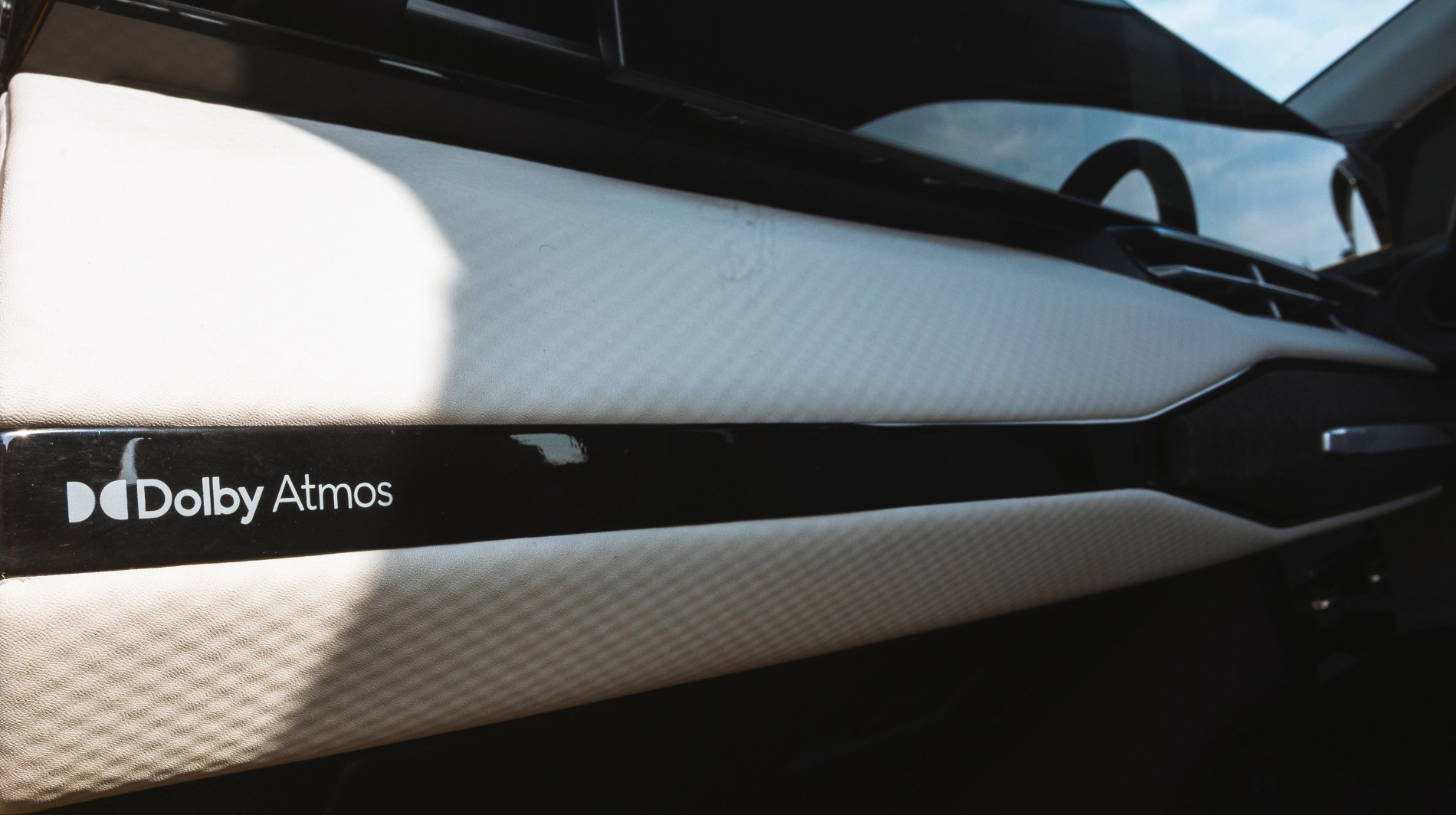
There is a long list of things to praise. The suspension is exemplary. The interior quality is a genuine step up and the triple screen layout, combined with the JBL Black Dolby Atmos audio system, gives the cabin an emotional and sensory lift. The long wheelbase makes the rear cabin truly usable in a way many rivals can only aspire to. NVH control is also impressive and both engines feel refined.
On the other hand, there are compromises. The brake-by-wire system works technically, but it lacks feedback. The steering is light and a little vague, which will disappoint drivers who want more communicative steering. The top-mounted steering buttons that can be accidentally pressed are an annoyance that need not exist. The touch-sensitive HVAC panel demands obsessive cleaning.
The Tata Sierra succeeds because it is honest about what it wants to be. It is not a retro toy. It is a practical and well-engineered SUV with character. The design draws from heritage without becoming a novelty. The cabin has the finish and equipment that elevate the Sierra above a lot of segment peers. Most importantly, the suspension and ride quality make it feel like a car that understands Indian roads deeply.
If you want a compact SUV that offers genuine family space, very comfortable long-distance manners and a cabin that feels modern and considered, the Sierra should be high on your list. For most buyers who value comfort, technology and identity, the Sierra finally delivers on the promise the original only teased. In the end the Sierra’s return is sensible as much as sentimental. Tata has treated the name with respect and built a car that can be loved for reasons beyond nostalgia. It brings back the idea of a personal SUV that feels like an experience instead of a commodity. That alone makes it one of the most interesting entrants in the class this year.
Ride comfort and handling
This is where the Sierra really earns its stripes. The suspension setup is the most impressive aspect of the entire driving experience. Tata has long been good at absorbing poor Indian roads and the Sierra continues that tradition. The car soaks up potholes, undulations, cracks, expansion joints, speed breakers and even larger craters with composure. That is despite the 19-inch wheels, which are the largest in the class. Low-speed ride is mature and compliant. The Sierra filters out harshness without feeling floaty. On long runs, it remains composed and fatigue-free.
At highway speeds, the Sierra is firmly planted. The wide track and the long wheelbase give it composure and stability when you are cruising triple-digit speeds. It instils confidence that makes long-distance progress effortless.
If you push the Sierra enthusiastically into corners, you will notice body roll. The chassis is not designed to be sporty and fast direction changes will reveal the expected lean. The steering itself is light in the city, which helps manoeuvring in tight spaces. It gains weight as speeds rise, but remains a touch vague for those who want razor-sharp feedback. The same steering wheel is used across other new Tata models, and it carries a persistent quirk. Buttons mounted on the top of the steering wheel, such as cruise control and phone disconnect, can be accidentally triggered when you flick the steering wheel. That is an irritation you feel in the moment and one we have encountered before in other cars from the brand. There are paddle shifters and they add theatre to the cabin but they also feel cheap in an interior that otherwise feels the best Tata has produced so far. They work well enough for occasional manual shifts, but do not transform the experience into a sporty drive.
Tata has fitted disc brakes all round and they do a tidy job of stopping the Sierra without drama. The brake feel is where the engineering is a little schizophrenic. The car uses a brake-by-wire system, which makes the pedal feel soft and linear. It is easy to press the pedal all the way in, which gives little progressive resistance to the foot. The result is good stopping performance with predictable modulation, but a lack of tactile feedback that most drivers will miss. In daily city driving, this yields confidence because the system is effective. For drivers who want a firmer pedal and a stronger connection between foot and calliper, it feels like something is being filtered out between you and the road.
Refinement and long-distance comfort
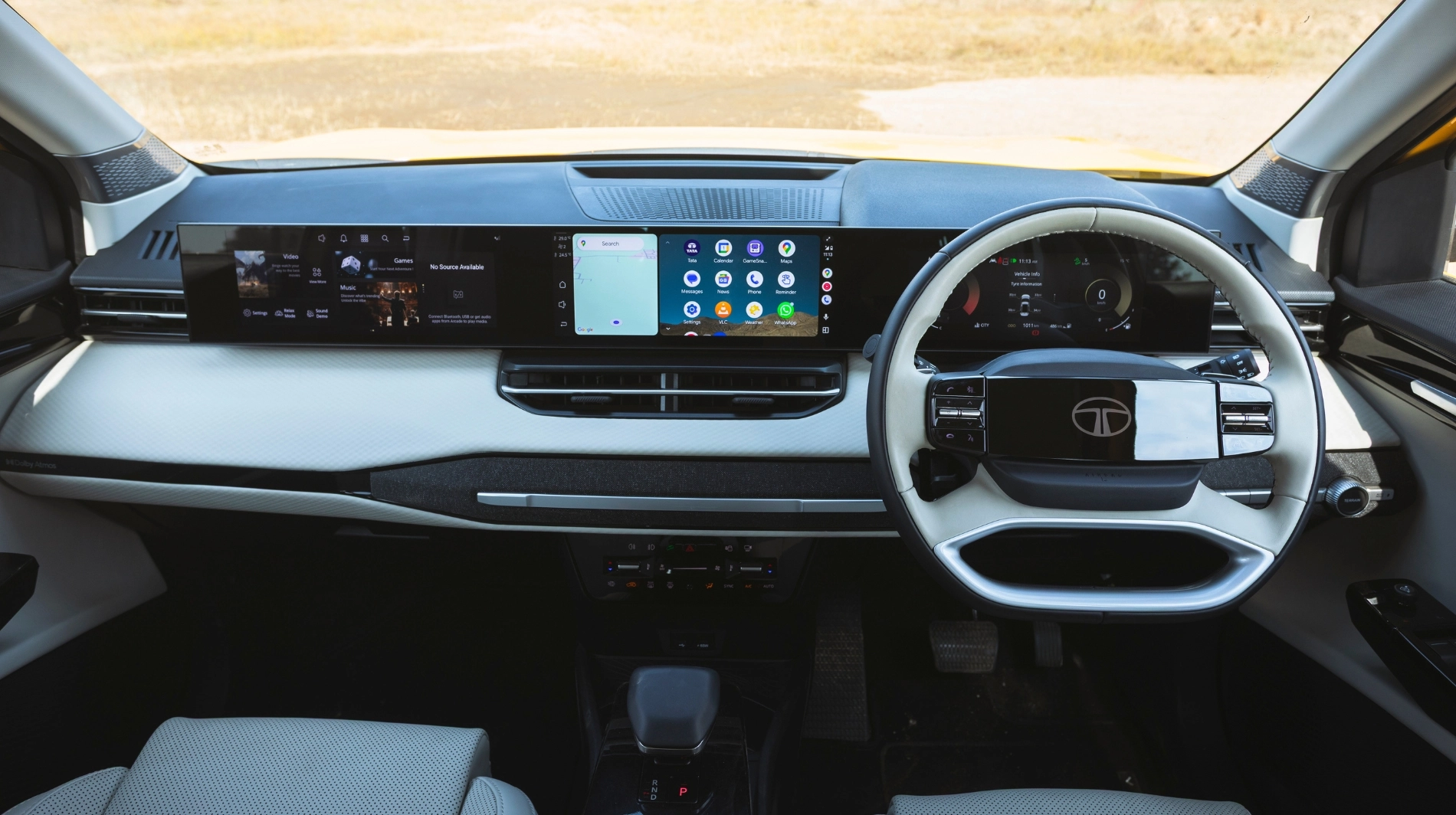
NVH levels are very well contained in both engines and the Sierra’s insulation and body structure contribute to a cabin that feels relaxed at speed. Road and wind noise are suppressed effectively. The FFD’s ability to smooth out rough surfaces contributes to passenger comfort and the seating supports long distances. The ergonomics are good. Switchgear is solid and satisfying to use. Small details such as damped door handles and smoothly operating air vents add to a premium feel. The steering wheel sports an illuminated logo that glows when the car wakes up and it is one of those small theatrical touches that feels earned rather than gratuitous.
Practicality and daily usability
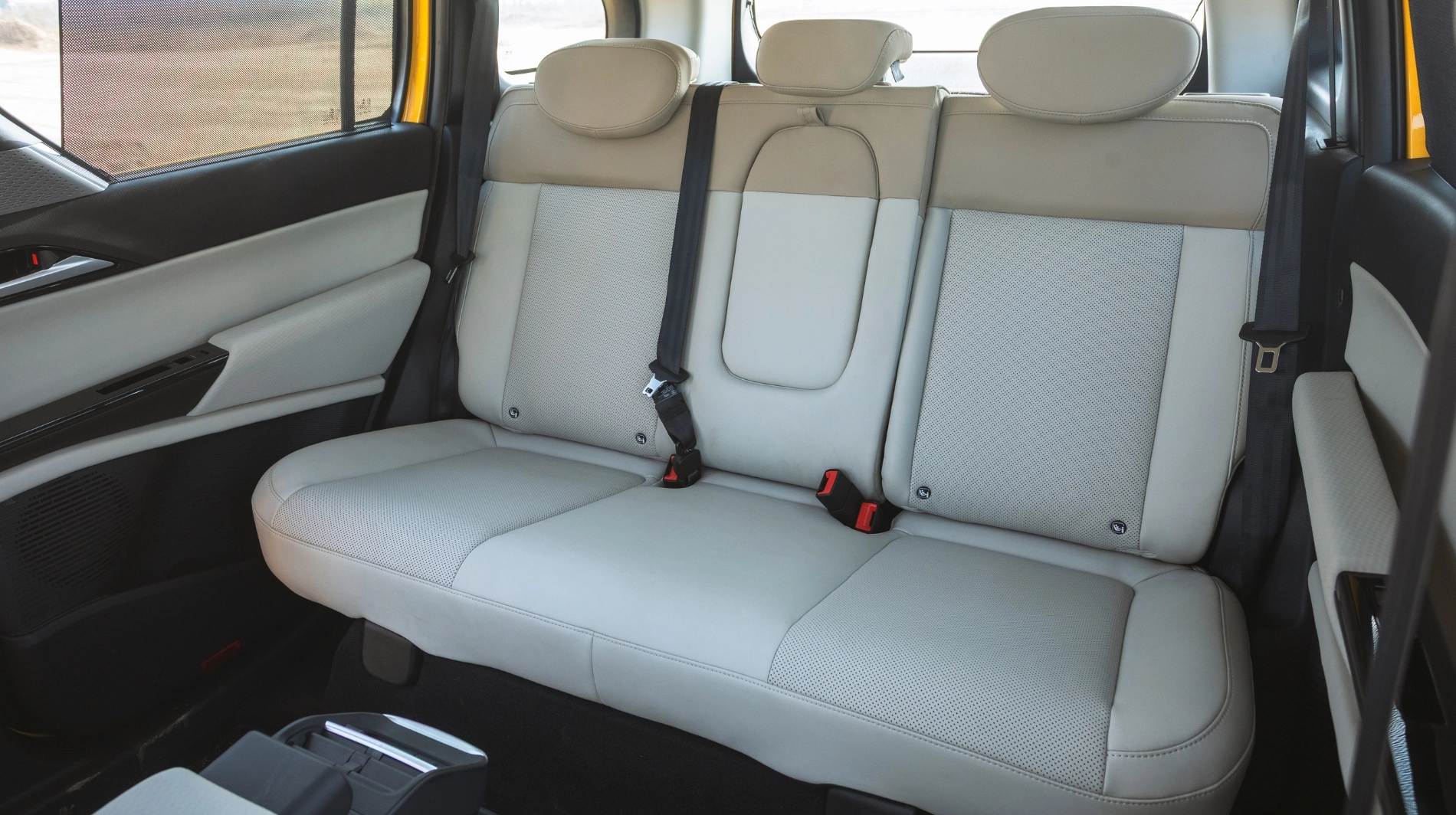
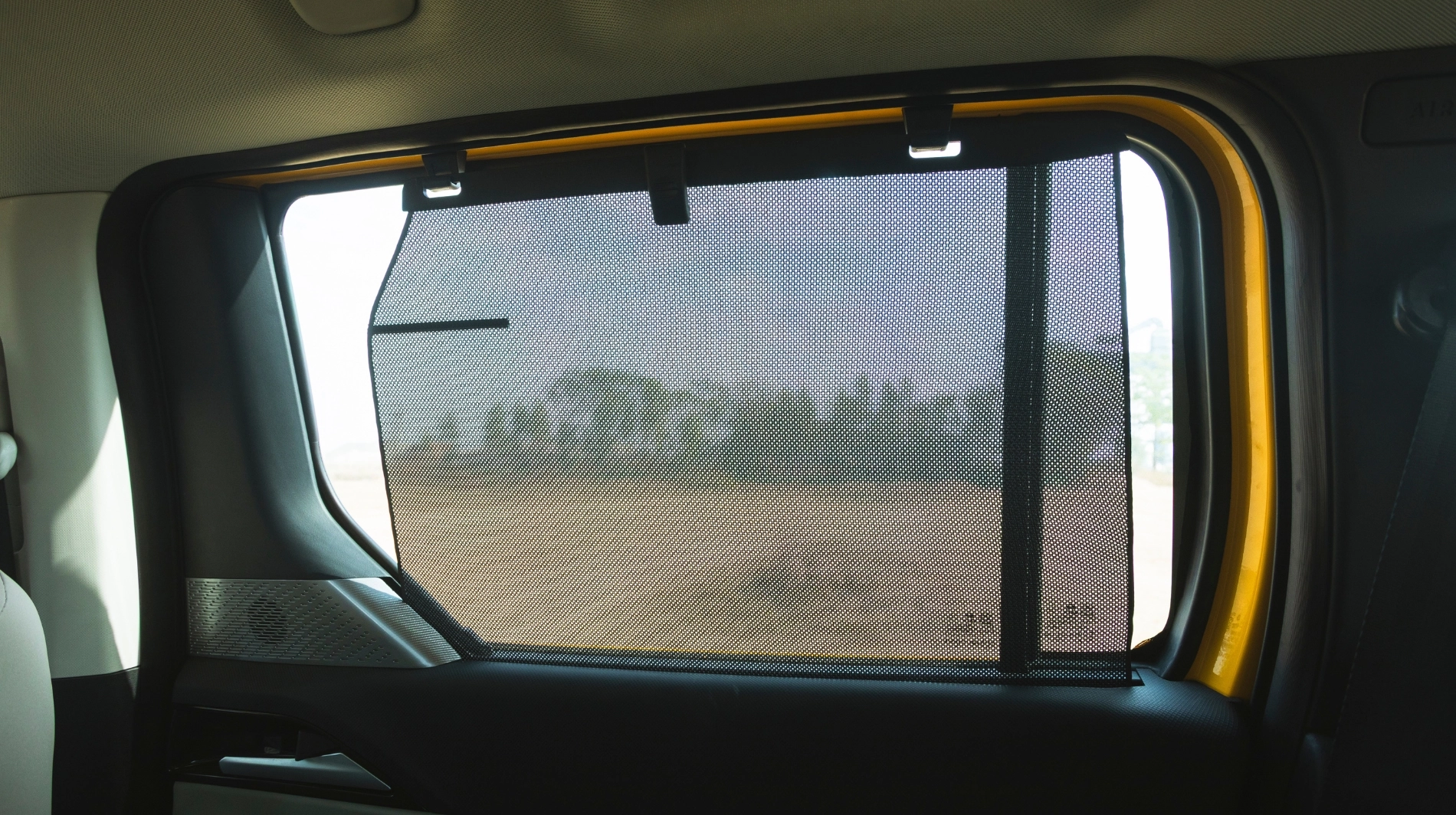
The Sierra is a sensible family car. The long wheelbase translates into class-leading rear space. Seats support under the thigh and knees well, and the rear cabin truly feels like a lounge when the sunroof and blinds are in use. There are two USB ports at the back, one of which is a 65-watt fast charger, which is useful for tablets and laptops. Storage is clever. The door pockets host a dedicated umbrella slot, which is the sort of detail that saves arguments at home over where the umbrella is kept. You also get profile-based cabin presets and remote pre-cooling, which means the Sierra can cool the cabin and return the seat and climate settings to your preference before you get in. The boot’s 622 litres is generous and the low lip makes loading and unloading easy.
Safety and assistance systems
Tata has given the Sierra a healthy safety package. At least six airbags, electronic stability control, a tyre pressure monitoring system and parking sensors front and rear are part of the offering. The ADAS suite is recognisable from other Tata cars and performs in a predictable and calibrated manner. Adaptive cruise control, lane assist and blind spot detection work as they should. The 360-degree camera is detailed and useful for parking. Tata’s approach to ADAS is measured and it errs on the side of predictability rather than overly aggressive intervention.
The headlamps on our test car were a bi-LED booster setup, Tata calls Night Sabre and they stretch their beam further at highway speeds. The welcome and goodbye animations are subtle and add theatre without being gimmicky.
There is no official crash test rating yet, but given Tata’s recent record and the hardware onboard, it would be reasonable to expect the Sierra to score near the top of the segment when it is eventually tested.
Interior
Step inside and the generational leap is immediate. The Sierra no longer borrows interiors from other Tata models apart from the steering wheel and gear selector. Surfaces feel materially better. The dashboard is broad and horizontal and gives the cabin a sense of width. Piano black sections are executed cleanly without ripples, which suggests attention to manufacturing detail. The sound bar in a long fabric-grille across the dash is part of the JBL Black audio architecture, and it does more than look good. It provides an immediate sense of occasion. Speaking of which, the cabin’s headline act is the triple 12.3-inch screen layout. A full digital driver cluster sits ahead of the steering wheel. The central touchscreen handles navigation, media and car settings. A third screen sits in front of the passenger and can run independent content over Bluetooth headphones so the driver remains undisturbed. The hardware looks premium and bright. If you prefer a HUD, you should be aware that the three-screen setup misses it, but Tata will offer two-screen variants that include a HUD. The screens themselves are crisp and easy to use in daily light. The HVAC control centre is a touch-sensitive panel carried over from other Tata cars, finished in gloss black. It looks slick, but it is impossible to keep clean and scratch-free, which makes me wince every time I reach for it.
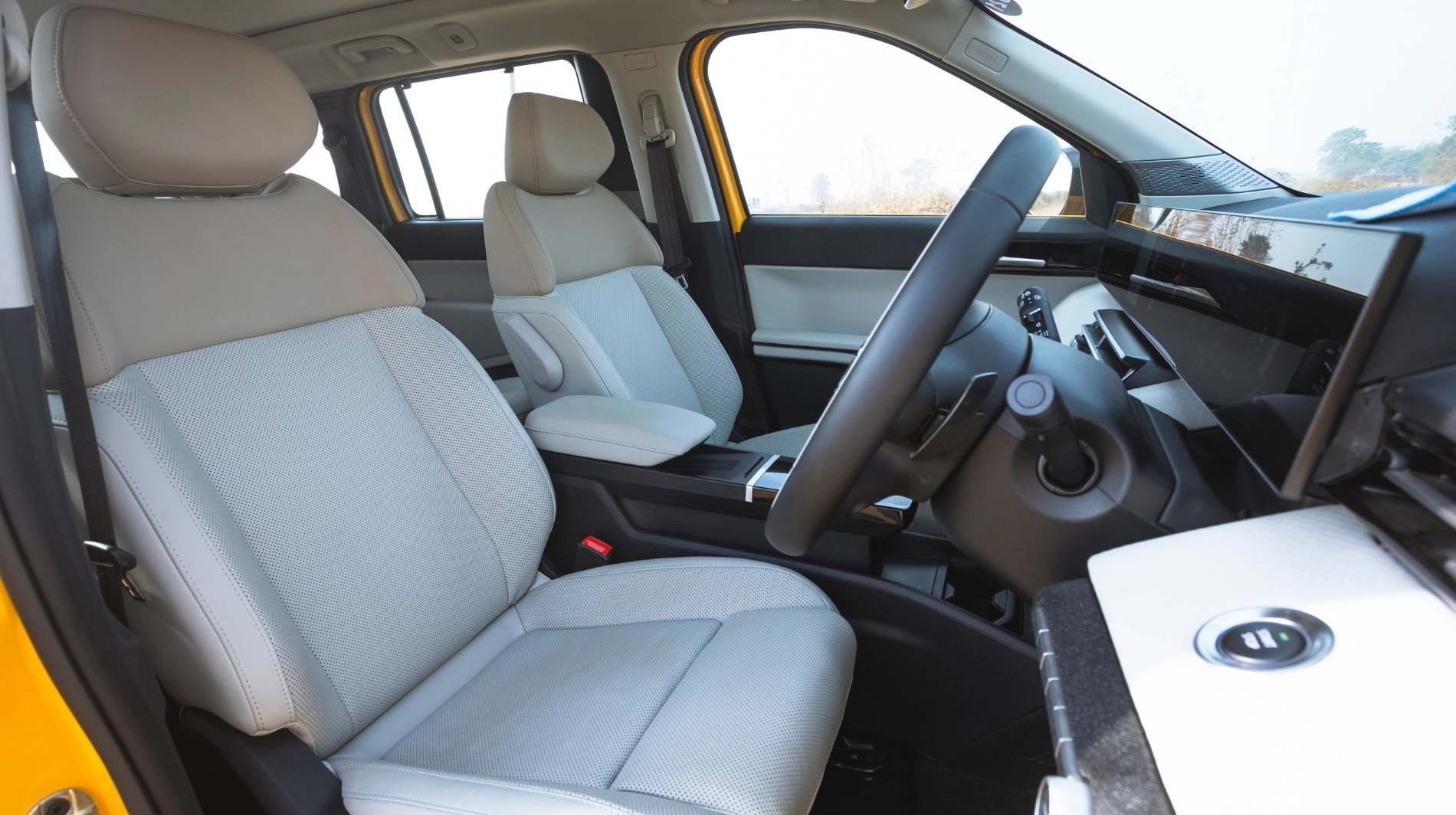
The seats are a high point. The driver gets an electric adjustment with memory for three positions and both front seats are ventilated. The cushion is multilayered with an initial softness that transitions into firmer support for long runs. A thigh support extender for the driver helps on longer trips and takes some load off the lower back, although a lumbar adjustment would have completed the package. The rear bench has generous width and the Sierra’s long wheelbase is obvious in the leg room, knee room and under thigh support. The floor is relatively flat, which means three adults can ride for extended stints without feeling cramped. The rear bench reclines in two steps, which changes the angle modestly but usefully. Practical touches such as fast charging Type C ports, a media port, clever storage in door bins and a slot for an umbrella show that the designers were thinking about daily life rather than just showrooms. The panoramic roof is one of the largest in the class at over 1.5 metres long, and it floods the cabin with light. Combine that with the sunshades down, and the Sierra feels open and airy in a way few rivals can match.
The boot is a family-friendly 622-litres, which swallows a week-long trip’s worth of luggage with room to spare. The spare wheel is housed under the body and lowered with a compact manual winch, so you do not have to unload cargo to access it. A JBL subwoofer sits neatly tucked to one side and a parcel tray keeps things neat with smart storage.
Sound, connectivity and packaging
Tata has taken sound seriously. The Sierra comes with Dolby Atmos hardware tuned by JBL Black and the demo makes it clear why this matters. The system’s three-dimensional staging and clarity are impressive for the segment. The audio demo highlighted how precise the placement of instruments can be and how deep the low end runs when required.
Connectivity features include over-the-air updates and connected services such as remote lock and cabin pre-cooling. The Sierra also comes with a full suite of ADAS that we recognise from Tata’s other models. Level two features, such as adaptive cruise control, lane assist, blind spot warning and 360 degree cameras are standard in intent and in hardware.
Powertrains and mechanicals
What is the backbone of the new Sierra? Tata’s new ARGOS platform, which has been engineered for ICE today and is scalable for electrification and future AWD applications. It gives the Sierra a wider track, longer wheelbase and a stiffer structure, which you begin to appreciate once you start driving. For this launch, Tata has chosen to lead with internal combustion engines and to follow later with an EV. The headline petrol is a 1.5-litre turbo that produces roughly 158bhp and 255 Nm. The diesel is a 1.5-litre unit shared with the Cuvv, but in the Sierra tune does around 116bhp and 280Nm. There are gearbox options, including a six-speed manual and a torque-converter six-speed automatic in select variants. There is also a dual-clutch automatic paired with the Naturally Aspirated engine trims, though the drive lineup focused on the petrol and diesel turbos. All available only in a Front Wheel Drive layout, while the first AWD variants have been confirmed for 2027.
Press the starter, and the new Sierra makes an immediate case for being more refined than what many expect from Tata’s older engines. Idle is smooth and cabin isolation is convincing. NVH levels are well contained in both the petrol and diesel cars. The diesel is predictably a little more present under heavy throttle, but it is much more civilised than diesels of a decade ago.
Throttle response is measured. The petrol does not feel dramatically more urgent than you might expect from a modern 1.5-turbo, but the transmission tends to rev a little more eagerly before settling on the right gear. In regular city driving, the setup feels relaxed and able. When you really demand acceleration, the turbo builds progressively and delivers usable power for overtakes without drama.
The diesel sits more comfortably in long-distance use. It carries that low and mid-range shove that makes highway progress effortless once you are in the meat of the rev range. There is turbo lag at low revs, but it is predictable and easy to manage. Expect the diesel to be the choice of those who prefer long highway trips and heavy luggage.
Fuel efficiency on the instrument cluster was indicating 8.0kmpl, irrespective of how hard or economically we drove it. A glitch that might be resolved soon.
Design
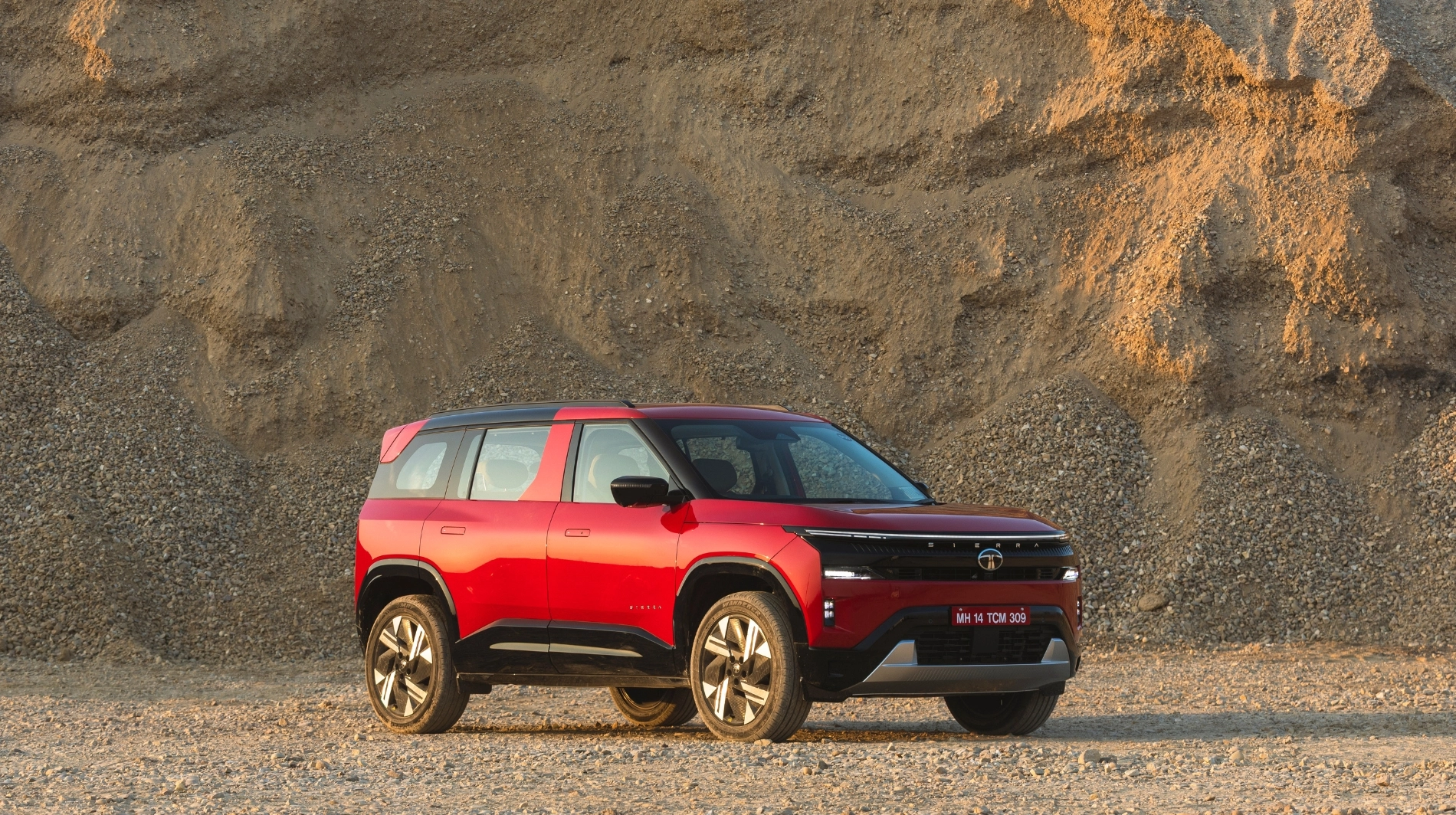
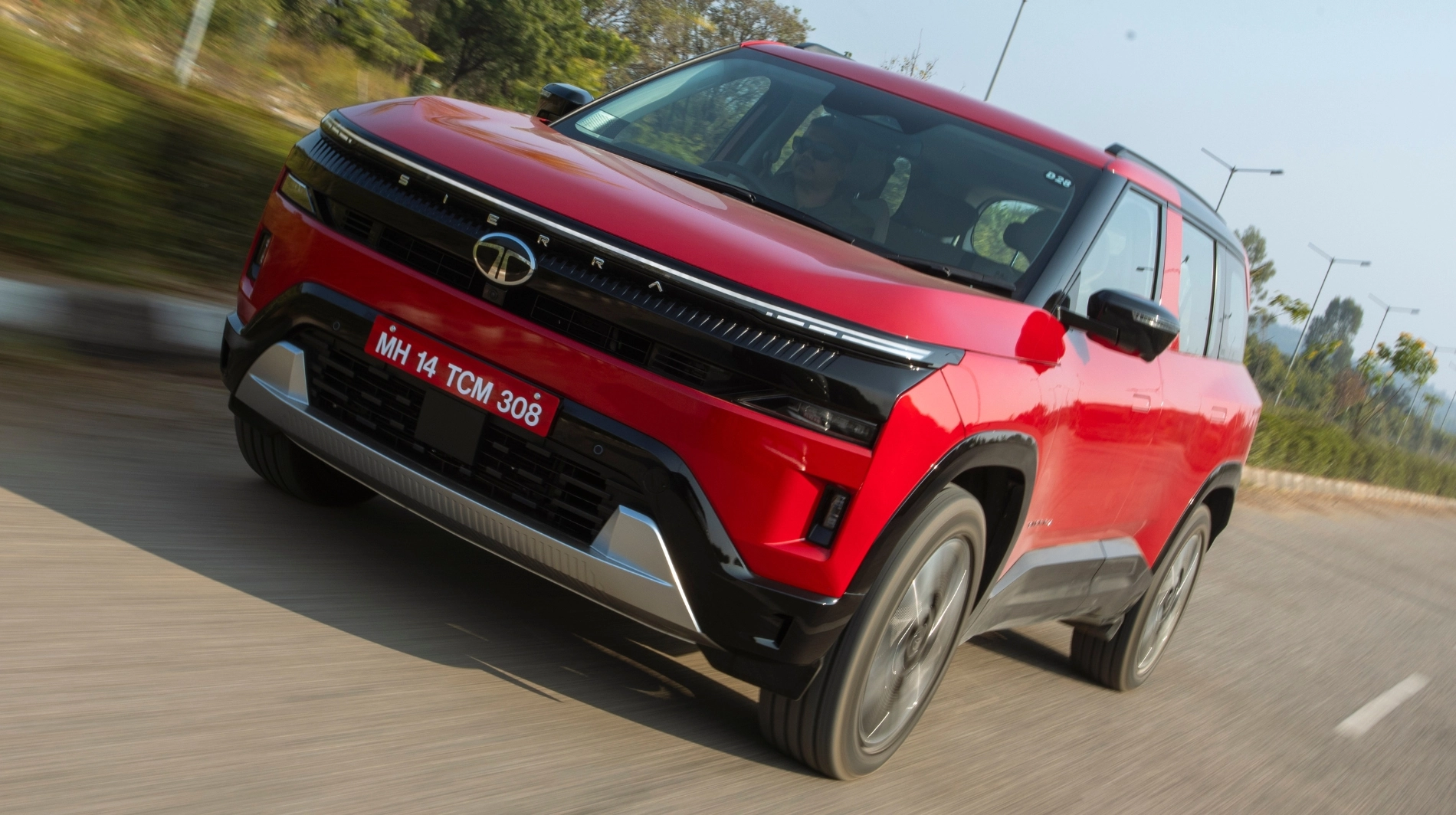
Walk around it and the conversation between past and present is obvious without being camp. The face reads as a modern reinterpretation of that boxy original. A large rectangular mask in deep gloss black dominates the front and contains a neat Sierra script. The headlamps sit lower in separate pods, which keeps the nose tidy. There is a full-width LED daytime running lamp that ties the elements together and gives the car a clear identity in traffic. According to the Tata designers, if the SUV had no badging whatsoever, it would still be recognised as a Sierra, and I do agree with them.
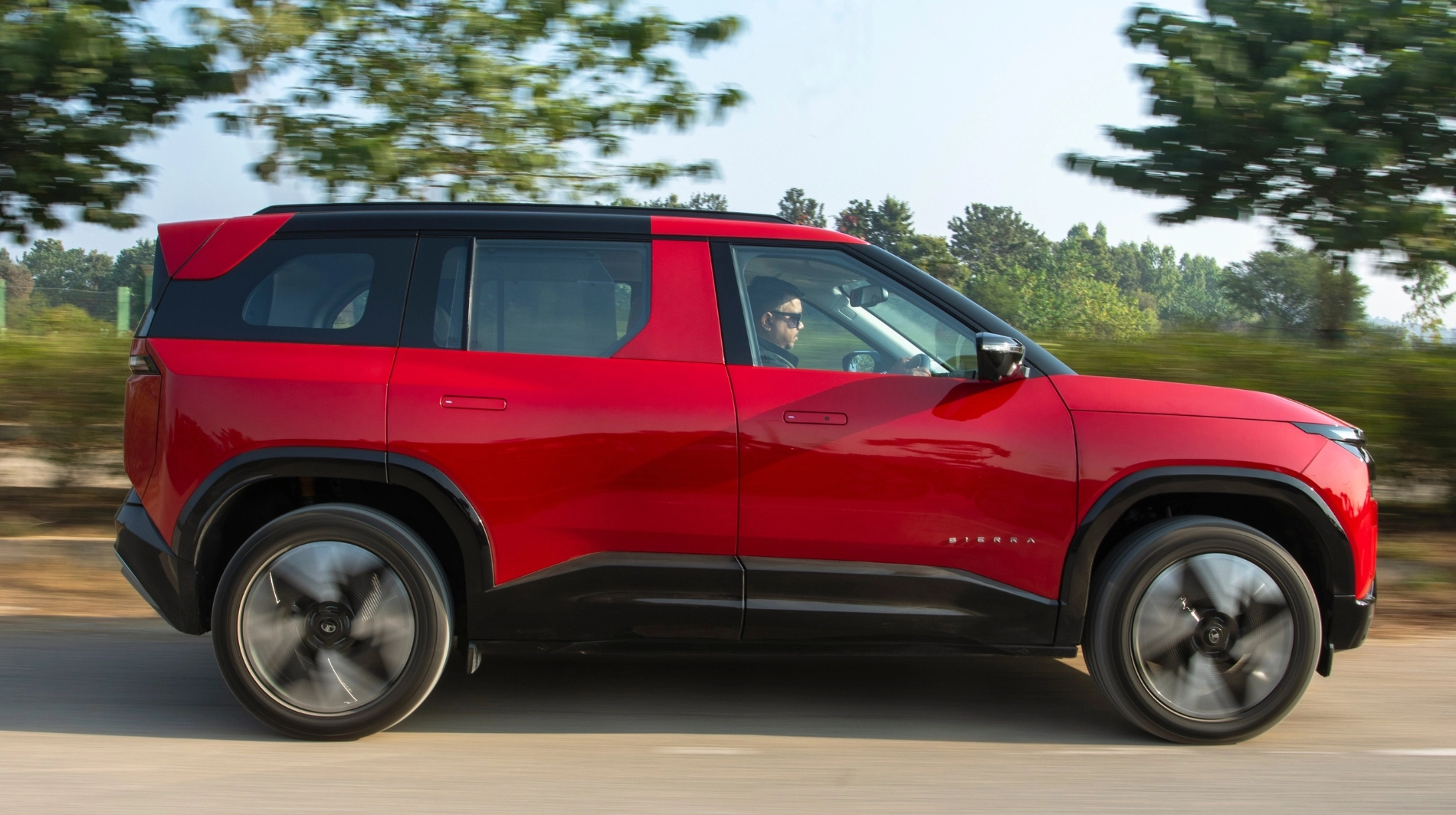
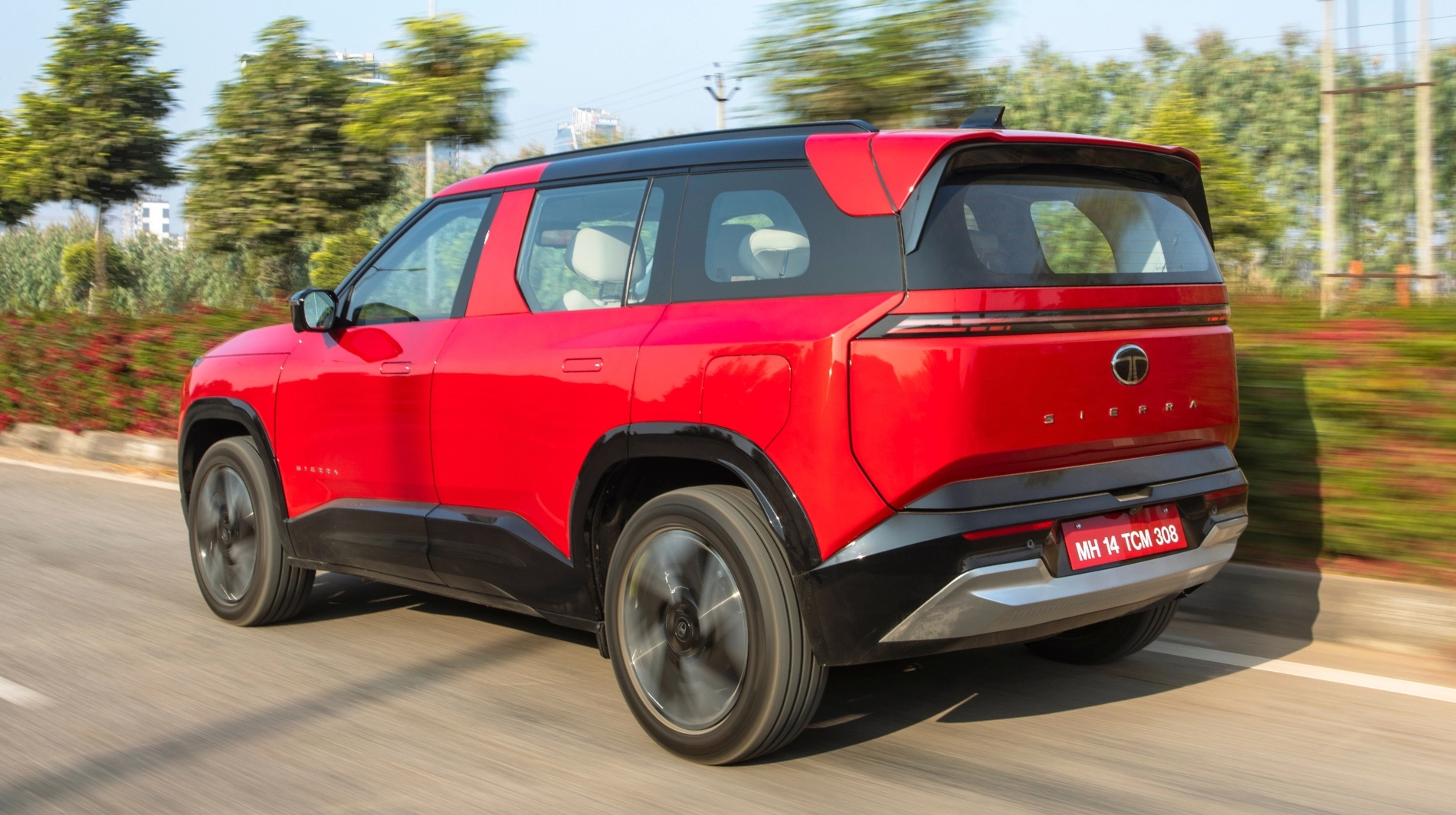
The profile is where the Sierra makes its statement. Designers have recreated the wrap over the glasshouse with a black painted panel that mimics the original sweep. It is not a slavish copy but an intelligent visual cue. A thick B pillar remains part of the silhouette and feels deliberate rather than awkward, very well executed. The 19-inch alloys fill the arches and deliver an unexpectedly planted look. The door handles are flush with integrated illumination, which helps the side stay clean. At the rear, the lines are straight and simple. The tailgate wraps slightly over the sides to keep joints tidy. The concealed rear wiper and the upright lamps give the back a composed face. This is an SUV that wears restraint well.