
Spacious, feature-rich and genuinely capable off-road, making it one of the most well-rounded SUVs in the segment.

Lacks the brand trust and some intuitive usability touches that rivals, such as the Fortuner, have perfected over time.
In India, if you want to make a statement, you don’t buy just any SUV. You get yourself a Toyota Fortuner. Over the years, it has moved beyond being just a product and has become the default answer in this segment. It represents reliability, presence and a certain assurance that comes from a reputation built steadily over time. And that is precisely what makes this space so difficult to break into. Because when one car becomes the benchmark, everything else is judged not just on what it does, but on how convincingly it can make you look away from it.
The MG Majestor enters this segment fully aware of that challenge. It does not attempt to reinvent the formula. Instead, it builds on it. The approach is straightforward: offer more. More of everything! More size, more presence, more features, more technology and more importantly, retain the kind of mechanical credibility that this class of full-size SUV demands.
To begin with, the Majestor is based on the MG Gloster. That means it retains a ladder-frame chassis, proper four-wheel-drive hardware and a diesel engine tuned for torque rather than outright performance. The fundamentals, therefore, are in place. What MG has done is take that base and elevate it in terms of design, comfort and overall appeal.
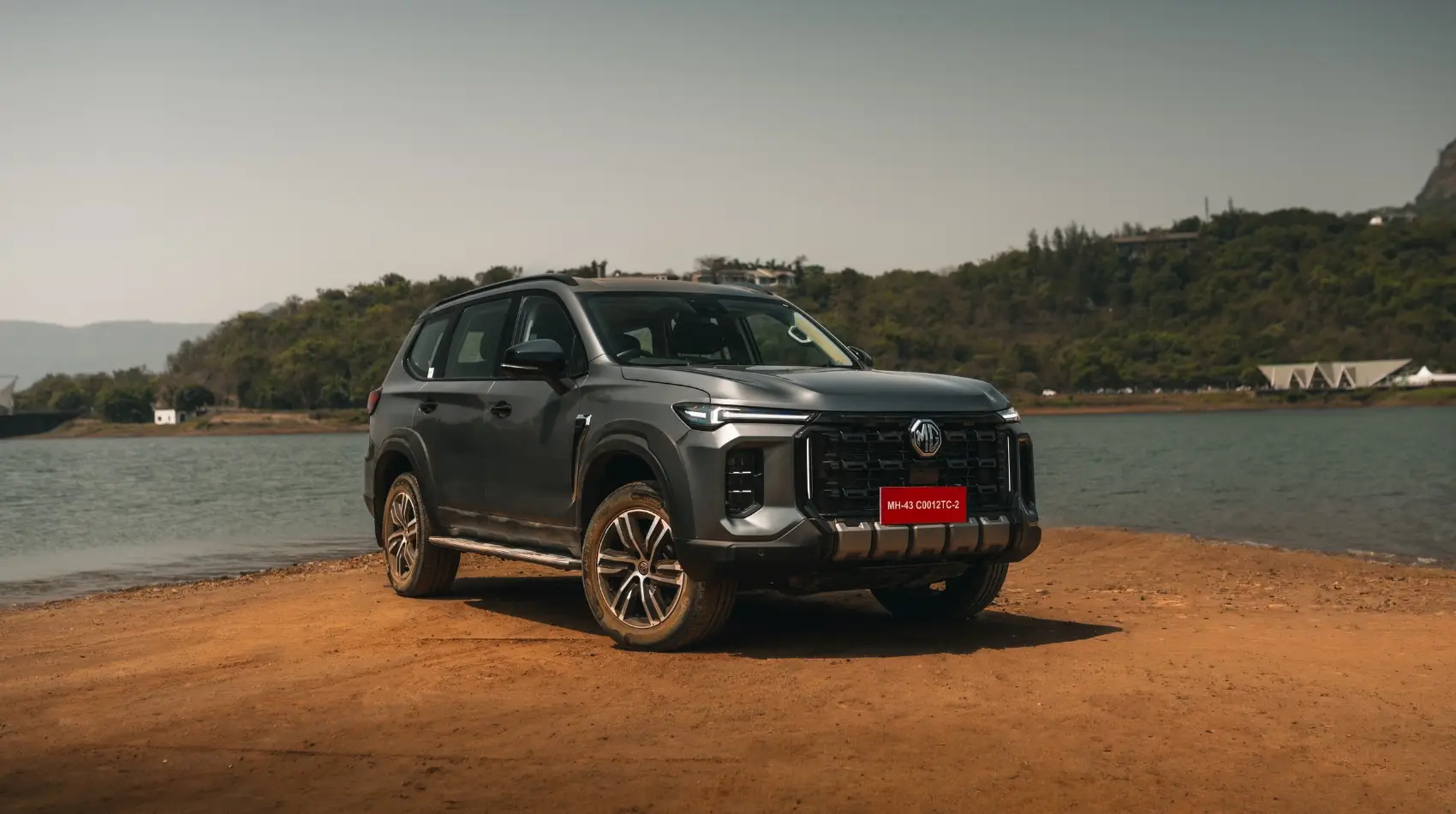
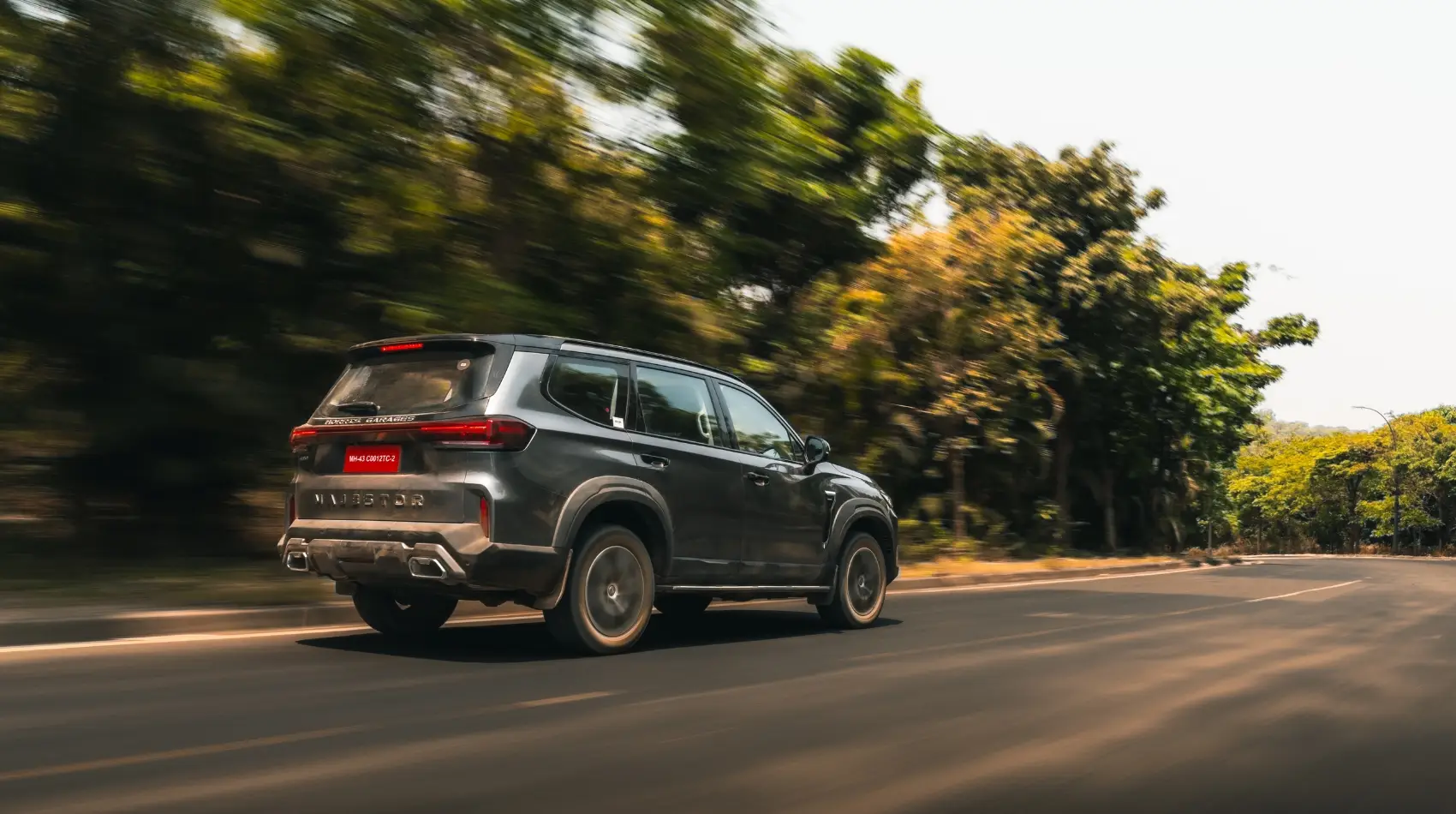
Size is the Majestor’s calling card. At over five metres long, more than two metres wide and nearly 1.9 metres tall, it is the largest SUV in this set, out-sizing the Jeep Meridian, Skoda Kodiaq, Volkswagen Tayron R-Line and even the Toyota Fortuner. It has real presence. Park it alongside a Fortuner and the Toyota, long considered imposing, suddenly appears skinny. The Majestor looks broader, taller, and more assertive, which immediately gives it a visual advantage.
The design reinforces this. The front is dominated by a large grille, referred to as the Mosaic Matrix grille, flanked by vertically stacked LED elements that MG calls ‘Dragon Eye’ daytime running lamps. It is a bold treatment and, in the context of the car’s size, it works. The lighting setup is not just about aesthetics either, with a tri-beam arrangement designed to improve visibility at night, particularly at highway speeds.
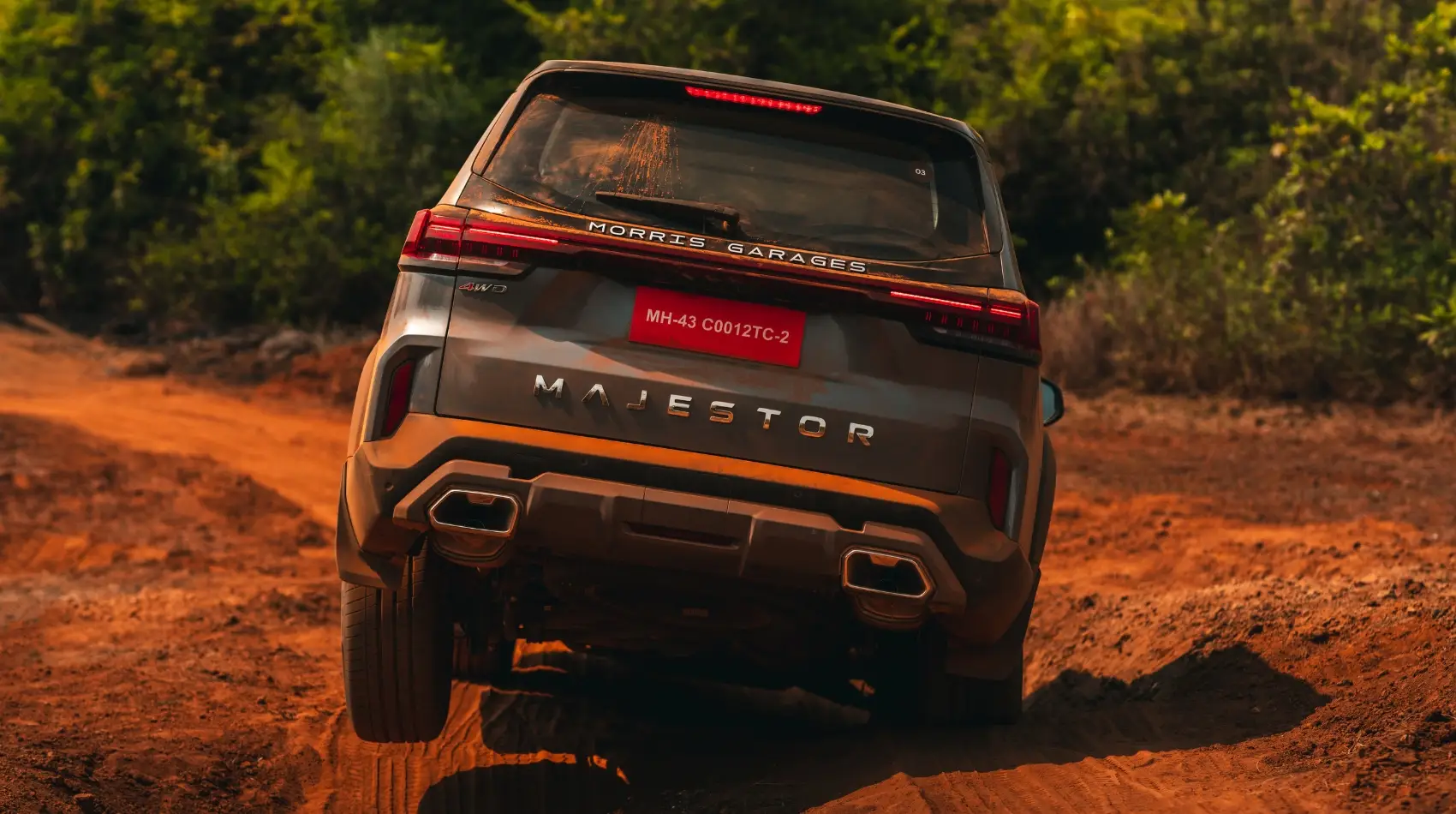
Move to the side and the upright stance, large glasshouse and pronounced wheel arches emphasise its SUV credentials. The 19-inch dual-tone alloy wheels fill out the arches well and add to the overall stance. At the rear, connected LED tail lamps and twin exhaust outlets complete the look. There is a clear attempt to balance modern design elements with ruggedness, resulting in a vehicle that looks substantial and contemporary.
One detail, however, does feel slightly overdone. The large ‘MAJESTOR’ lettering across the tailgate detracts from what is otherwise a well-resolved design, adding a touch of visual clutter where restraint might have worked better.
Step inside and the focus shifts to comfort. You sit high, as expected from a ladder-frame SUV, and visibility is excellent. This is one of the inherent strengths of this architecture, and it makes a noticeable difference in everyday driving. You have a clear view of the road ahead and a good sense of where the car’s extremities lie, which helps when manoeuvring something of this size.
The driver’s seat offers multiple adjustments, including electrical controls, though it does not go as low as some might prefer. It is not a significant drawback, but a slightly lower seating position would have further enhanced the driving experience. Once you are settled in, however, the cabin proves to be a comfortable and well-appointed place to spend time.
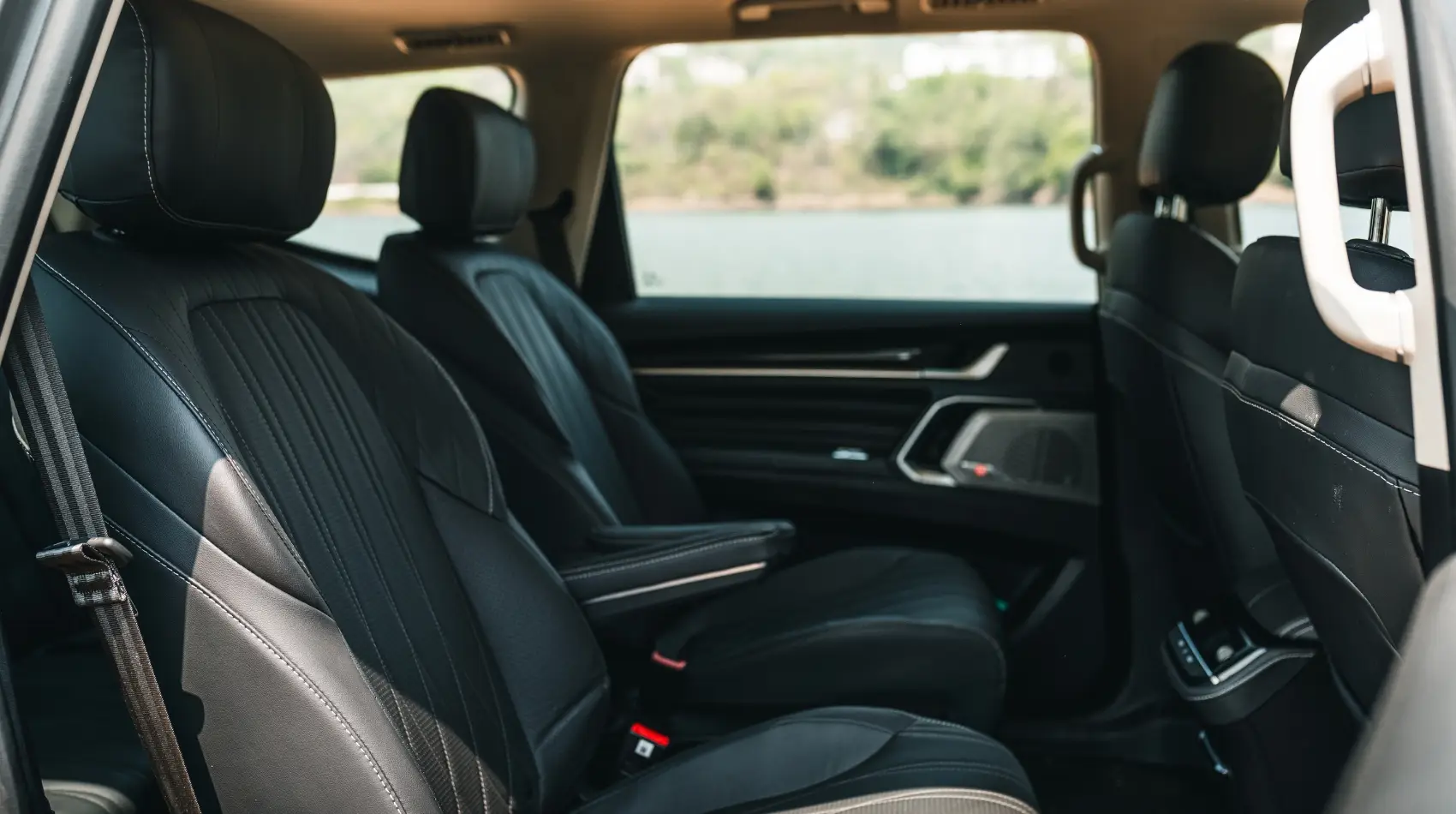
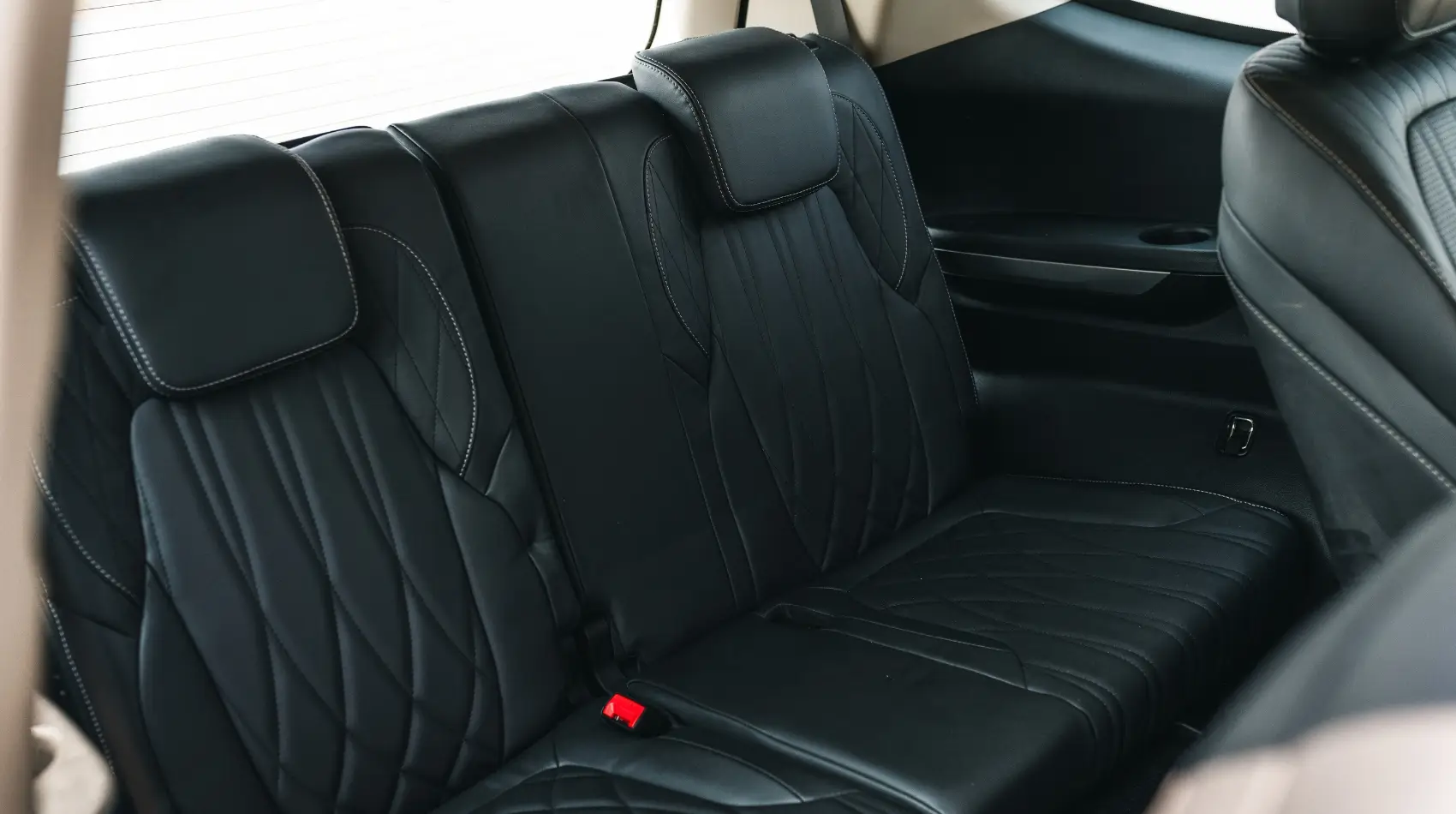
Material quality is a step forward. There is good attention to detail in the stitching across the seats and door pads, and the use of carbon fibre-look inserts adds a layer of visual interest. The overall fit and finish feel appropriate for the segment, and there is a sense that MG has put effort into making the cabin feel premium.
Space is one of the Majestor’s strongest attributes. The second row, particularly in the captain seat configuration, is genuinely comfortable. There is ample legroom and headroom, and the ability to slide and recline the seats adds to flexibility. The third row is also usable, which is not always the case in this segment, making the Majestor a practical choice for those who need three rows regularly.
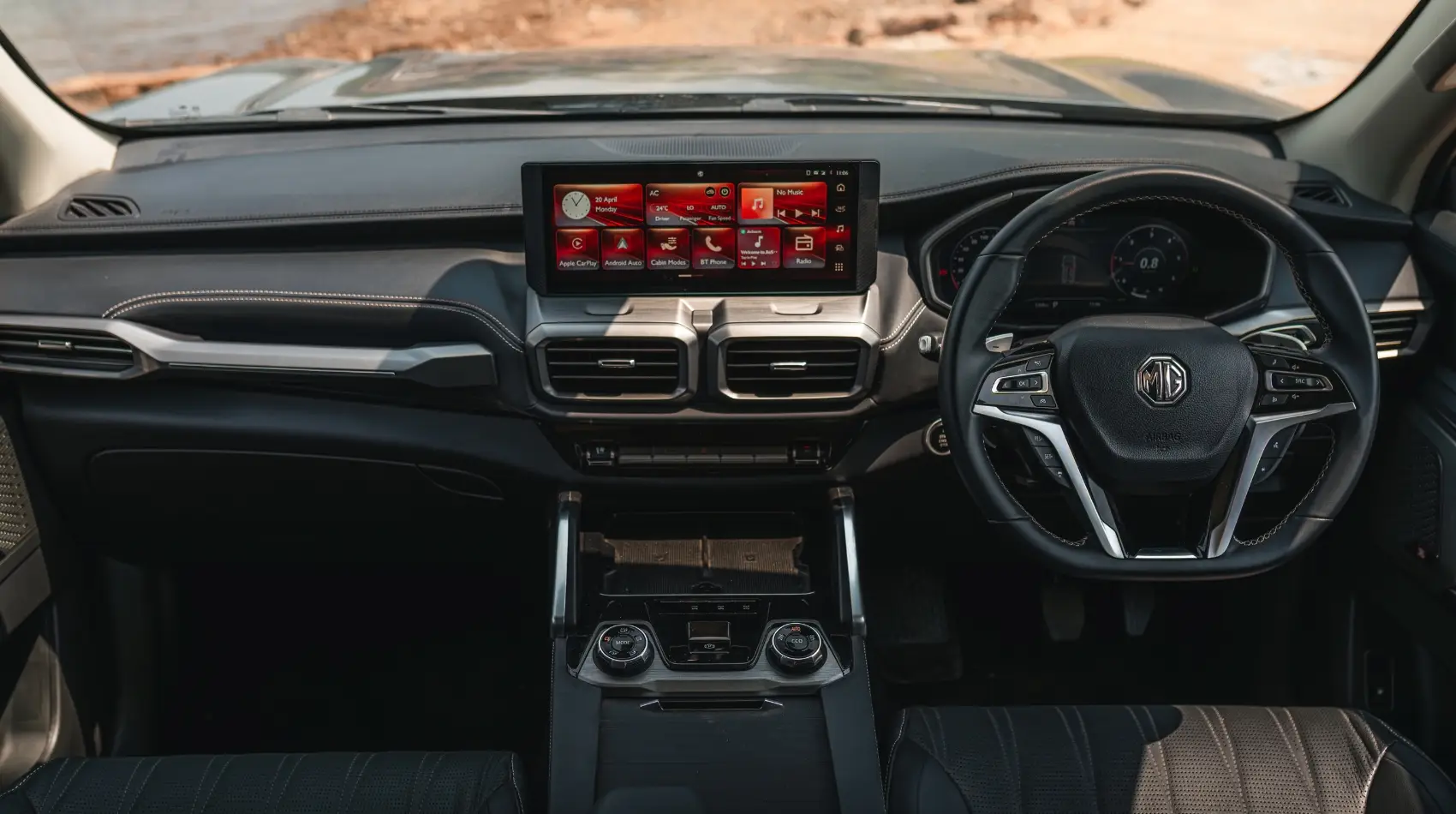
The feature list is extensive. You get ventilated front seats with multi-mode massage functions, a large panoramic sunroof, ambient lighting, wireless Android Auto and Apple CarPlay and a 12-speaker JBL sound system. There is also a three-zone climate control system, along with a 220V power socket for the second row, which adds a useful layer of practicality for longer journeys. Up front, two wireless charging pads work well and add to everyday convenience. The cabin, overall, feels well-equipped and in line with current expectations.
However, the execution is not without its limitations. A number of key functions are integrated into the touchscreen interface. Seat ventilation, for instance, is accessed through the climate control menu, and the massage function is buried deeper within the system settings. While these features are welcome, accessing them is not always intuitive, particularly while driving.
The infotainment system itself, while feature-rich, is not the quickest to respond. There is a slight lag at times, which becomes noticeable when you are trying to make quick adjustments. Drive modes and car settings are also integrated into the system in a way that requires attention, and physical controls would have been more practical here.
The sunroof sunshade is another area that could have been better executed. The glass area is large and does enhance the sense of space, but the sunshade is relatively thin. In Indian conditions, where heat management is important, this may affect comfort over longer journeys. Rear passengers also miss out on sunshades for the side windows, which feels like a noticeable omission.
The JBL 12-speaker sound system delivers acceptable performance, but it does not quite match expectations for a cabin of this size. The large interior volume makes it difficult to achieve the kind of depth and bass one would expect, and the result is a system that feels adequate rather than impressive.
Under the bonnet, the Majestor is powered by a 2.0-litre twin-turbo diesel engine producing around 212bhp and close to 480Nm of torque, paired with an 8-speed automatic transmission. On the road, the engine delivers performance that is consistent with its purpose. It is not particularly quick, but it offers sufficient torque to make overtakes without stress and to maintain a comfortable cruising speed on the highway.
Refinement is good in most everyday conditions. At typical city speeds and under normal driving, the engine remains quiet and unobtrusive, with minimal noise entering the cabin. It is only when pushed harder, particularly beyond 3000rpm or when driving off the beaten path, that the diesel character becomes more noticeable. For the majority of use cases, however, the cabin remains well insulated.
The suspension setup is tuned for comfort, and that is evident from the way the Majestor deals with road imperfections. It absorbs bumps and undulations, with occasional thuds, making it well-suited for long-distance travel. The overall driving experience is best described as relaxed.
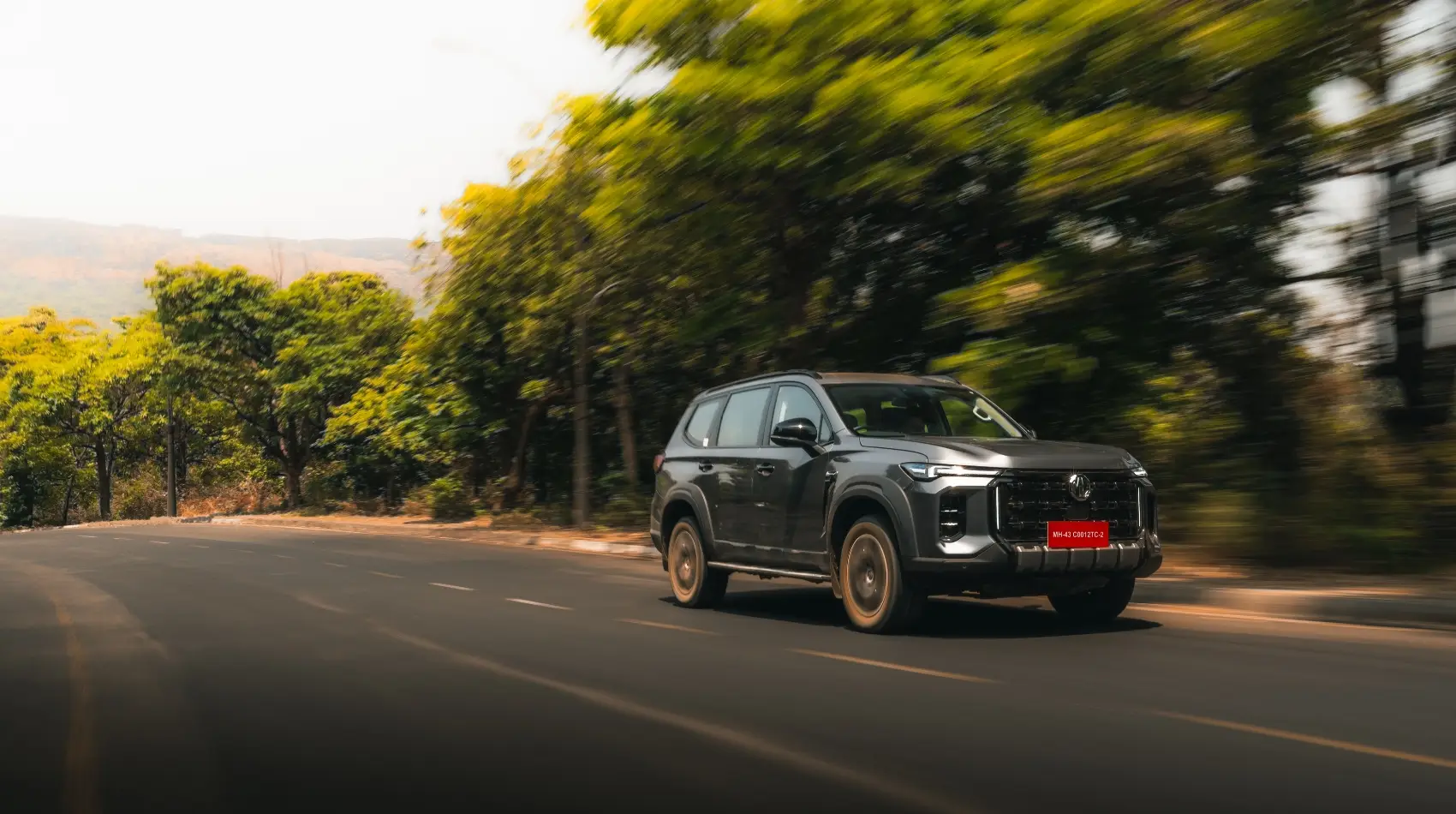
Despite its size, the Majestor is surprisingly easy to drive. The steering is light, visibility is good and the 360-degree camera system provides additional confidence when manoeuvring in tight spaces. Around town, it feels far less cumbersome than its dimensions would suggest.
On the highway, it settles into a comfortable rhythm. It feels stable, composed and capable of covering long distances without effort. It is not an engaging car to drive in the conventional sense, but that is not its primary focus.
In corners, body roll is present, as expected from a vehicle of this size and construction, but it is reasonably controlled. It does not feel unwieldy, and there is enough composure to inspire confidence. However, it is not a car you would choose for enthusiastic driving.
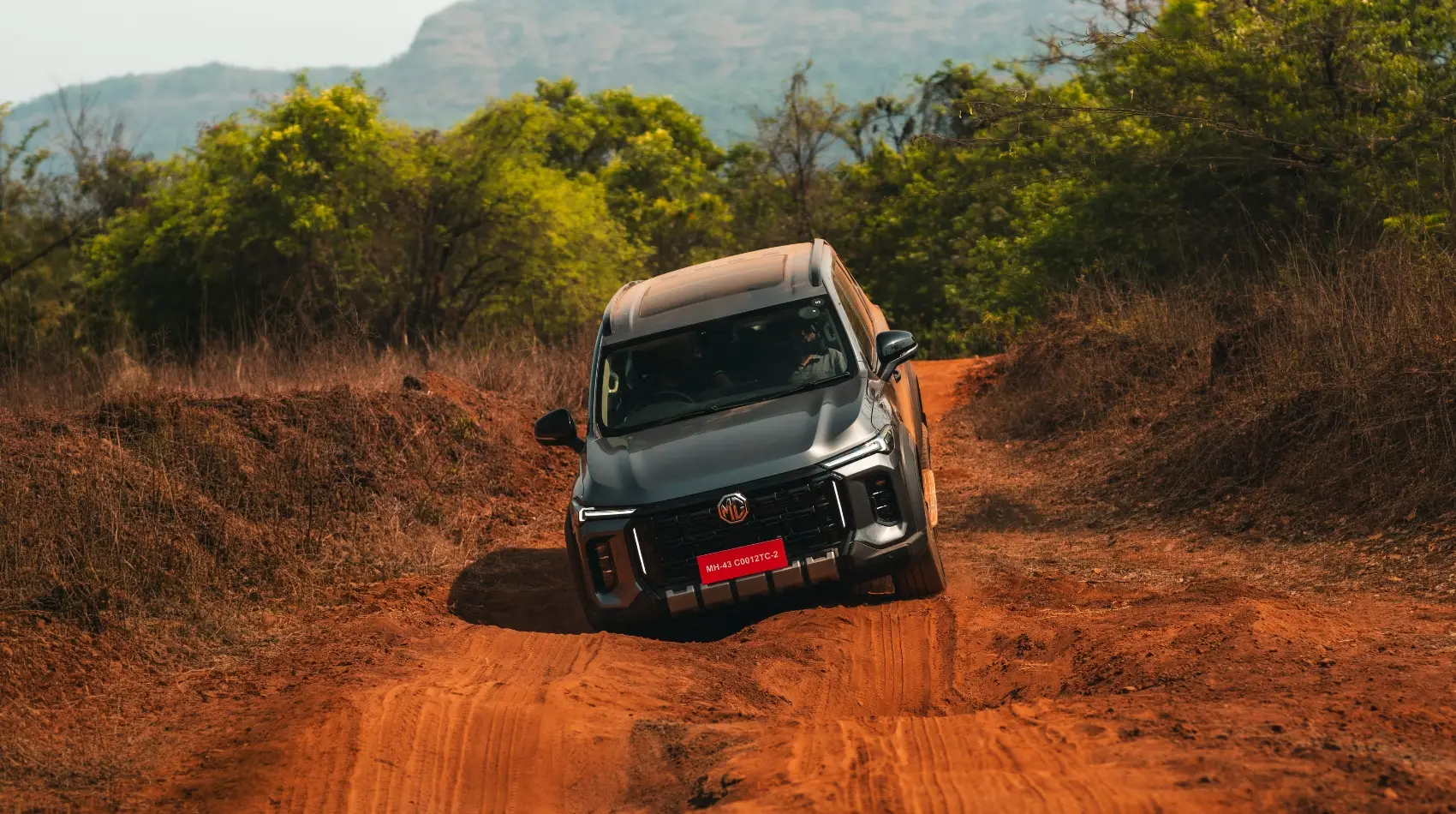
Where the Majestor truly distinguishes itself is off the road. It comes equipped with a proper four-wheel-drive system, low-range gearing, and three differential locks. This includes a centre, rear and front differential lock, which is a significant advantage in challenging conditions.
The system allows for progressive engagement depending on the terrain. In standard conditions, it operates in two-wheel drive or automatic mode. As the terrain becomes more demanding, the centre differential can be locked to distribute torque evenly between the front and rear axles. Further locking of the rear and front differentials ensures equal torque distribution across all wheels, significantly improving traction.
There is also a crawl control system, which manages throttle and braking inputs at low speeds, allowing the driver to focus on steering. This is particularly useful in technical off-road sections where maintaining consistent control can be difficult.
With strong approach and departure angles and a high water-wading capacity, the Majestor is well equipped for serious off-road use. More importantly, these systems work cohesively, giving the driver a sense of control and confidence in challenging conditions.
This is where the comparison with the Fortuner becomes particularly relevant.
The Fortuner continues to rely on its proven mechanicals and a reputation built over the years. It is dependable, durable and widely trusted. However, it is also beginning to show its age. The interior feels dated, the feature list is not as extensive and the overall experience is more functional than luxurious.
The Majestor, in contrast, offers more in several key areas. It is larger, more feature-rich and more contemporary in its execution. It provides greater comfort, more technology and a stronger sense of modernity. But the Fortuner still holds a significant advantage in terms of brand value and long-term trust. These are factors that weigh heavily in buying decisions in this segment.
If you look purely at what you get, the Majestor comes across as the more modern SUV. It is larger, more feature-rich, more comfortable and significantly more tech-laden than its primary rival. It is also genuinely capable off-road, with hardware that few in this segment can match. The Fortuner still holds its ground in terms of reputation and long-term trust, but in terms of sheer breadth of capability and equipment, the Majestor clearly moves the conversation forward.
The Majestor is also the most complete MG SUV yet. It feels more mature, more premium and far better suited to take on the Fortuner than the Gloster ever was. It does not have the same legacy, but it arguably offers a more rounded experience today. For buyers willing to step away from the obvious choice, this might just be the smarter one.
The decision, ultimately, comes down to priorities. The Majestor does not try to replace the segment leader outright. What it does is present a credible, well-rounded alternative. It offers a combination of comfort, capability and features that is difficult to ignore. And in a segment where the default answer has remained unchanged for years, that in itself is significant.