It’s big on space, heavy on features and now electric. The Tomahawk is MG's attempt to reinvent the Hector formula on a new platform.
8/10
For
Spacious cabin, feature-packed interiors, seven-seat practicality, quiet and refined
Against
Light steering, average performance, ordinary exterior
Remember when MG came to India with the Hector and basically said, “Here’s a big SUV, here’s a massive list of features, and oh, it has Internet too”? It was a fairly audacious way to enter a market where established manufacturers had spent years carefully building their reputations. The Hector was large, well-equipped and tech-heavy, and for a new entrant, that was enough to make MG a name worth paying attention to.
The Hector Tomahawk is MG trying to do something similar again, except the market has moved on considerably since 2019. The Tomahawk sits on the company's new ADAPT platform, a flexible architecture designed to accommodate four different powertrains, and in this guise it is an EV with a 69.2kWh battery, a single front-mounted motor making 204PS and 310Nm, and a claimed MIDC range of 517km. It can be had as a five- or seven-seater, which immediately gives it a slightly different proposition from the crop of electric SUVs that have arrived in India over the last couple of years.
Prices start at ₹19.49 lakh ex-showroom, or ₹13.99 lakh if you opt for MG's Battery-as-a-Service model. Those numbers make the Tomahawk interesting before you've even turned a wheel, but numbers have never really been the Hector's problem. The question is what the car is like underneath all the equipment.
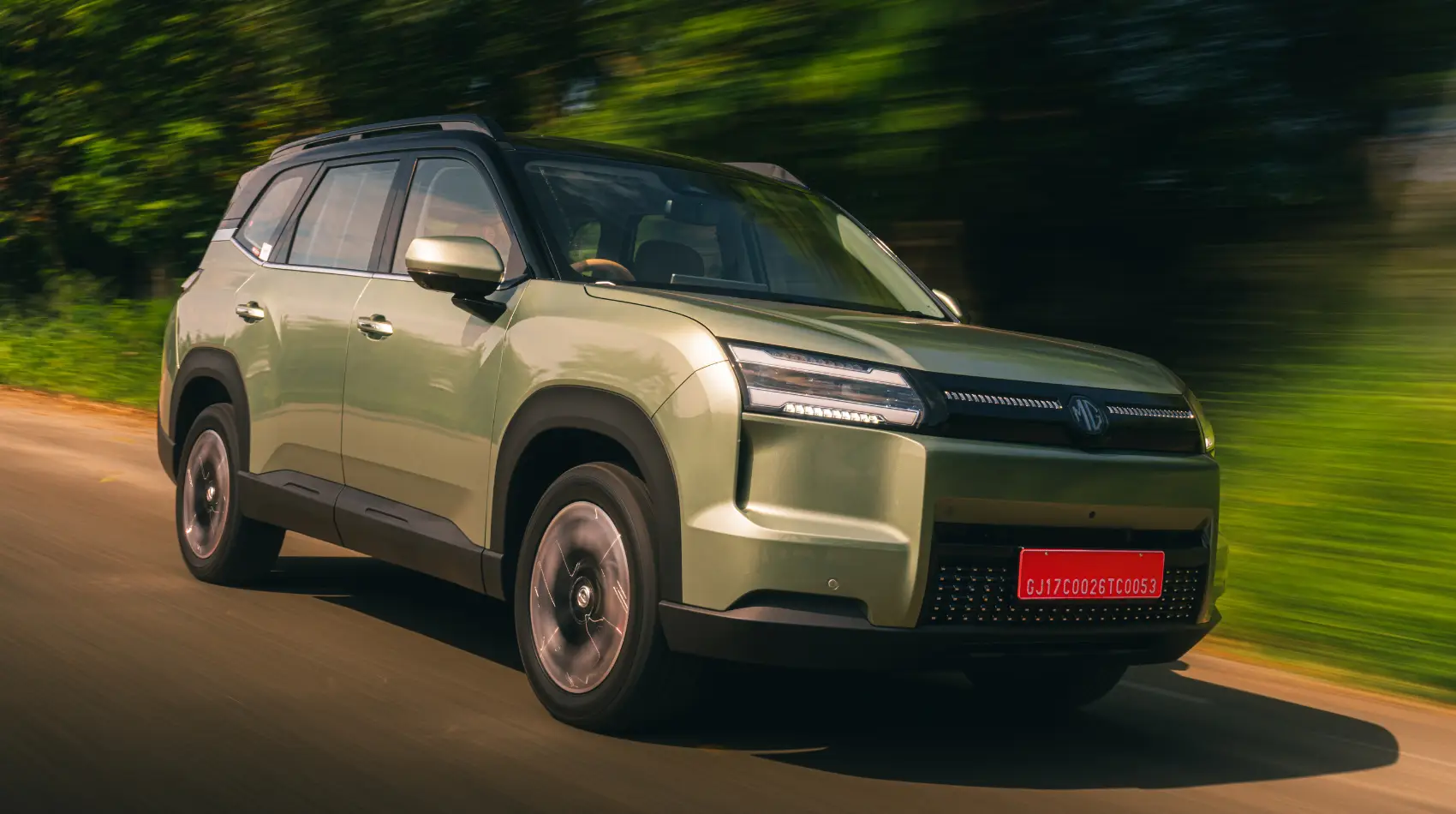
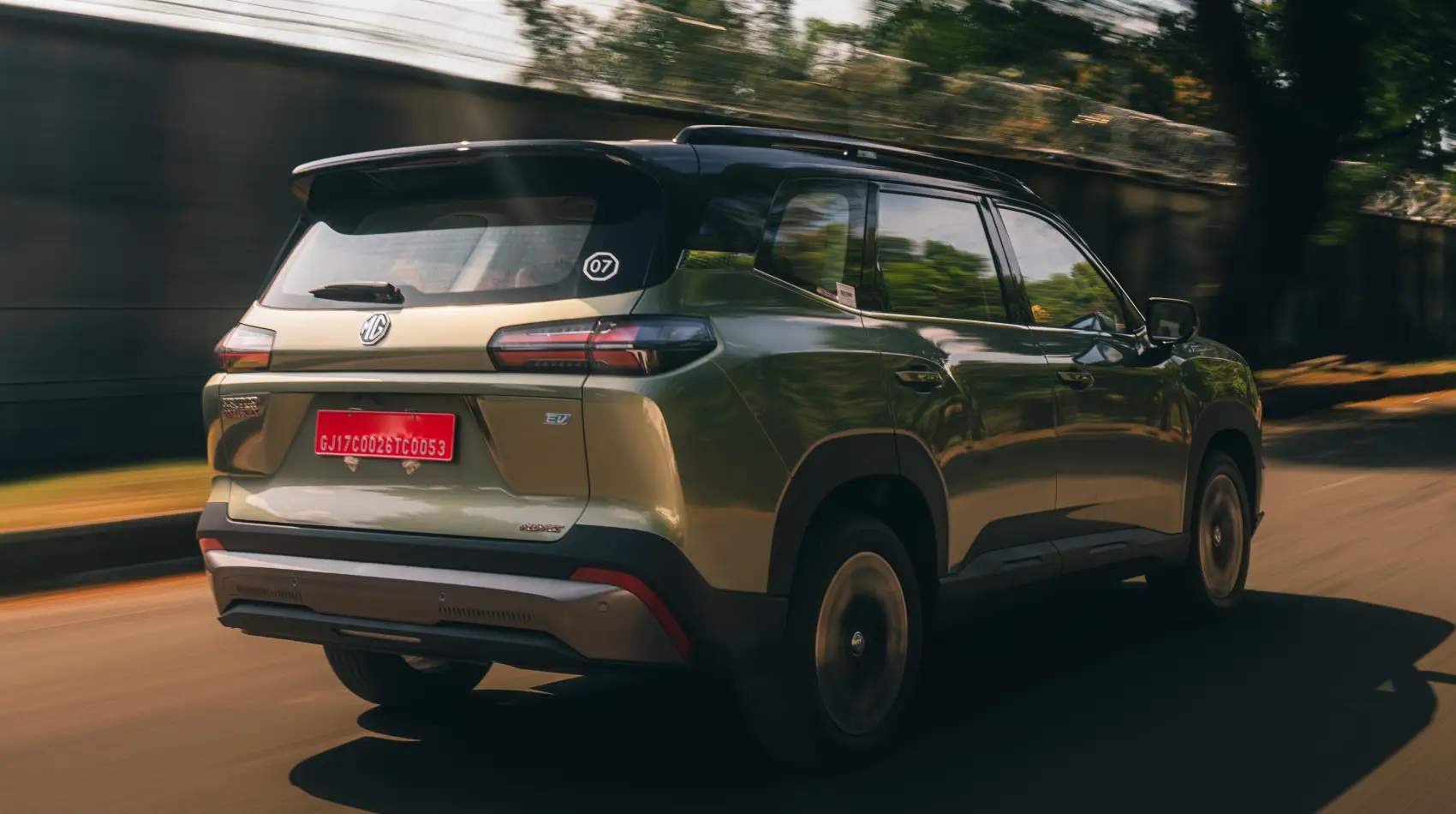
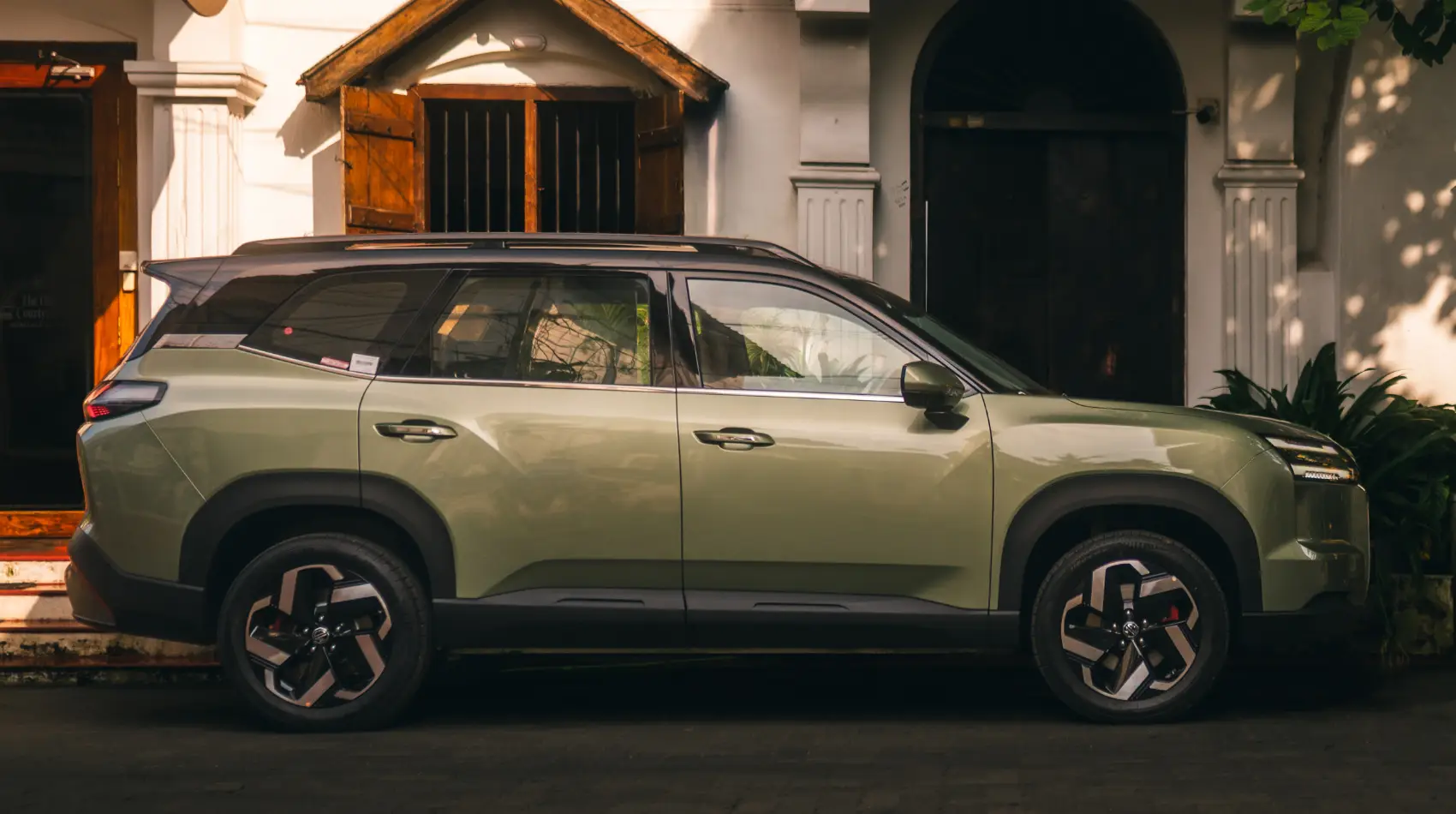
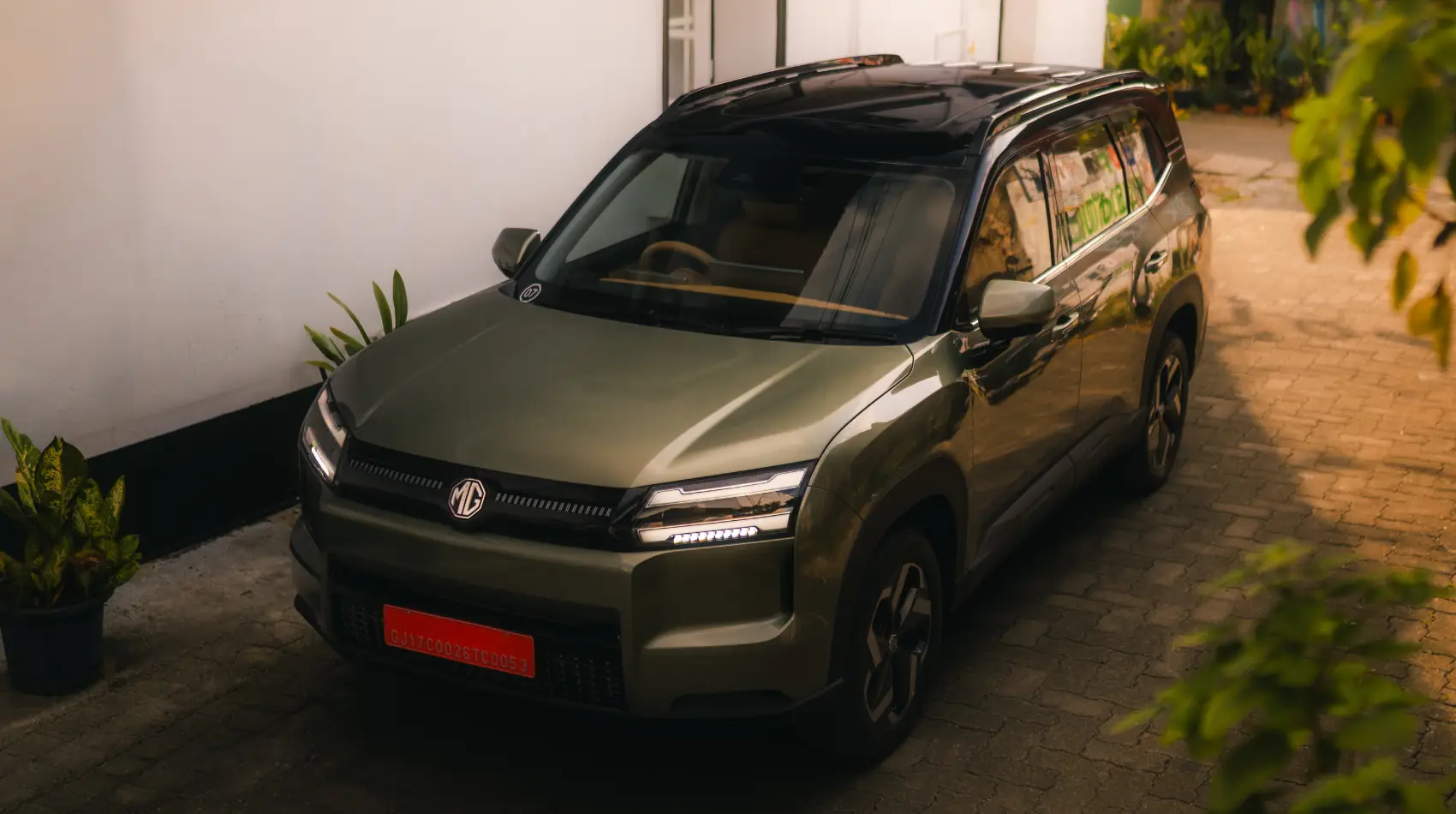
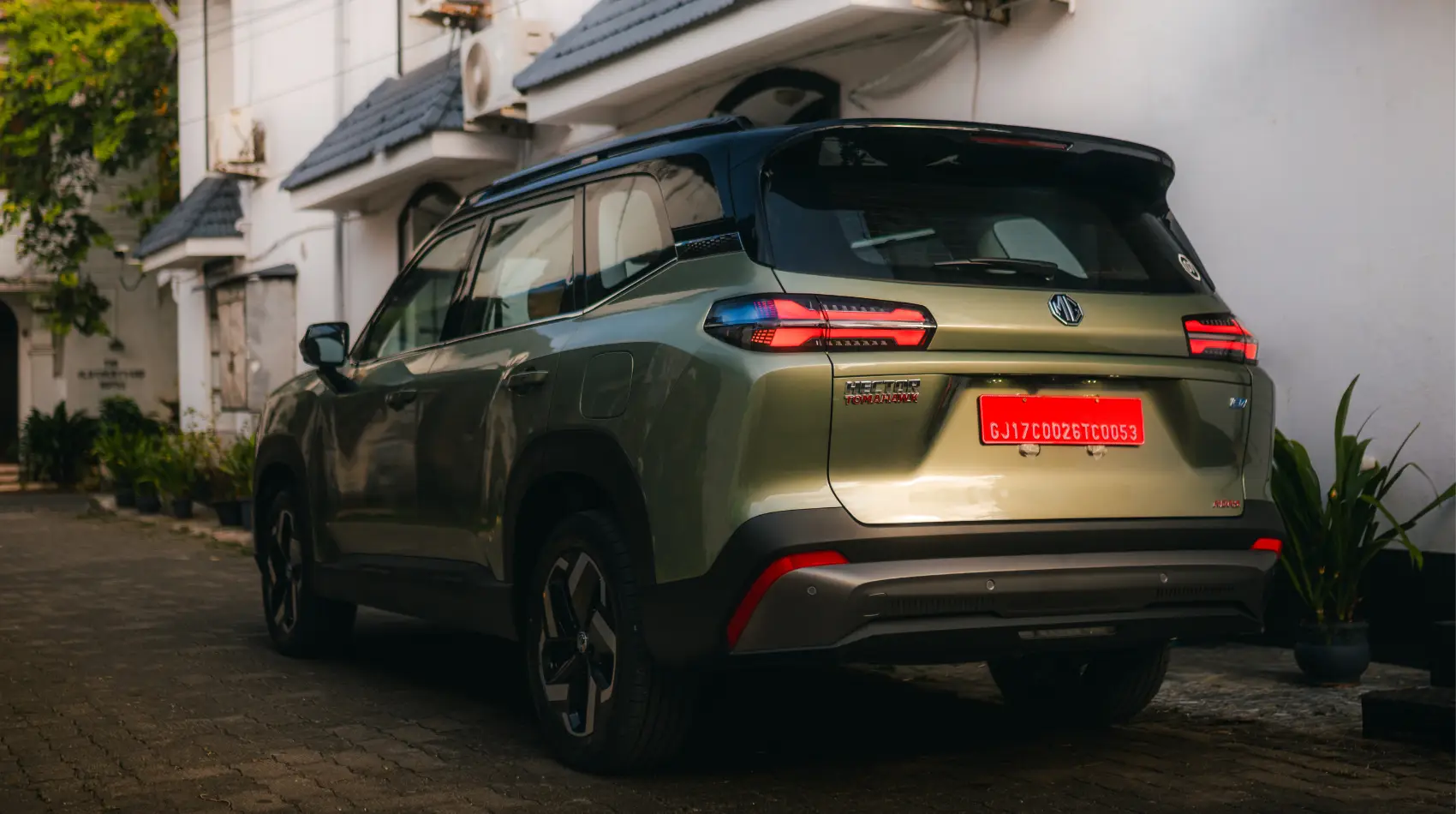
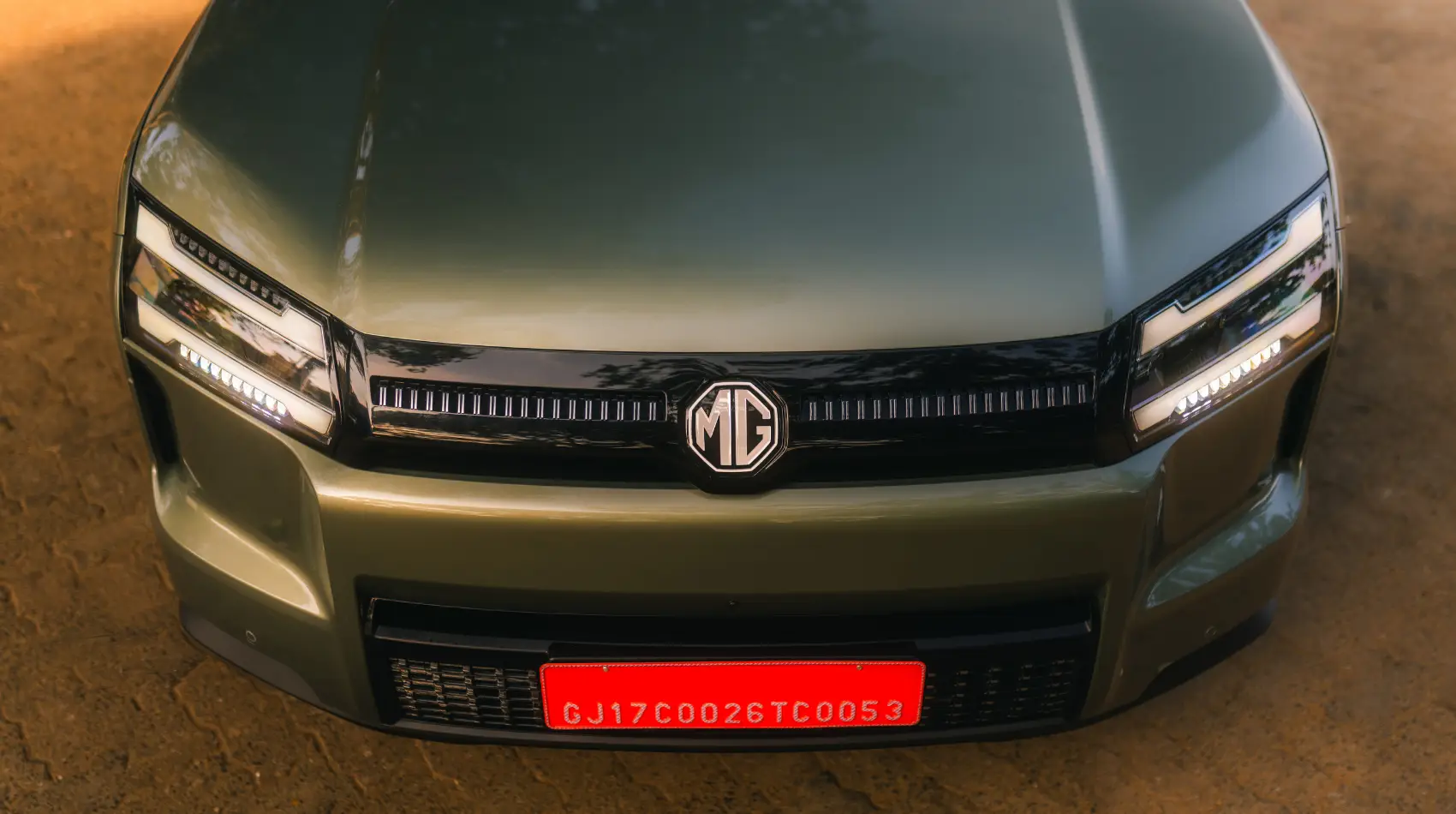
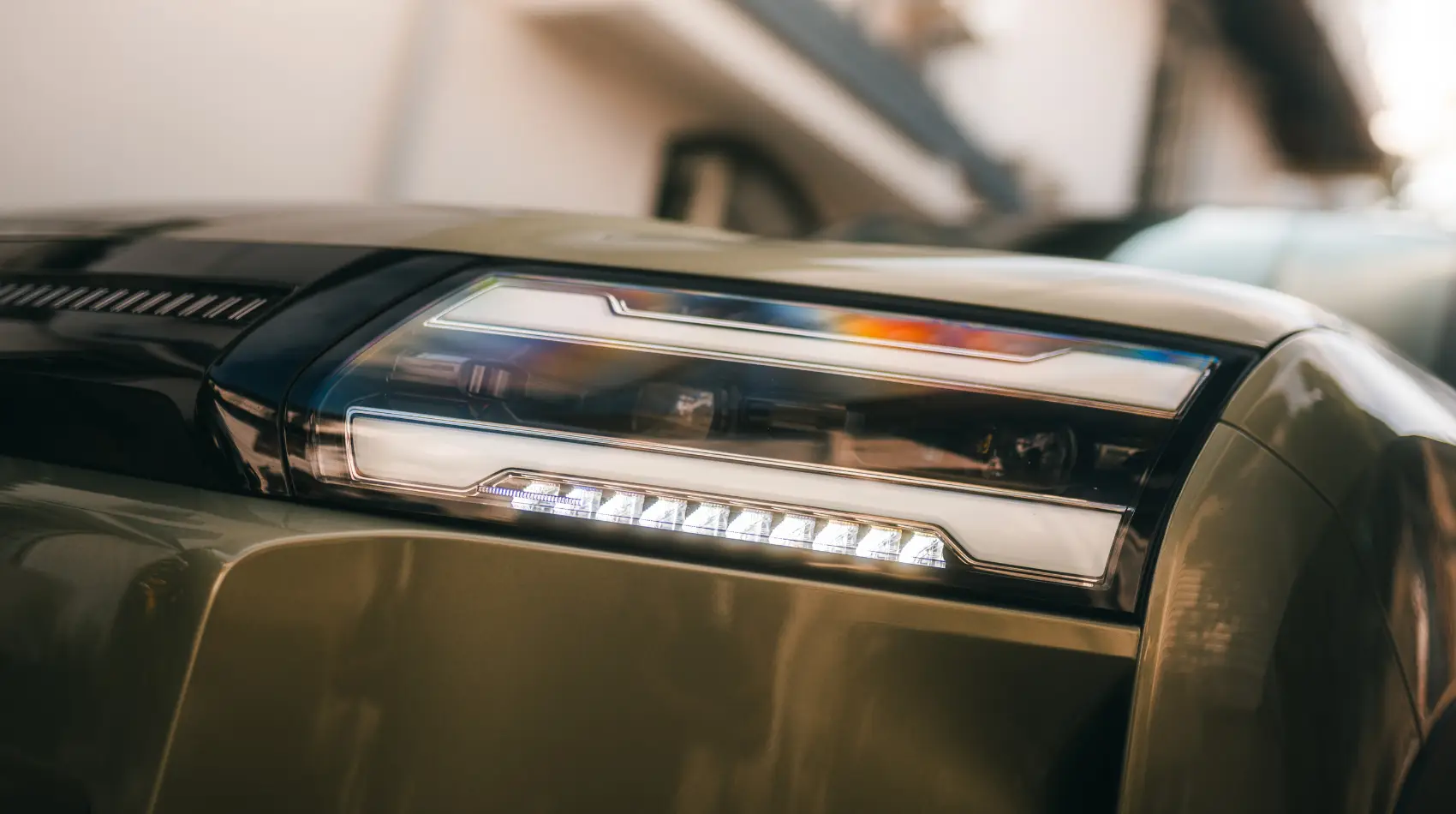
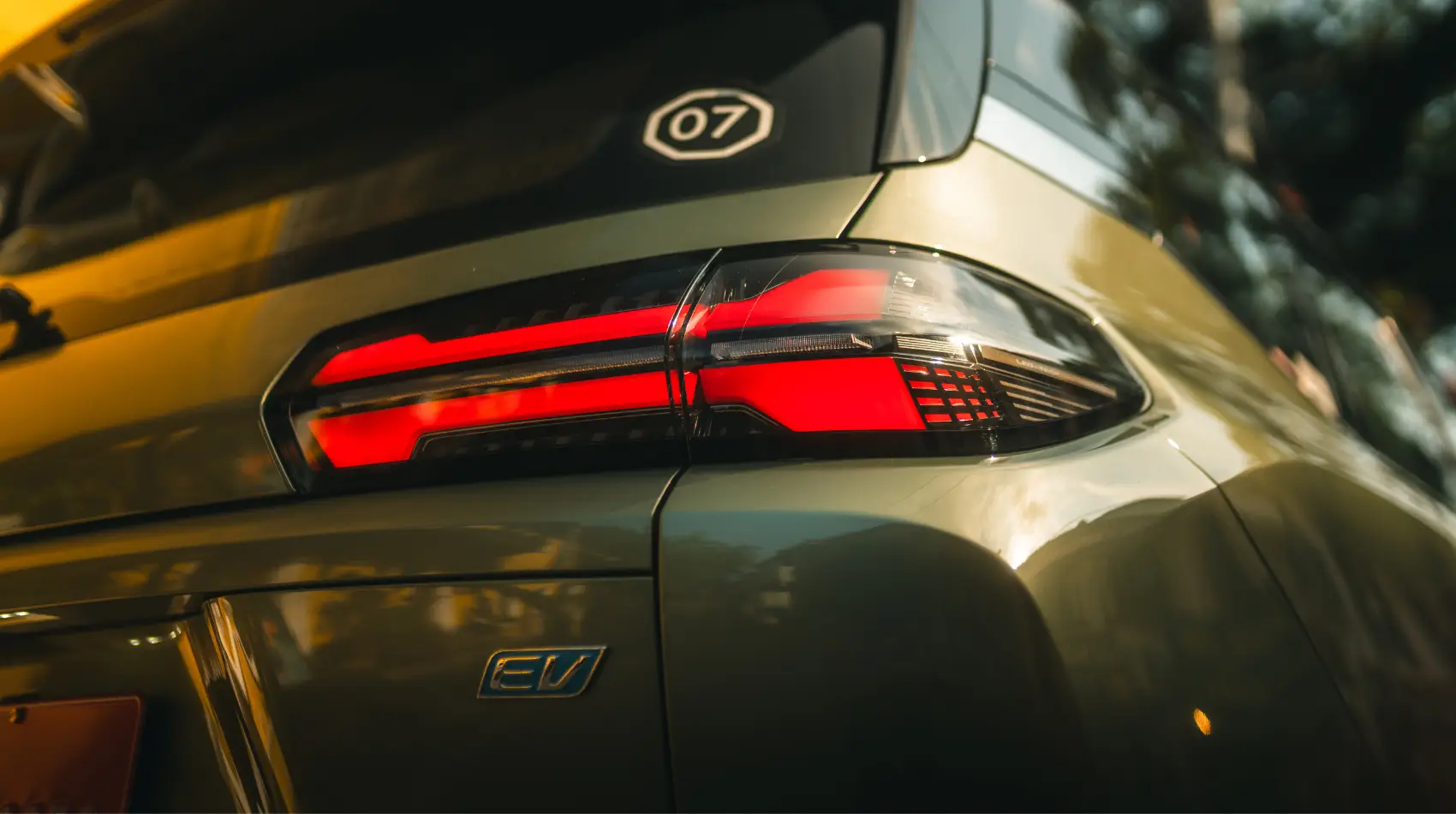
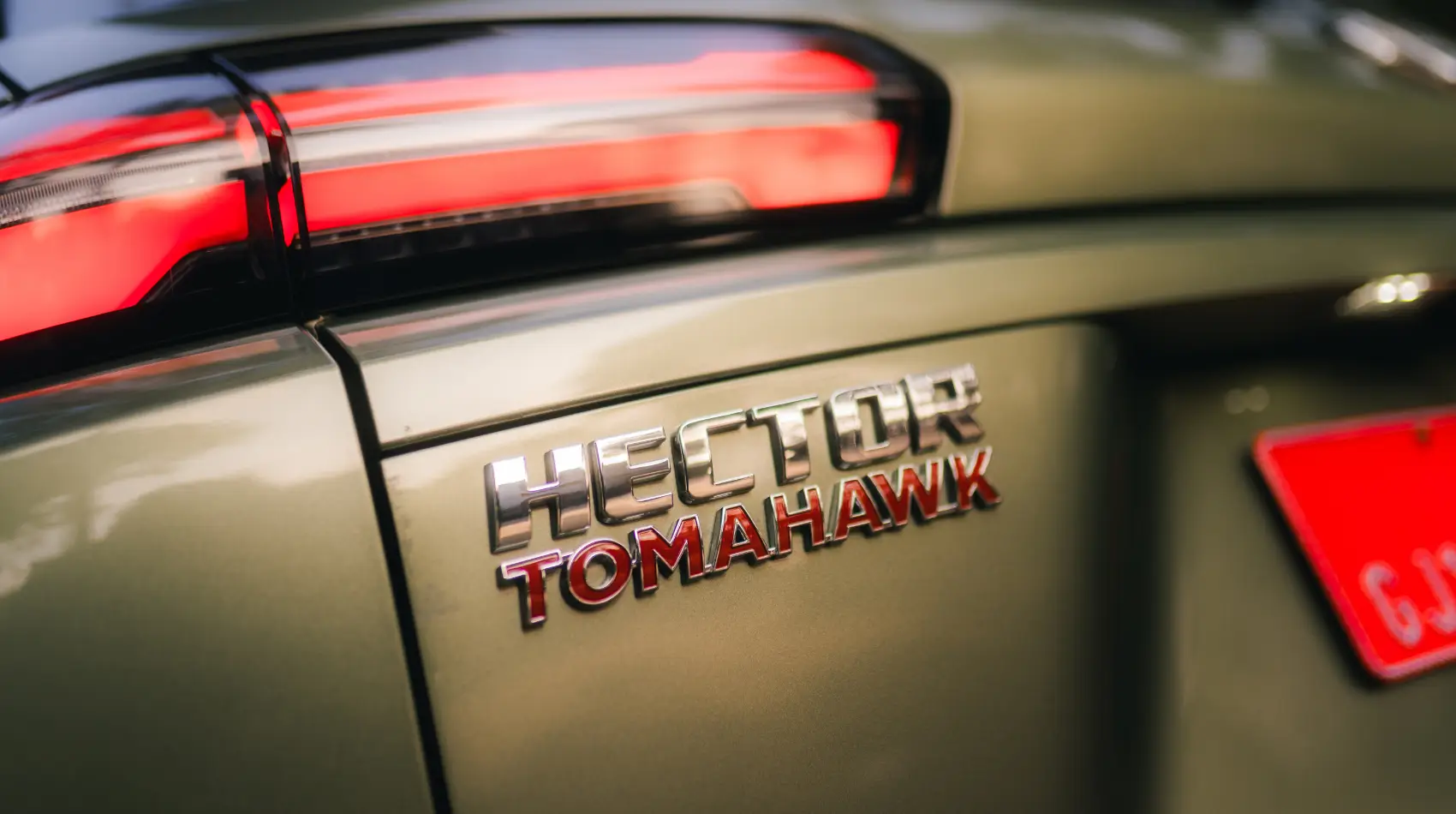
The Tomahawk is a sizeable SUV, and it looks it. There is an upright stance, a broad nose, slim LED lighting and plenty of sharp detailing, all of which give it a distinctly modern, slightly futuristic face. From the side, the proportions work rather well; there's a decent sense of length and the overall silhouette has enough presence to make sure you won't confuse it with anything smaller.
Personally, though, I'm not entirely sold on the design. There is a lot going on, and while that gives the Tomahawk plenty of road presence, it doesn't quite translate into the visual sophistication you'd expect from a brand-new SUV in this price bracket. Some of its newer rivals have figured out how to look expensive without covering every surface with detailing. The Tomahawk isn't ugly by any stretch, but I find myself appreciating its proportions more than its styling.
And that matters because the Hector has always traded heavily on its sheer presence. The Tomahawk certainly retains that quality, but it doesn't quite have the elegance that would make you turn around for a second look.
More Relaxed than Rapid
Behind the wheel, the first thing that strikes you is how easy the Tomahawk is to drive. This is a big SUV, but it doesn't feel intimidating from the driver's seat. The 204PS motor has the grunt to get the car moving without fuss, and because all 310Nm are available immediately, highway overtakes are straightforward.
It isn't particularly quick by modern EV standards, though. Some of its competitors have considerably more powerful motors and deliver the kind of acceleration that reminds you you're driving an electric car. The Tomahawk takes a more relaxed approach. It has enough performance for a family SUV, but you're unlikely to be pushed back into your seat every time you bury the accelerator.
For my drive through Kochi, I spent almost all of my time in Sport mode. It's the setting that suits the Tomahawk best when you're on the highway, sharpening the throttle response and making the car feel more eager when you're building speed or making an overtake. There are other driving modes and multiple levels of regenerative braking, so you can tailor the car to your preference, but Sport felt like the most natural fit for the way I was driving it.
The steering is a little less convincing. It's quite light for a car of this size, which is handy when you're manoeuvring around town but leaves you wanting a little more heft once you're travelling quickly. A little additional weight and resistance around the straight-ahead position would have made the Tomahawk feel more reassuring at speed.
The brakes are a different story. There's plenty of bite when you get onto the pedal and the car sheds speed confidently. The multiple regen levels are useful, too. You can dial up the regenerative braking when you want the car to slow more aggressively as you lift off, or back it off when you prefer a more conventional coasting experience. It's the sort of adjustability that makes sense in an EV rather than simply being there for the sake of having another menu setting.
Where the Tomahawk Feels Most at Home
The suspension is perhaps one of the car's more convincing attributes. The Tomahawk manages a good balance between compliance and body control, soaking up imperfections without becoming overly soft or floaty. That's particularly useful in something this large, because a big family SUV needs to be comfortable without feeling like it's permanently floating on its springs.
On the broken surfaces and undulating roads I encountered around Kochi, the suspension did a good job of keeping the cabin settled. There's enough compliance to take the sting out of sharper imperfections, while the body doesn't continue moving long after you've gone over them.
The other benefit of making the Tomahawk electric is that the cabin is quiet, and at cruising speeds there's little to interrupt conversations or your music. It's the sort of car in which you can appreciate the absence of noise rather than simply noticing the absence of an engine.
Loaded Cabin Experience
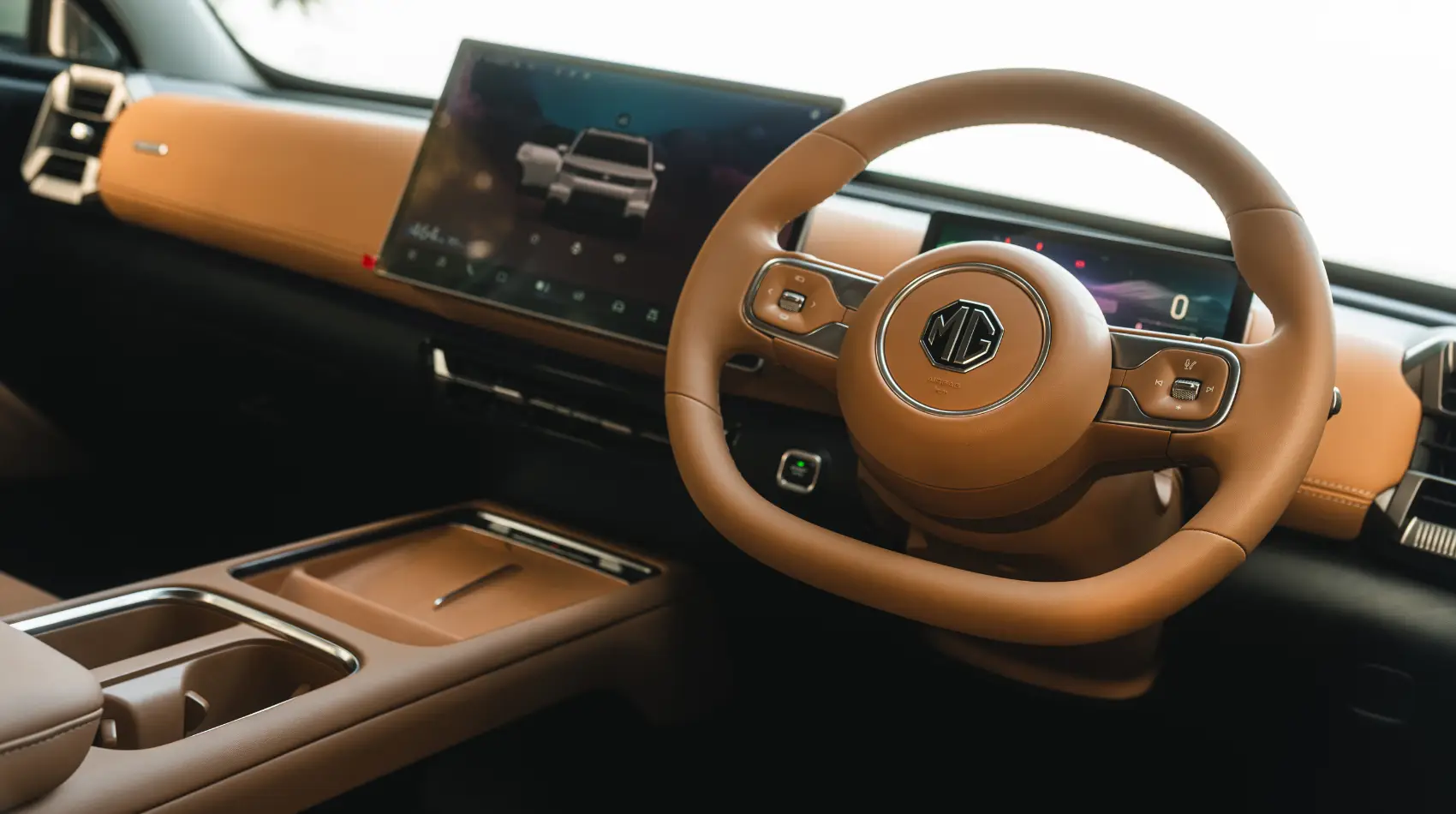
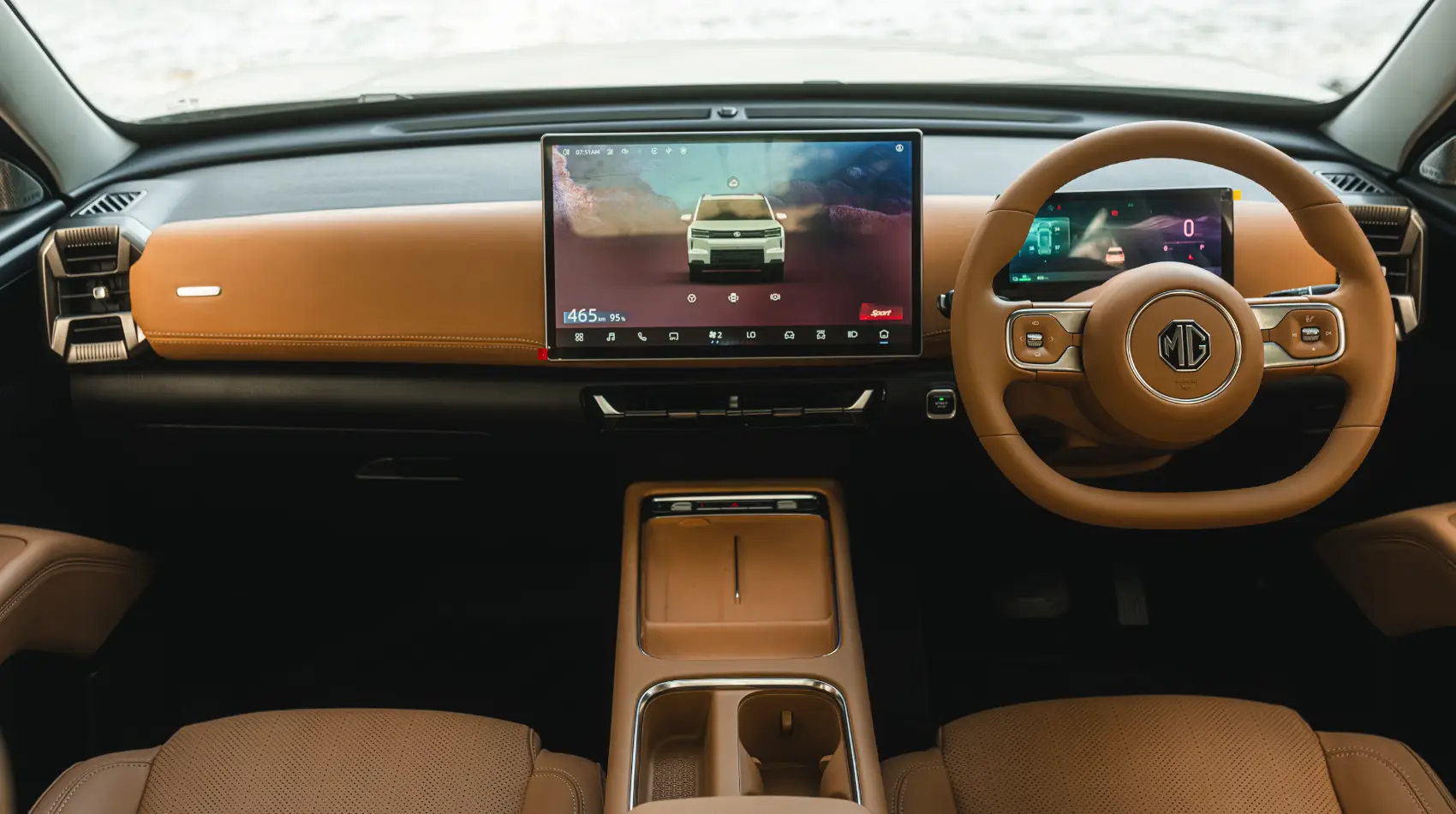
The Hector's technology-heavy cabin was one of its defining traits, and MG hasn't exactly toned things down with the Tomahawk. The dashboard is dominated by a large 15.6-inch central touchscreen that MG likes to call the Grand View touchscreen, while the cabin itself is spacious and packed with equipment.
But what I like more than the sheer quantity of features is the sense that MG has tried to make the interior a place to spend time. There are different cabin modes that alter the ambience depending on what you're doing. So if you wish to relax, the system will optimise the AC, the music volume, the ambient lights etc to help you do that. There’s even a Pro Pet Mode in the car that keeps your pet safe and comfortable inside the vehicle by maintaining an ideal air conditioning temperature and displaying a "return soon" message on the infotainment screen. Oh, and there’s a Karaoke mode too. As a certified banger belter (in my own book) I so wanted to test this feature out, but we just couldn’t get it to work due to complications with the JioSaavn app. Anyway, there’s something for me to look forward to the next time I’m in the Tomahawk.
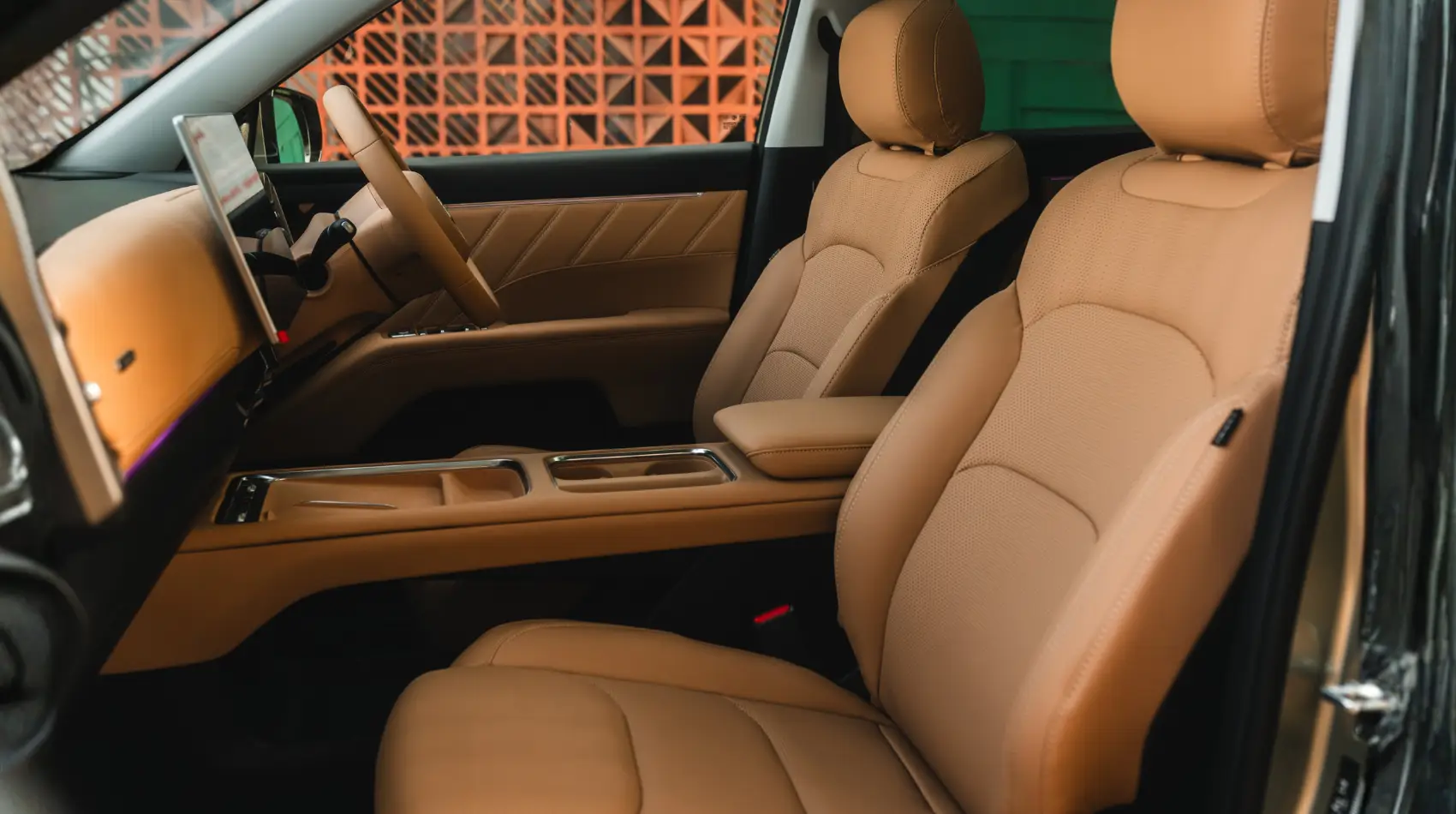
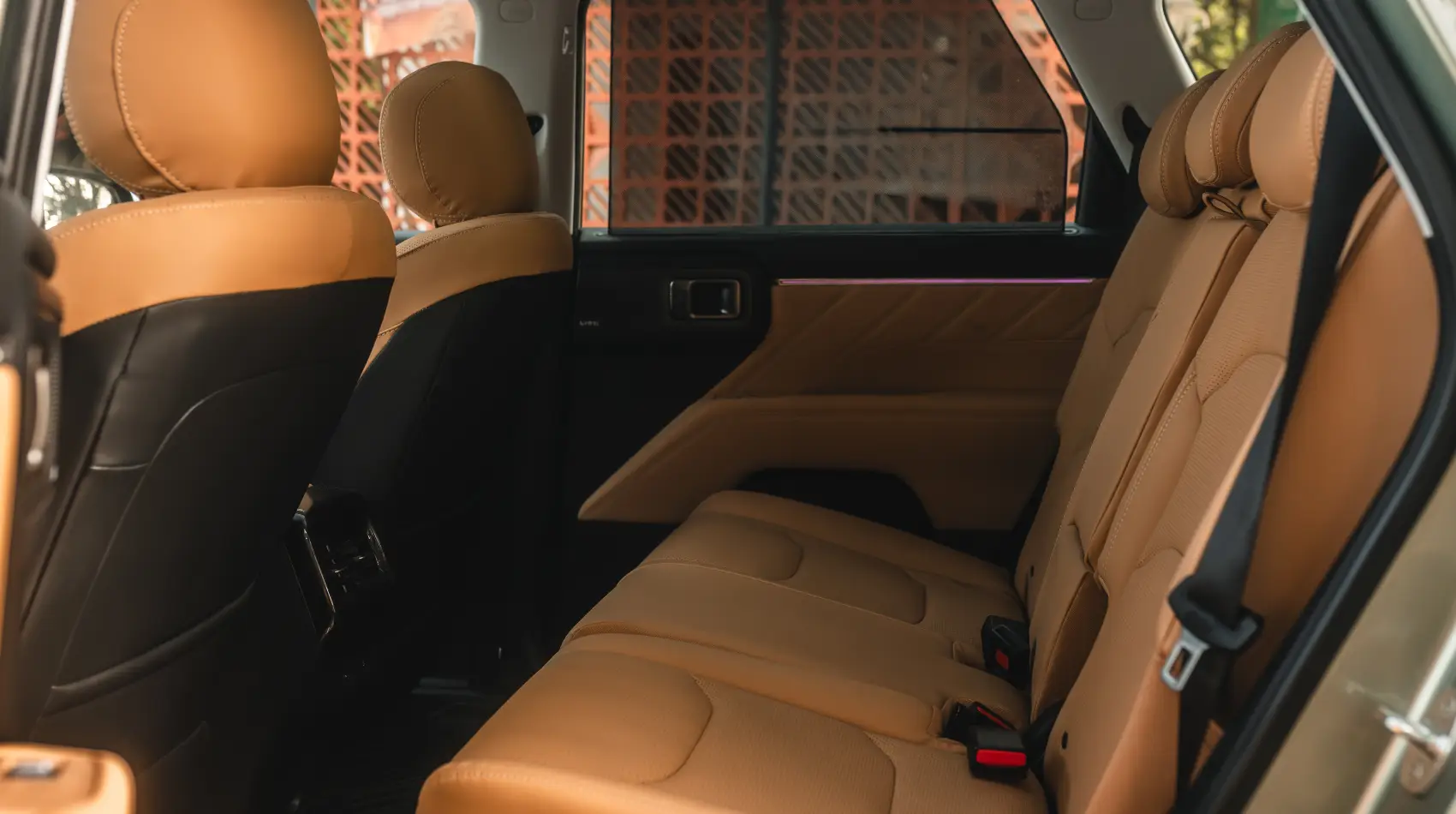
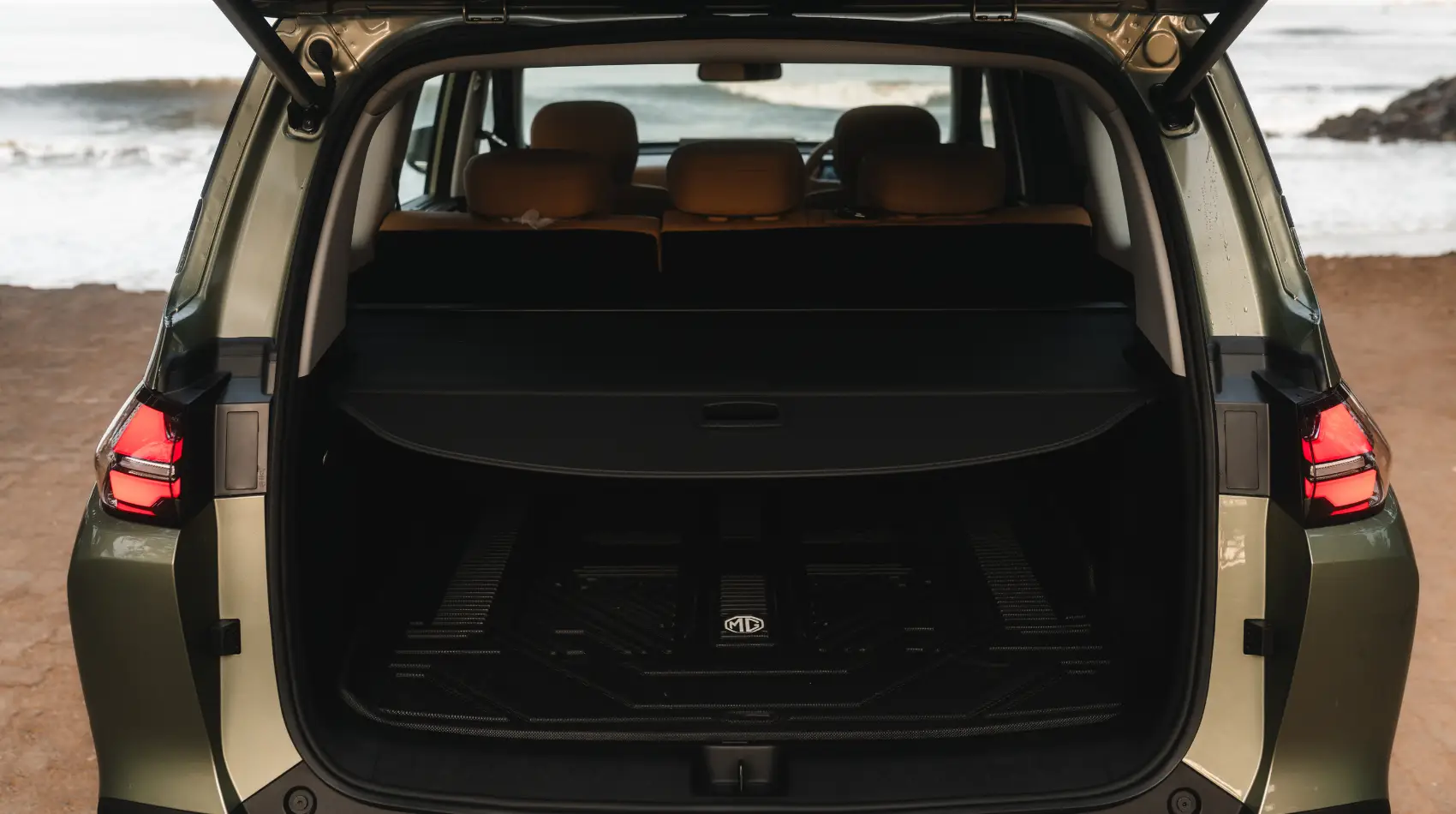
The more important stuff is here too: plenty of space, a commanding driving position and the practicality of a seven-seat configuration. That last point is worth highlighting because genuinely usable three-row EVs remain relatively uncommon. Whether you actually want seven seats or prefer the luggage capacity of the five-seater will depend on how you use the car, but having the choice broadens the Tomahawk's appeal considerably. Needless to say, comfort in the third row is non-existent, and more so for a person of my height.
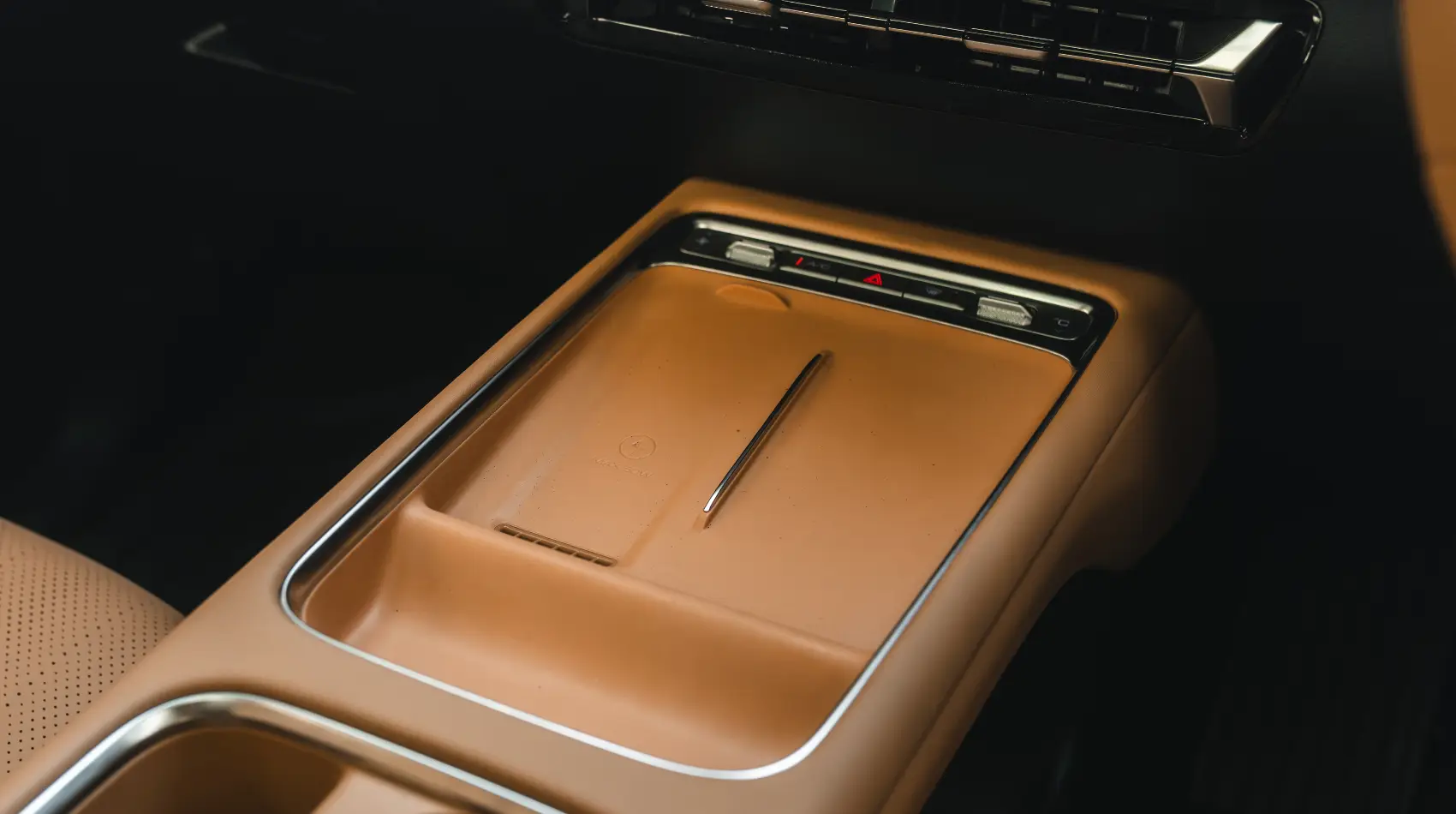
Still, I don't think the cabin has quite the premium ambience of some of the Tomahawk's newer competitors. And I would point the blame squarely at the colour scheme of its interiors. It’s called Desert Squadron, and that means a sand-coloured leatherette and plastic sprawls everywhere from the door inserts, the seats, the dashboard, the centre console, to even the cubby hole lid. The thing is, this light colour outright makes the leatherette material shine and that doesn’t bode well when you’re trying to achieve a premium feel for the interiors, which I’m assuming will indeed be MG’s goal. As for the cabin as a whole, it's feature-rich, undoubtedly.
Range, Charging and an Interesting Trick
MG claims that 517km of MIDC range can be extracted from the 69.2kWh battery. My drive wasn't long enough to conduct anything resembling a proper range test. We started with 490km showing on the range meter and managed just 26km before an early flight forced us to return the car. That was a mixture of highway and interior roads, all driven in Sport mode. By the time we handed the car back, the indicated range had fallen to 389km.
So, yes, 101km of indicated range disappeared for 26km of actual driving. But it would be irresponsible to extrapolate that into a real-world range figure. The distance was far too short, and Sport mode was hardly the most efficiency-minded way of driving. If anything, the exercise demonstrated how quickly the range estimator can react to your recent driving conditions. A proper road test will have to tell us what the Tomahawk can actually manage between charges.
Charging is more straightforward. The car supports 90kW DC fast charging, with MG claiming a 30–80 percent charge in around 35 minutes. That's perfectly usable for highway travel, although it isn't class-leading in an EV market where charging speeds continue to climb.
Then there's V2H, or Vehicle-to-Home. The idea is a good one: use the Tomahawk's battery to supply electricity back to your home during a power cut. However, this isn't something you can achieve simply by plugging the car into your existing home charger. It requires an additional accessory that enables the bidirectional flow of electricity.
MG demonstrated the concept in Kochi by powering what was presented as a full-sized Airbnb using the Tomahawk. It was certainly an impressive visual demonstration, but it wasn't enough to tell us what living with V2H would actually be like. The feature is expected to be enabled early next year, and that's when it will become possible to properly test its usefulness in a real home environment.
The Sensible Tomahawk
The Hector Tomahawk isn't trying to be the fastest electric SUV in its class, nor is it particularly interested in looking like a luxury car. Instead, it takes the familiar MG recipe. It gives you lots of space, lots of equipment and plenty of technology, and then applies it to an electric family SUV.
For me, that's where the Tomahawk makes the most sense. It's comfortable, easy to drive and impressively well equipped, and the seven-seat option adds a degree of practicality that many EVs still can't match. The flip side is that the motor isn't as powerful as some of its rivals, the steering could do with more weight and the exteriors as well as interiors don't quite deliver the premium visual impact I was hoping for.
But if your priorities are space, comfort, features and everyday usability rather than outright performance or showroom-floor glamour, the Tomahawk has a fairly coherent proposition. It's not a car that overwhelms you with any one particular quality. Instead, it tries to give you a lot of car for the money and, in classic MG fashion, throws in a few things you probably didn't know you wanted; of course, I’m referring to the karaoke feature here. The original Hector was MG's introduction to India. The Tomahawk feels more like its introduction to what MG wants to be next.