The BMW X1 is BMW India’s roti-sabzi. It’s its fish and chips. It’s arguably the most important product BMW sells in India.
Did you know that the iX1, the electric X1, accounts for around 60 per cent of all X1 sales in India? And there are two main reasons for that. First, it’s really attractively priced as an entry-level luxury offering at around Rs 55 lakh on-road. For someone looking to buy their first luxury car, it actually makes a tremendous amount of sense. And second, it gets the long-wheelbase body style, which means there’s a lot of space in the back seat , and frankly, that’s exactly what a lot of Indian buyers in this segment actually want.
And now BMW has decided to really cement the X1’s position in India by bringing that long-wheelbase body style to the petrol version as well.
If you’re a diesel fan, though, you might be disappointed. There is no long-wheelbase diesel coming anytime soon. But frankly, the diesel accounts for less than 10 per cent of overall X1 sales, so it simply doesn’t make much sense for BMW to invest that kind of money into developing and homologating an upgraded diesel version too.
The X1 Long Wheelbase is 116mm longer overall, and 108mm of that increase has gone directly into the wheelbase. We’ll talk about what that does to the inside in a little bit, because there is one other extremely important piece of information you need to know first.
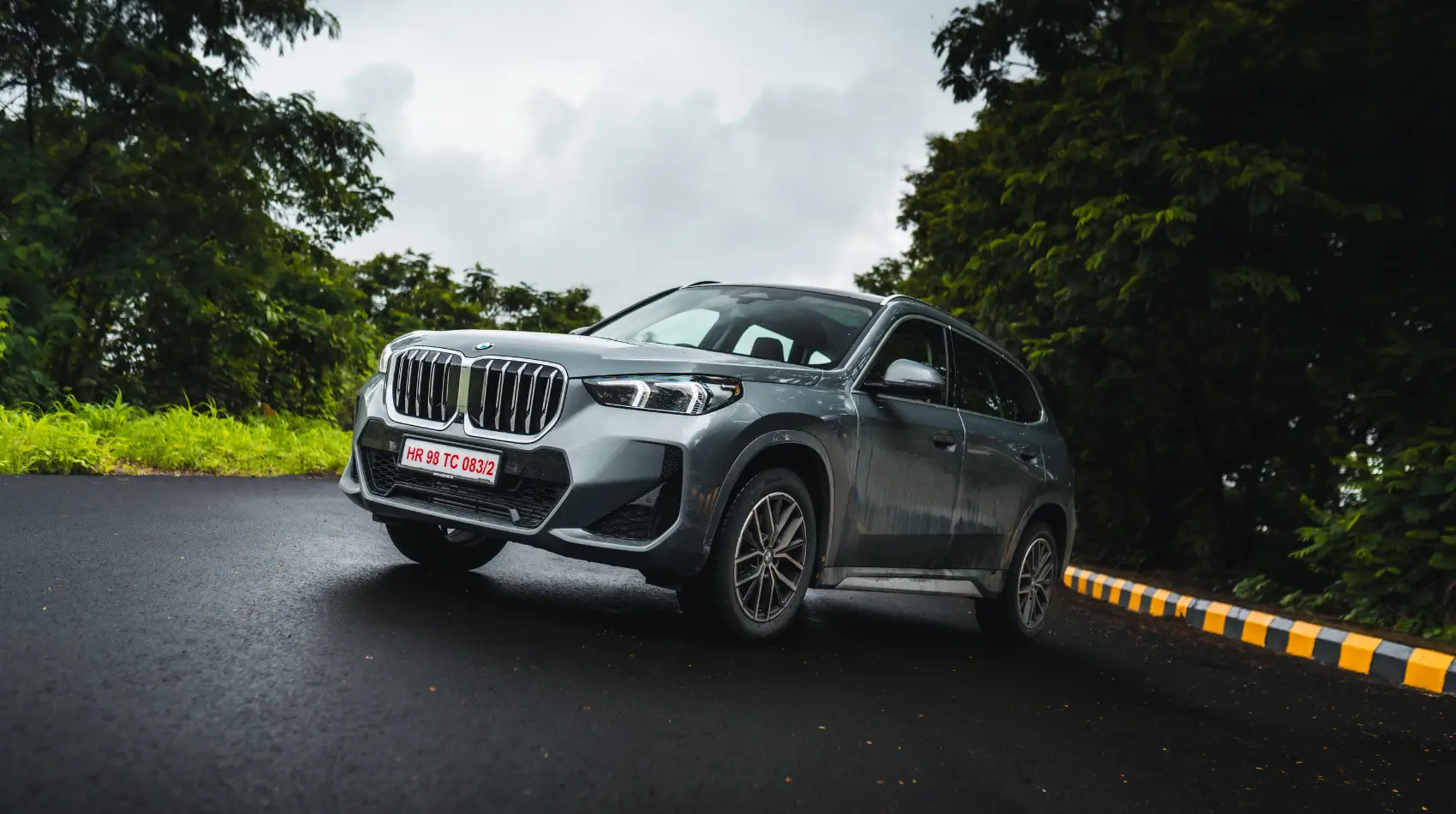
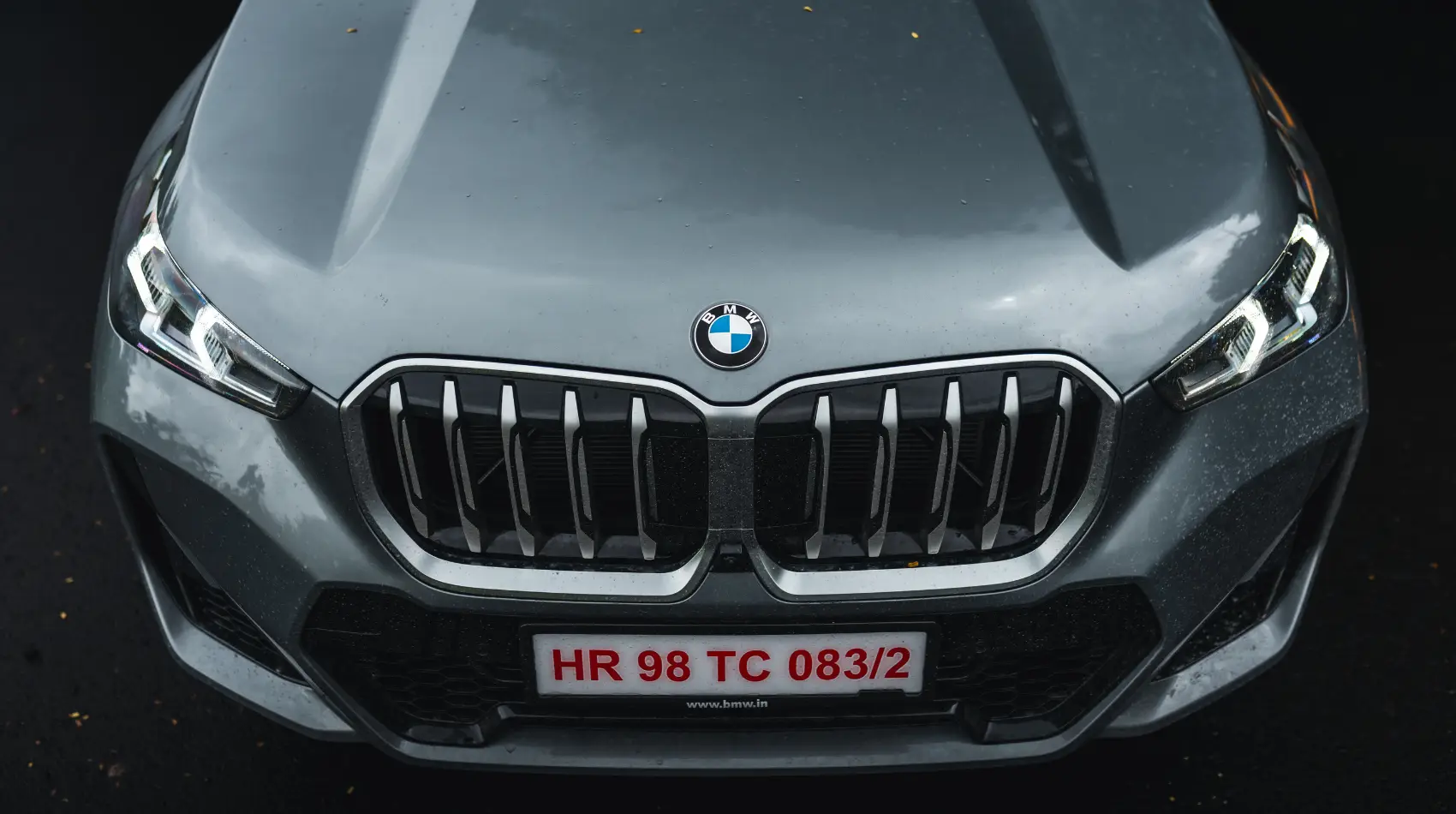
The easiest way to differentiate this from the standard X1 is the side skirt. It’s silver on the long-wheelbase car and black on the standard car. So, if you’re a proper car nerd, the sort of person who absolutely loves accumulating automotive information that is genuinely useless to 99.9 per cent of the population, but deeply impressive to the other 0.1 per cent of your equally nerdy friends , this is exactly the kind of information you need to have.
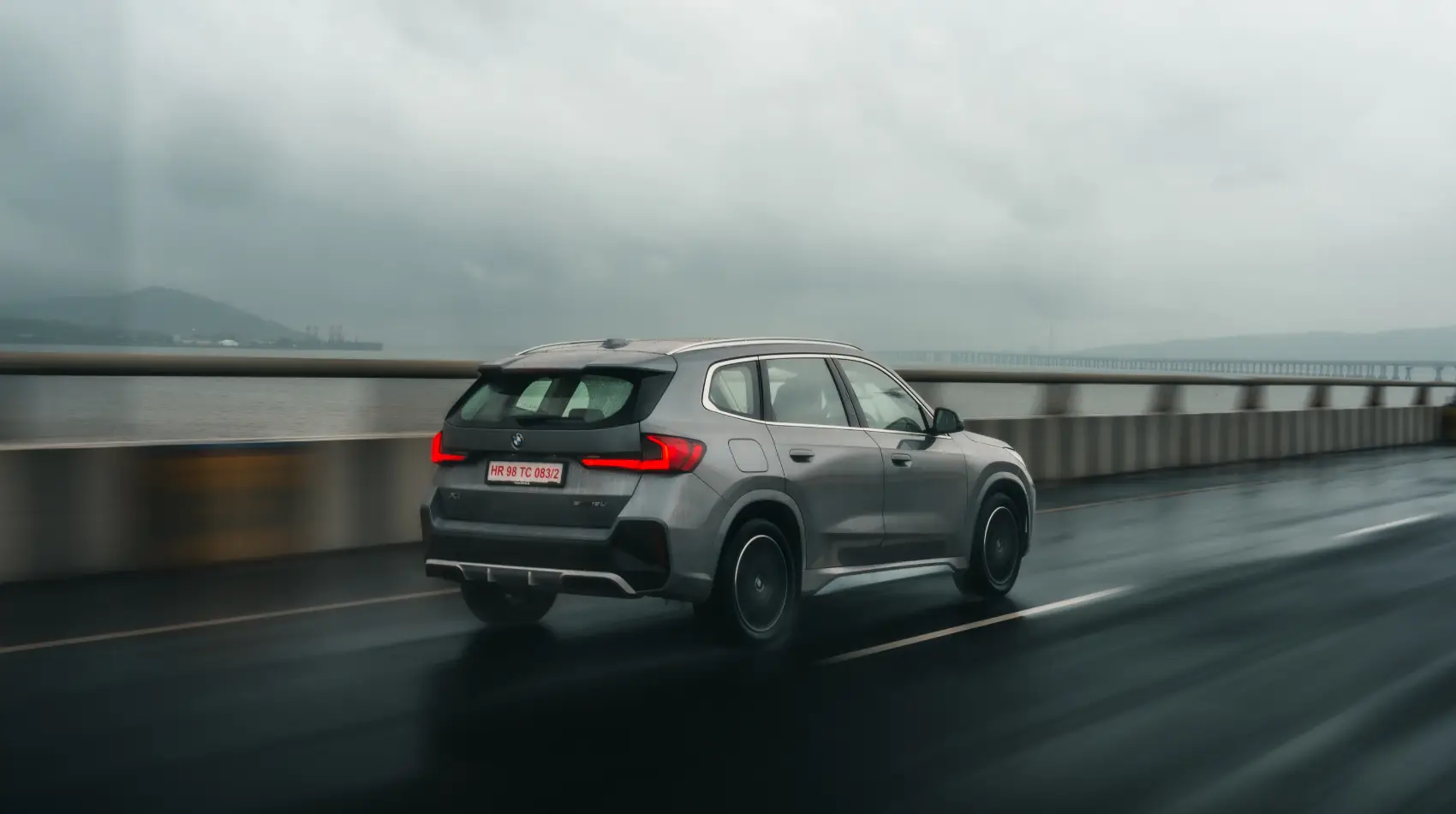
Of course, there’s also an ‘L’ in the badging at the back, just in case you need further confirmation that this is the longer car.
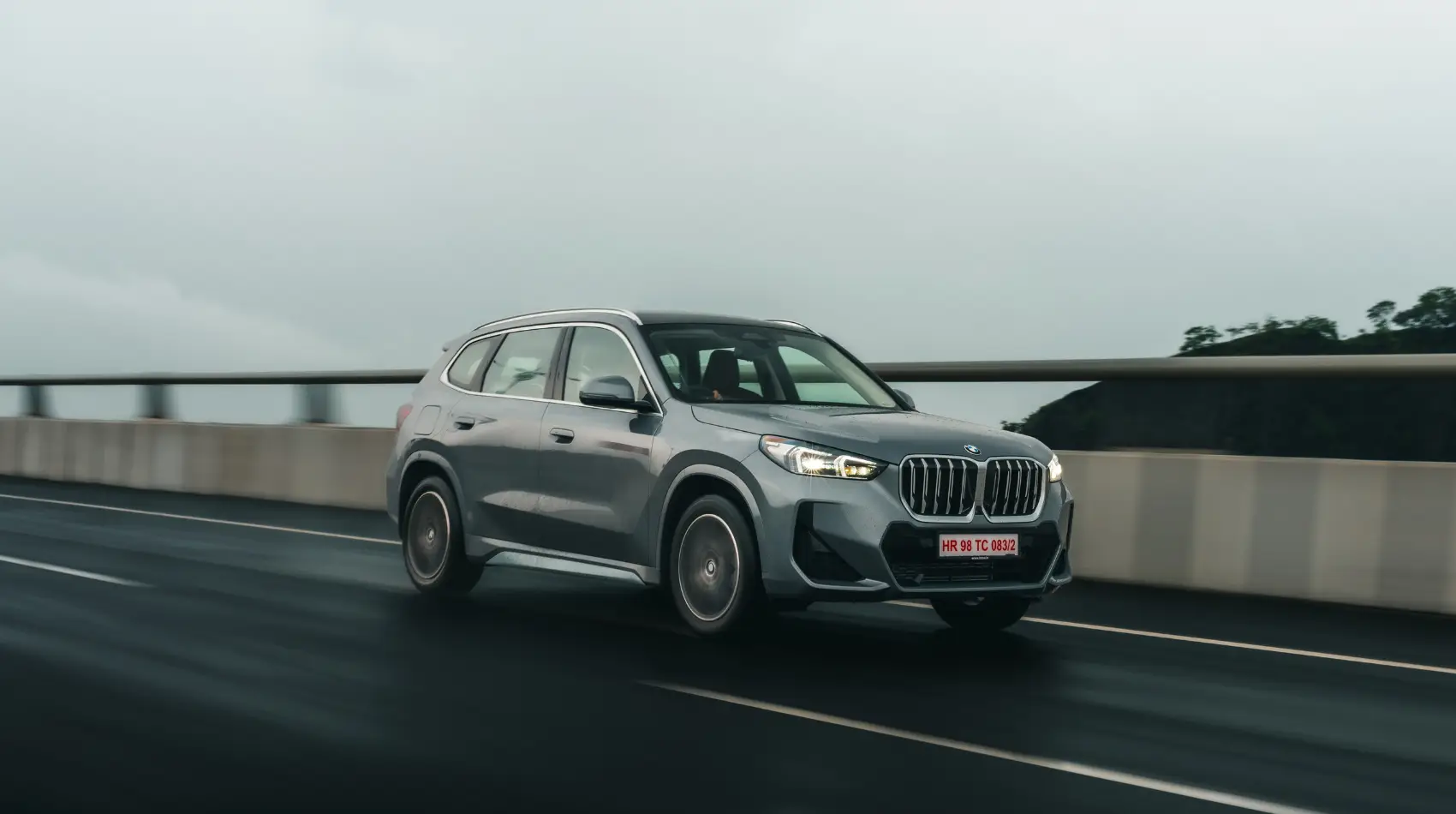
Otherwise, the styling remains largely unchanged. And frankly, the X1 today is one of the more handsome cars in the segment. It has enough typical BMW-ness about it, it looks suitably aggressive without trying too hard and, proportionally, even the stretched version works rather well.
What doesn’t work rather well are the wheels. I would genuinely love to know why BMW designers, or designers in general these days, are so obsessed with busy-looking alloy wheels. It’s especially confusing in BMW’s case because the company is currently cooking with some absolutely fantastic wheel designs on its other cars and, historically, probably has one of the greatest wheel-design catalogues in existence. And yet, the X1 gets these very low-rent-looking, unnecessarily busy 18-inch wheels. They’re easily one of my least favourite parts of the car.
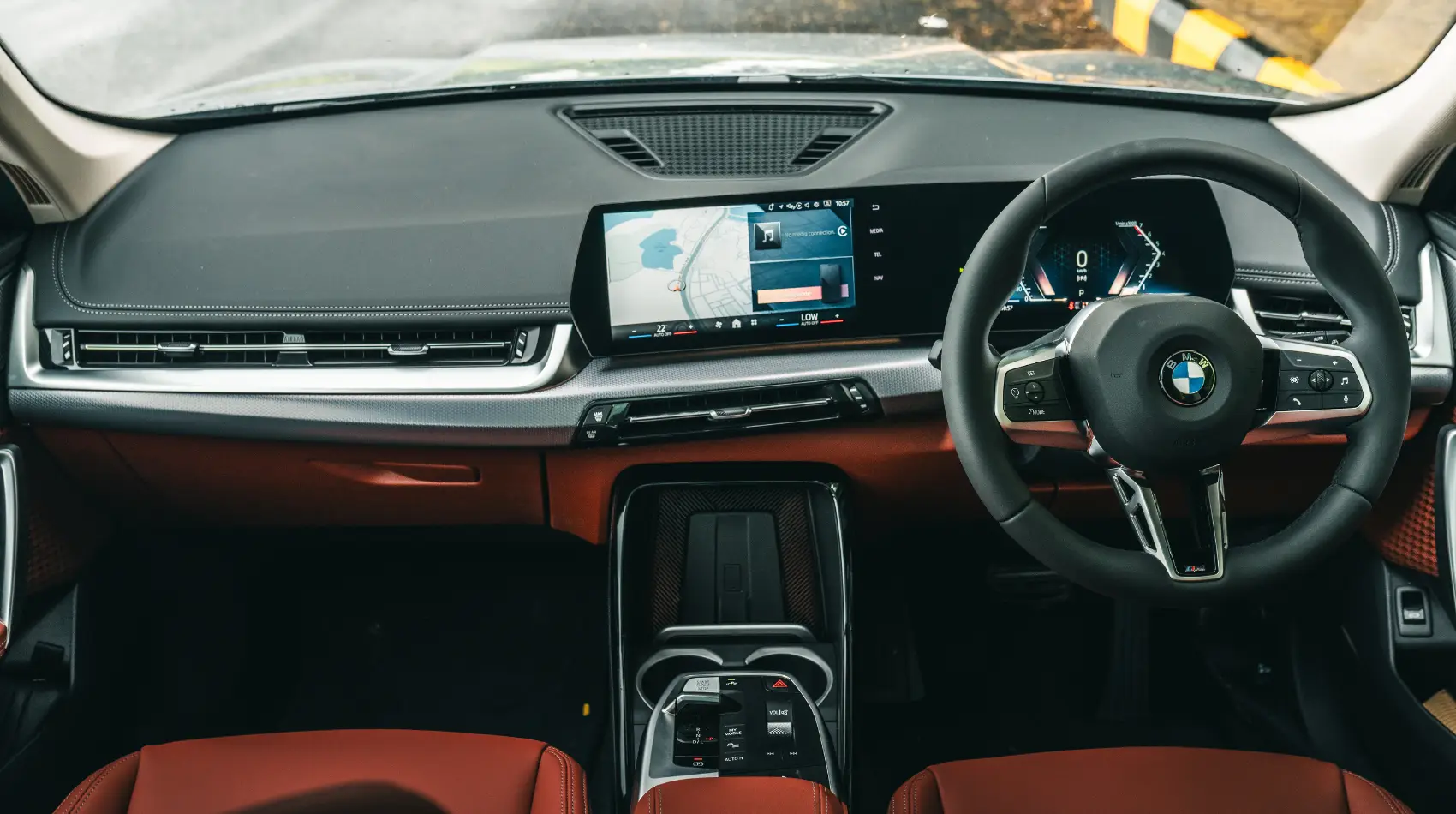
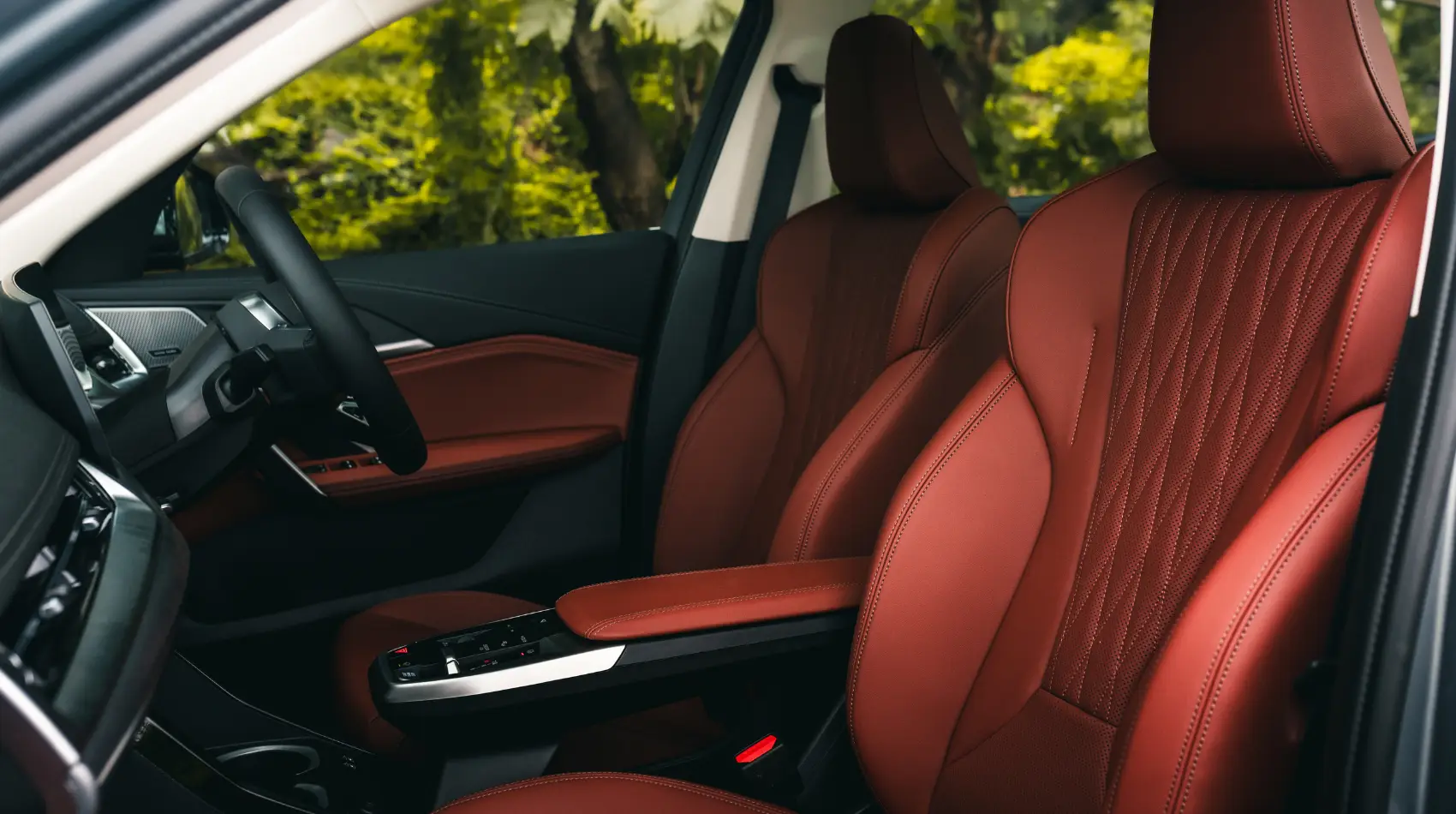
Move inside, though, and things immediately get better. The first thing you notice is the new interior colour. It’s this dark reddish, almost terracotta-like shade and it looks absolutely fantastic. In fact, I genuinely think there will be people who buy the X1 simply because they see this interior in a showroom. And I completely understand why. If I were buying one, this is the interior I’d have too.
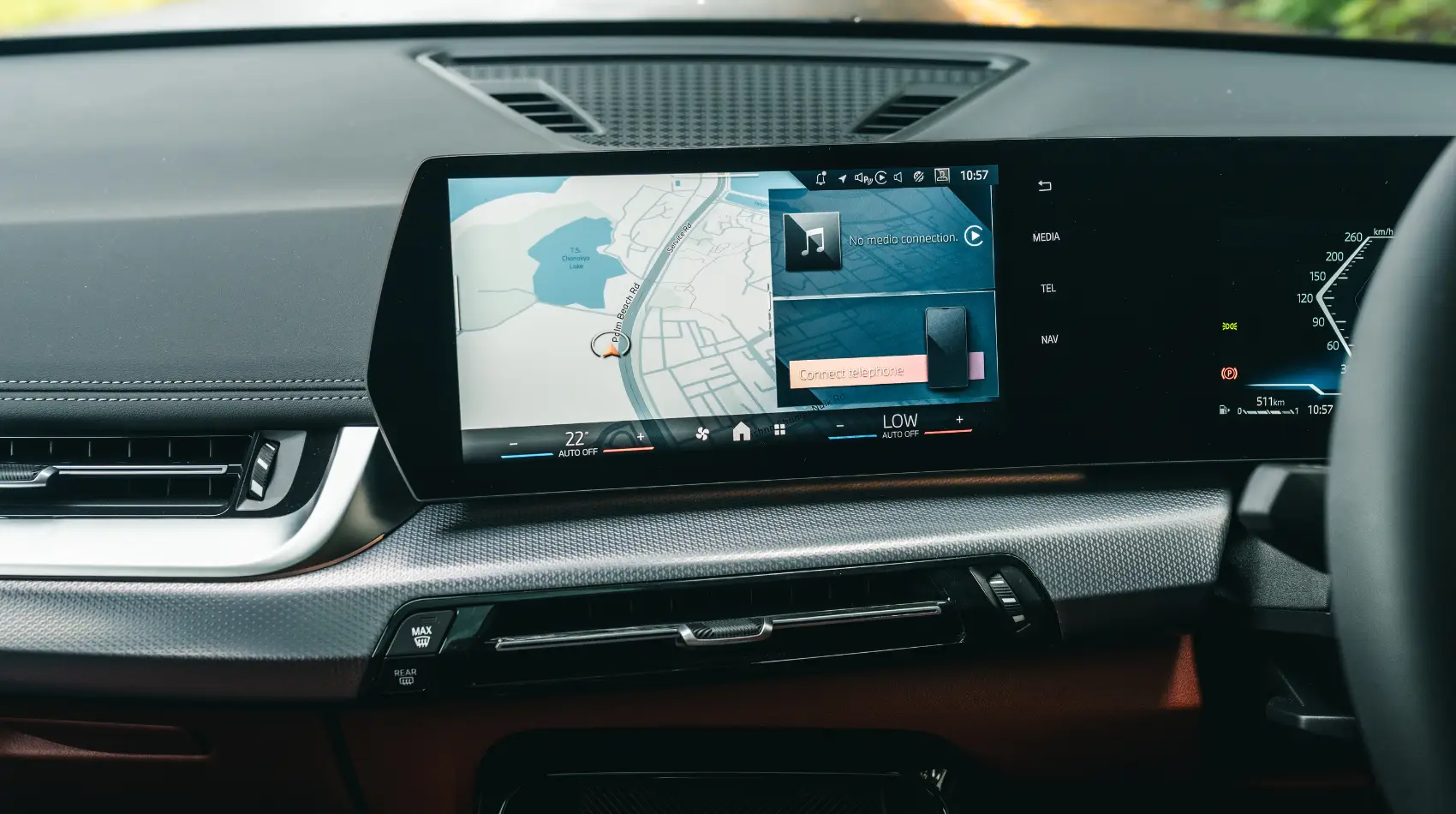
The front of the cabin otherwise retains all the familiar X1 ingredients. You still get the curved instrument cluster and infotainment display angled slightly towards the driver, maintaining that traditional driver-centric BMW feeling. The steering wheel remains typically excellent and, generally, the cabin still feels modern and appropriately premium.
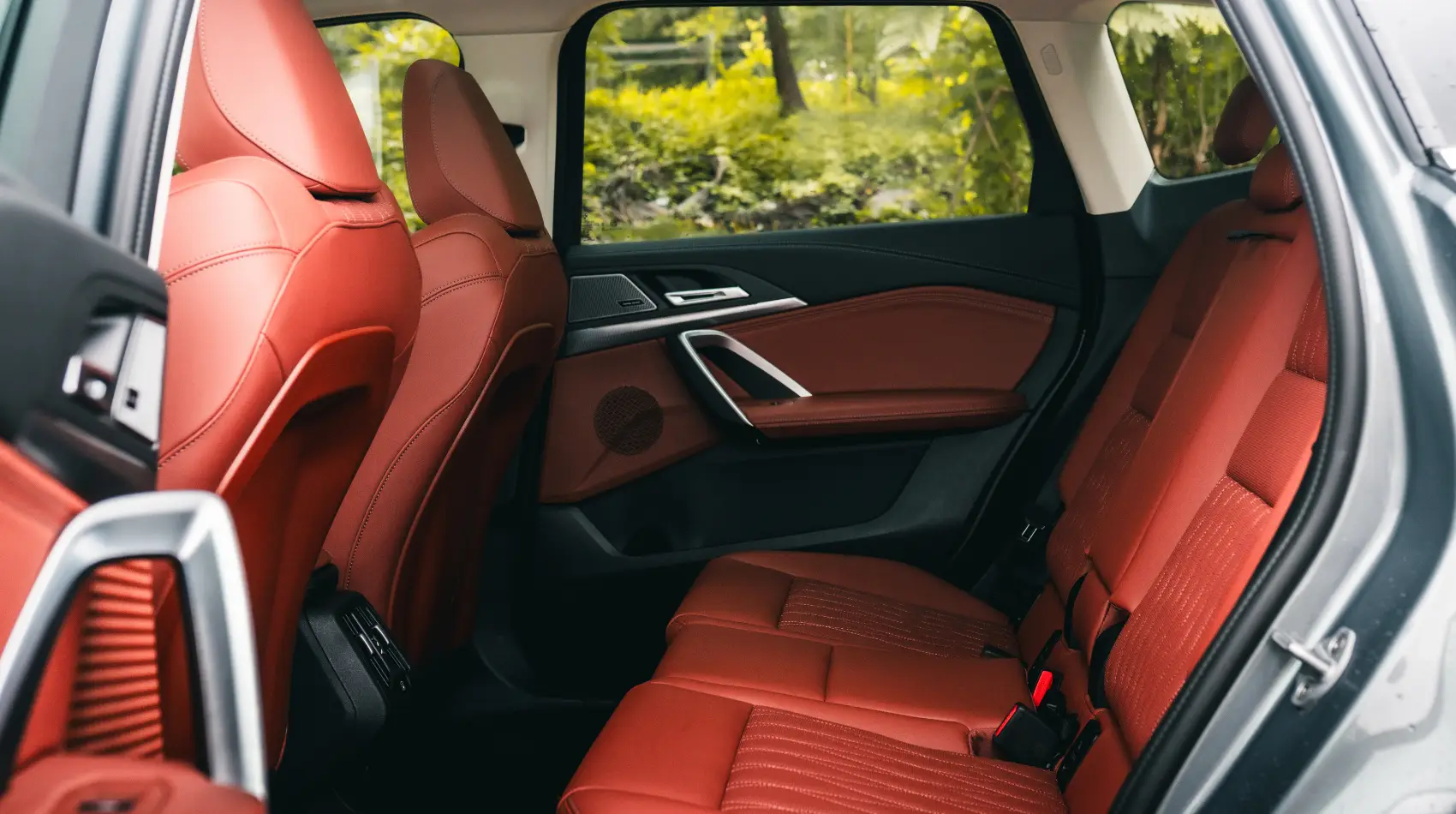
But the important changes are behind you. Remember those extra 108mm in the wheelbase? BMW claims the stretched X1 offers 109mm more rear knee room and around 20mm more seat-base length. Both matter.
There is a very noticeable amount of additional room in the back. This genuinely feels like the sort of rear-seat space you would have expected from an X3 a few years ago, and that is a considerable compliment for what is still BMW’s entry-level SUV.
The longer seat squab helps too, because simply creating a huge gap between the front and rear seats doesn't automatically make a rear seat comfortable. You need proper under-thigh support as well, and the X1 does a much better job of that here.
But this is where BMW has missed an opportunity. If you are going to turn the X1 into a rear-seat-focused luxury car, you need to do more than simply make the rear cabin bigger. There are no reclining rear seats. More importantly, there are no rear sun blinds. BMW did something similar with the 5 Series, and I remember us telling them then that it was a mistake. And now they’ve gone and done it again with the X1.
In India, if you’re deliberately making a car longer because you know buyers are going to sit in the back, you need to give those buyers more rear-seat equipment. A proper set of integrated sun blinds should have been there from day one. BMW needs to either offer them as a neatly integrated dealer accessory or, better still, introduce them as a factory option. Because apart from the extra space, there simply isn’t enough happening in the rear to really capitalise on the whole long-wheelbase philosophy. And just in case you don’t want the red interior, there is also a grey-and-white option. But frankly, just get the red.
There are mechanical changes too, so this isn’t simply a case of BMW stretching the X1 and calling it a day. The petrol engine now makes 156hp, up by 20hp from the previous 136hp figure, while torque remains at 230Nm. And yes, this is still front-wheel drive. There’s no all-wheel-drive option on offer. Before anyone gets upset about a front-wheel-drive BMW, remember that the X1 has been front-wheel drive for a while now.
Performance is adequate rather than exciting. The 0-100kph time remains somewhere in the low-nine-second region, which means this certainly isn’t a particularly fast BMW. But then, are you really buying this X1 to launch it from traffic lights and chase tenths of a second? Or are you buying it because you want to sit comfortably in the back while somebody else deals with the traffic?
Because that brings us to perhaps the most important mechanical change of all: the suspension. BMW has reworked the suspension setup with revised spring and damper rates, and the difference is immediately noticeable. This is a substantially more comfortable X1 than I remember. Low-speed ride quality is better. High-speed comfort is better. Sharp bumps and potholes are dealt with far more gracefully, and the whole car simply feels calmer over the sort of roads it will encounter every day in India.
It somehow seems quieter too. Whether that’s down to the tyres, additional insulation or simply the way the suspension is now dealing with road imperfections, there seems to be noticeably less road noise entering the cabin than I remember from the regular X1.
The steering, however, has gone in the opposite direction. It feels light. Very light. In fact, probably too light for something wearing a BMW badge. It’s considerably lighter than I remember any previous X1 being, and if you come into this expecting traditional BMW steering weight, you might initially be disappointed.
But context matters. This X1 has a very specific purpose. It has been engineered around comfort and rear-seat usability rather than trying to shave 0.1 of a second off your commute from Andheri to Colaba. And in that context, light steering isn't necessarily a bad thing.
As an overall package, then, the X1 Long Wheelbase arrives in India at a particularly interesting time because it has the potential to give almost everybody else in this segment sleepless nights. The Mercedes-Benz GLA is approaching the end of its current lifecycle, with a new-generation car on the horizon. The Audi Q3 is also preparing to move into its next generation in India. And the Volvo XC40 is overdue for a proper replacement.
BMW, meanwhile, has taken what was already one of its most important products in India, added the one thing Indian luxury-car buyers almost universally appreciate , more rear-seat space , made the petrol engine more powerful, softened the suspension and somehow made the whole thing quieter and more comfortable.
Yes, I wish BMW had gone further with the rear-seat equipment. Yes, those wheels desperately need to be replaced by something from the nicer end of BMW’s enormous alloy-wheel catalogue. And yes, the steering has lost some of that traditional BMW heft. But none of those things fundamentally change what this car has become. For now, the X1 Long Wheelbase has all the ingredients to be the ruler of the roost in this segment. At least until everyone else steps their game up.
BMW X1L
Engine: 1.5-Litre 3 cylinder Petrol
Power: 156hp
Torque: 230Nm
Price: ₹49.99 Lakh (ex-showroom)