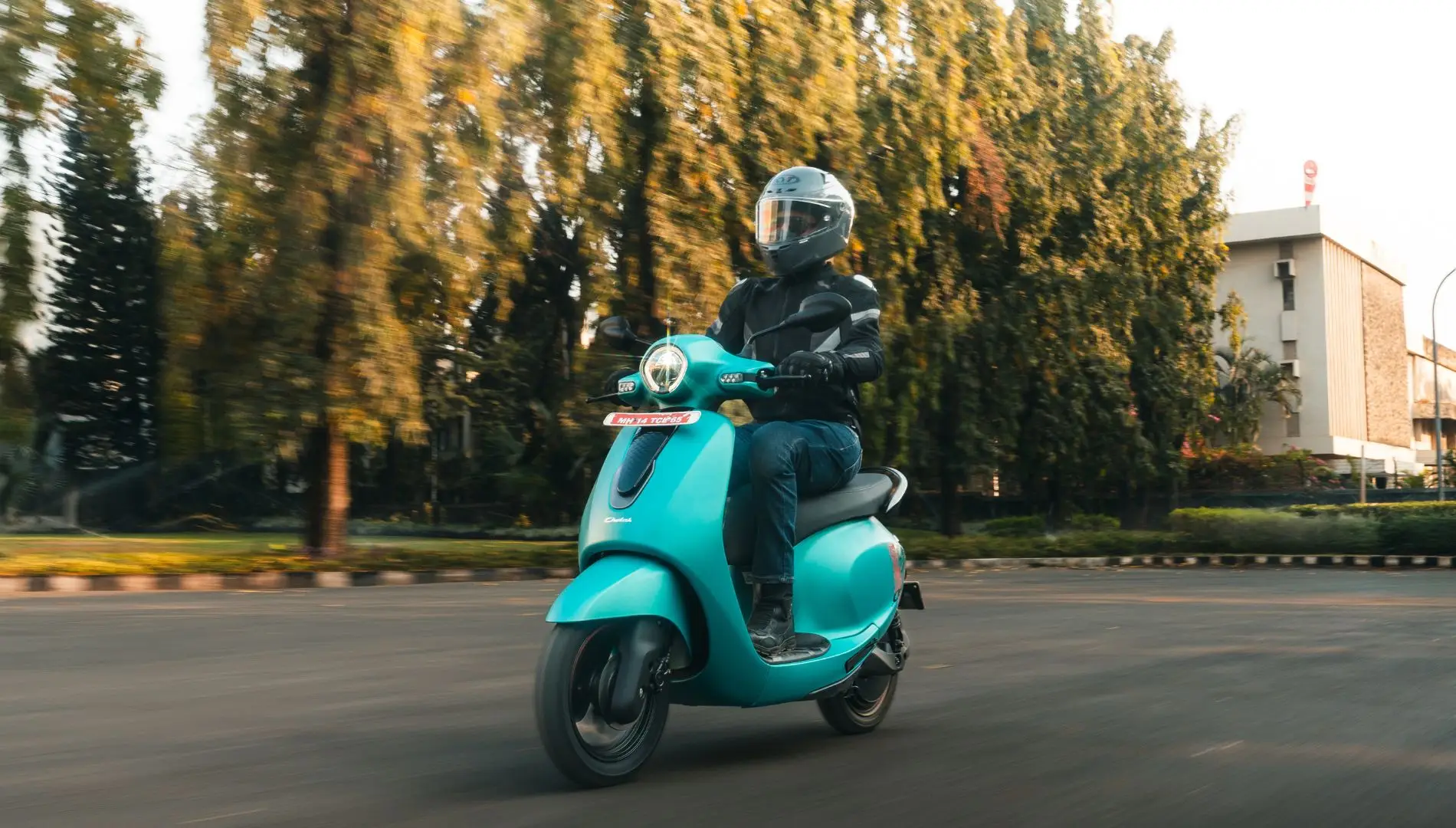
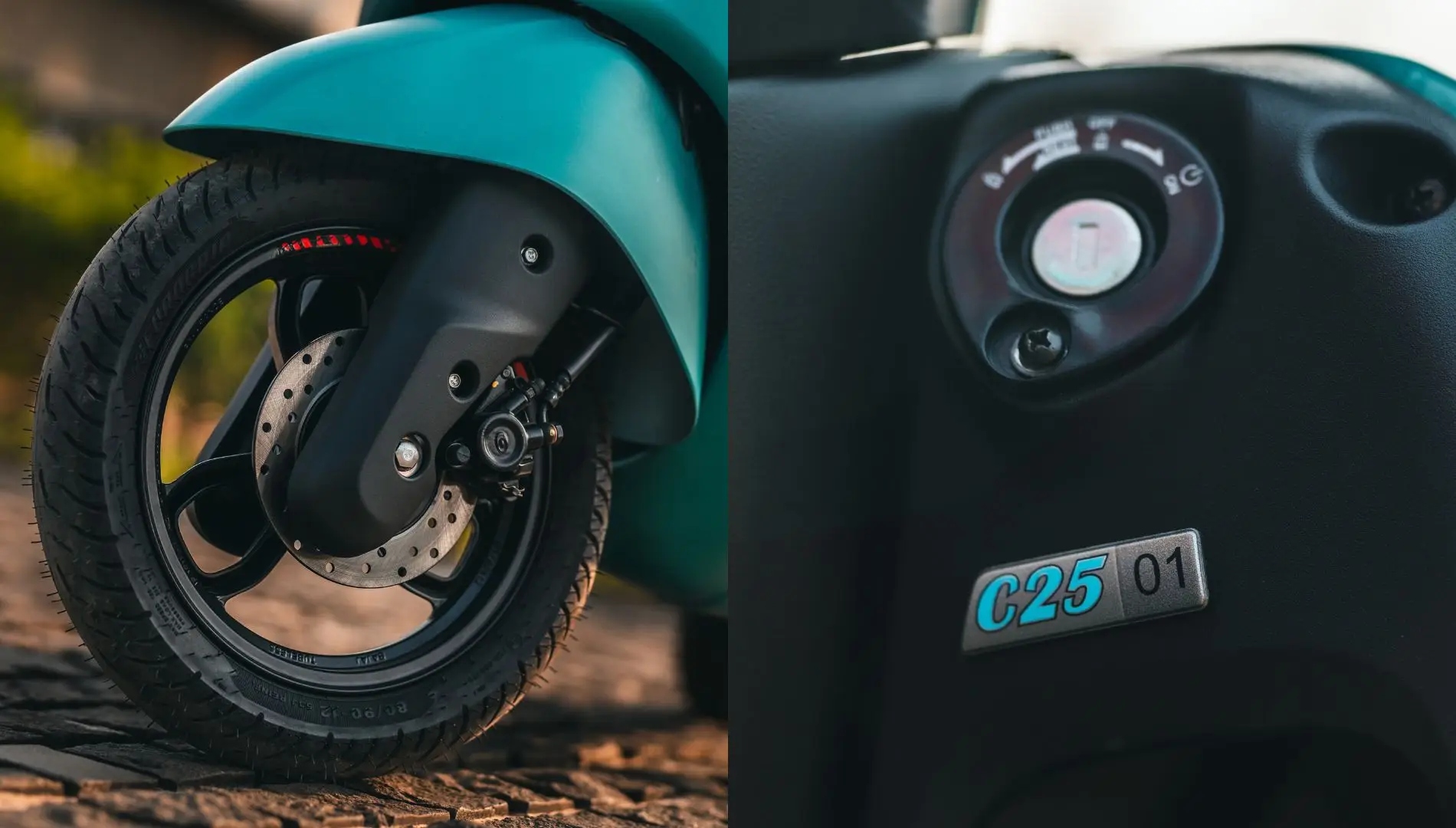
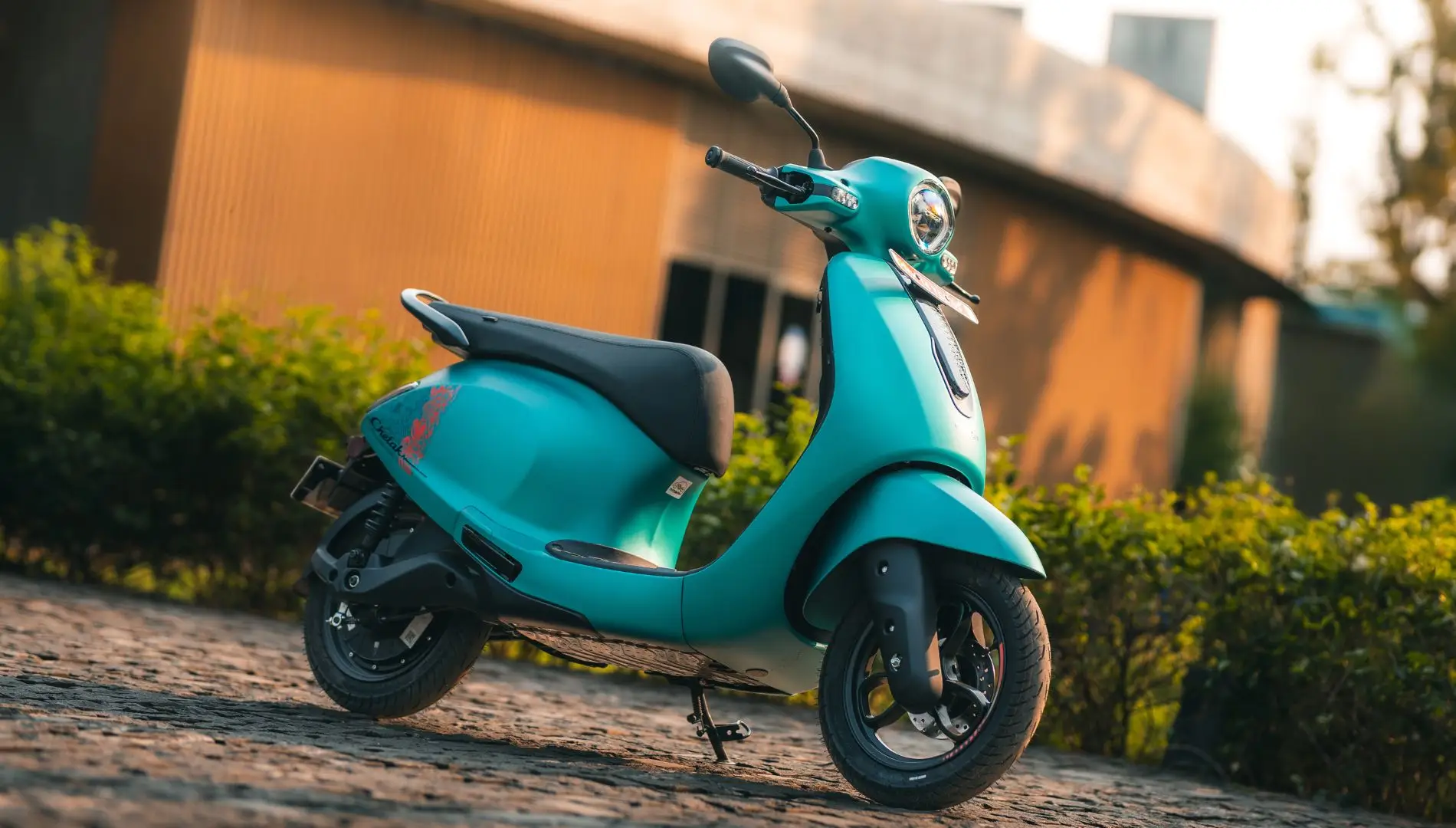
It has been six years since the Chetak electric scooter first hit the streets and, today, it stands as the second best-selling electric scooter in the country. Keen to carve out an even bigger slice of the pie, Chetak has now rolled out the C25 — a new, smaller and more affordable model, and only the brand’s second offering — aimed squarely at buyers seeking a reliable, easy-to-live-with and thoroughly practical daily runabout.
Priced at ₹91,400 (ex-showroom), the C2501 is powered by a 2.5kWh battery with a claimed IDC range of 113km. The C25 also gets a generous 25-litre boot and tips the scales at 108kg — around 22kg lighter than the 35 Series. It is capped at 55kmph, which gives it a distinctly different riding experience altogether.
So, what’s it like around town? Does it serve its intended purpose, and is it a good daily runabout? Here’s my take after spending some time riding it in the city. But before we swing a leg over the saddle, let’s take a closer look at what it has to offer.
Chetak C2501 styling and features
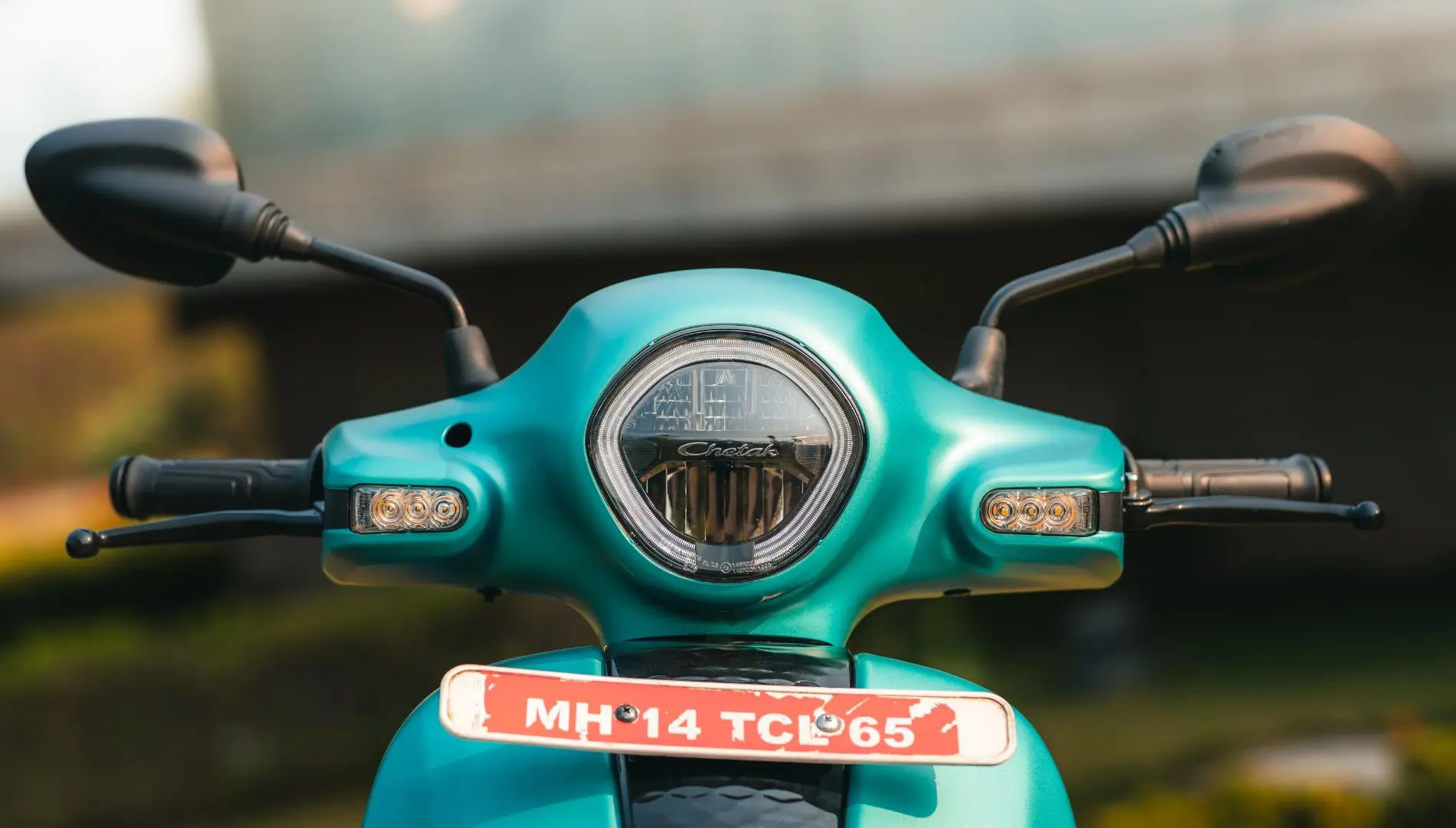
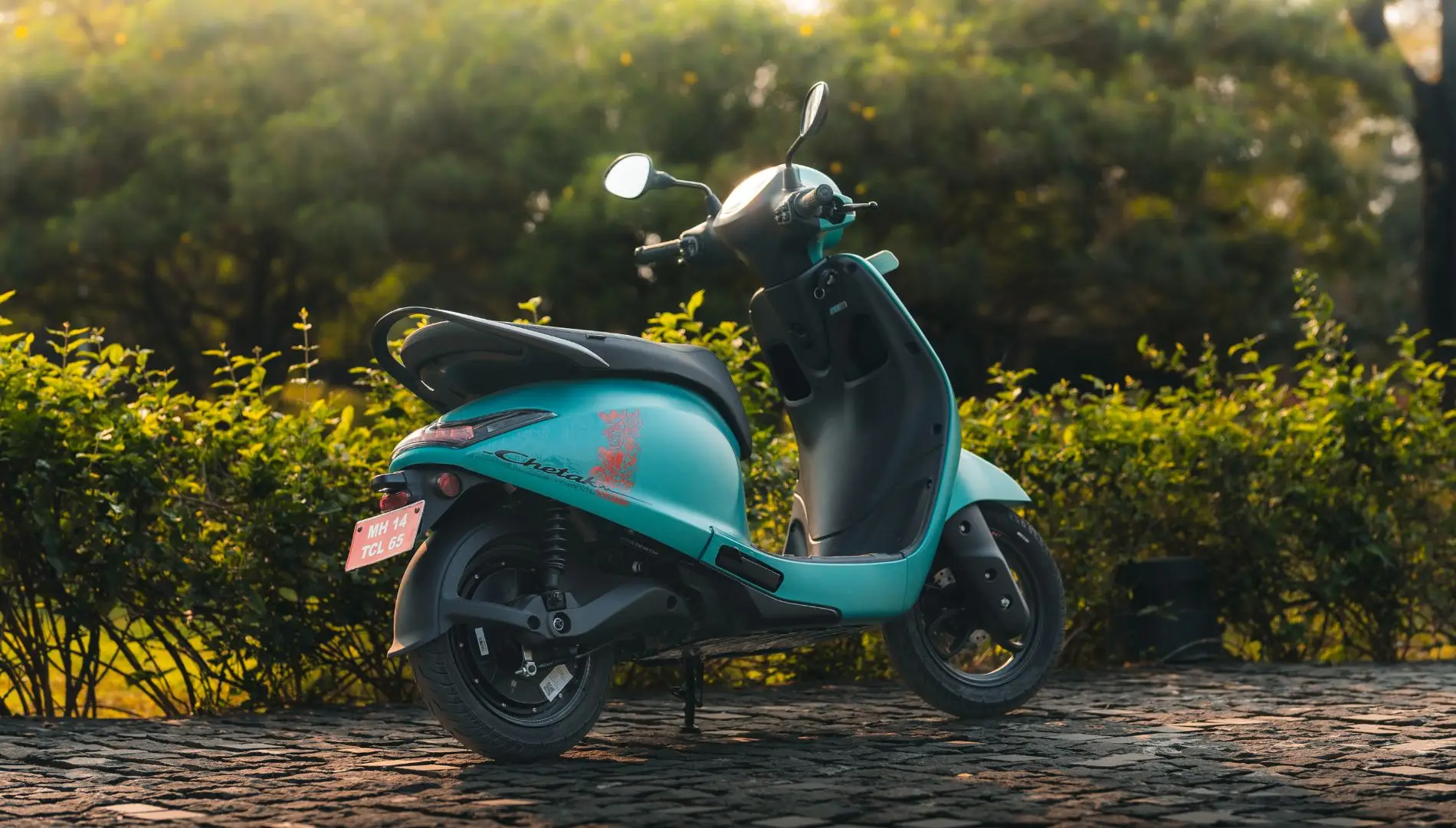
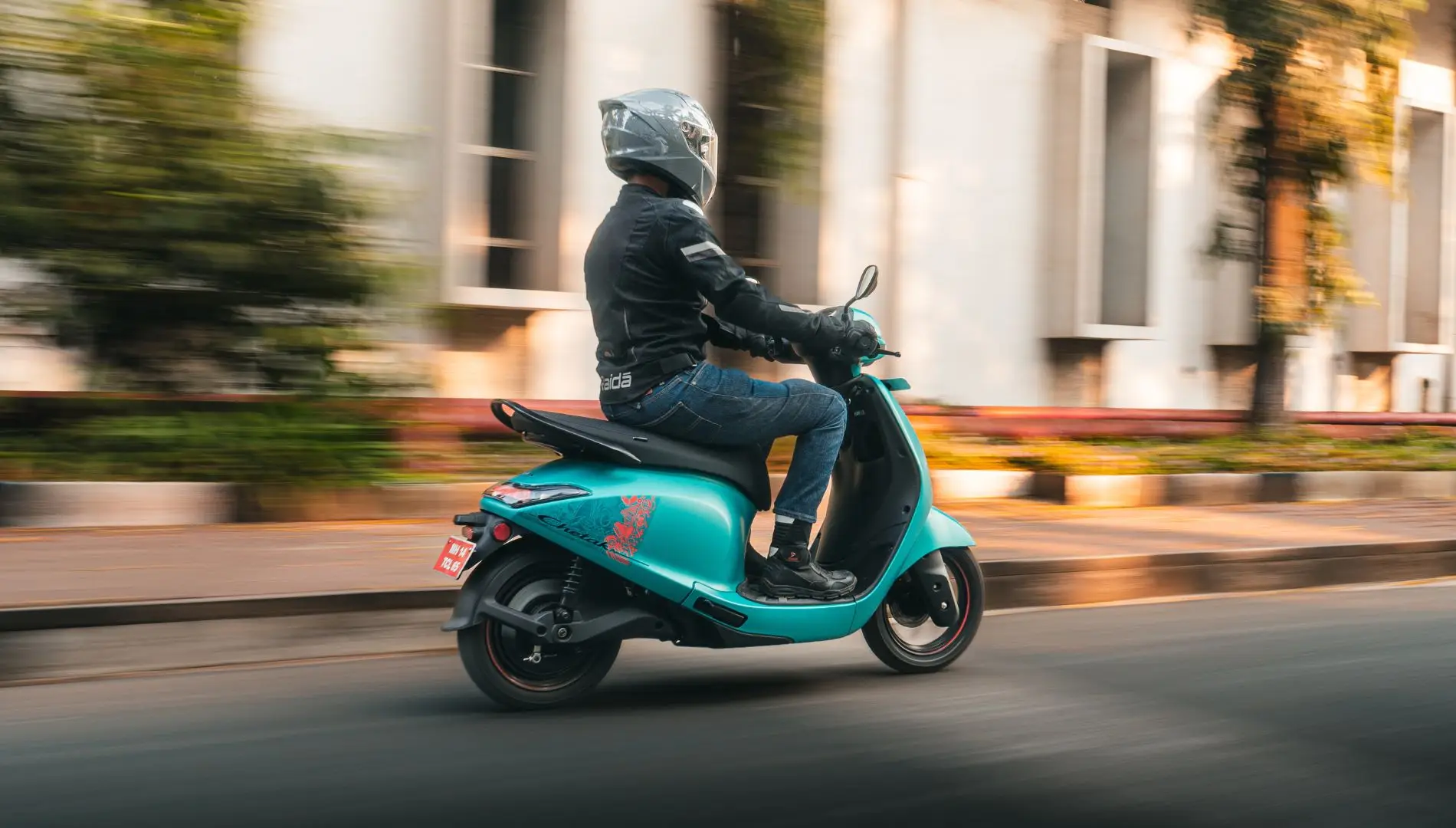
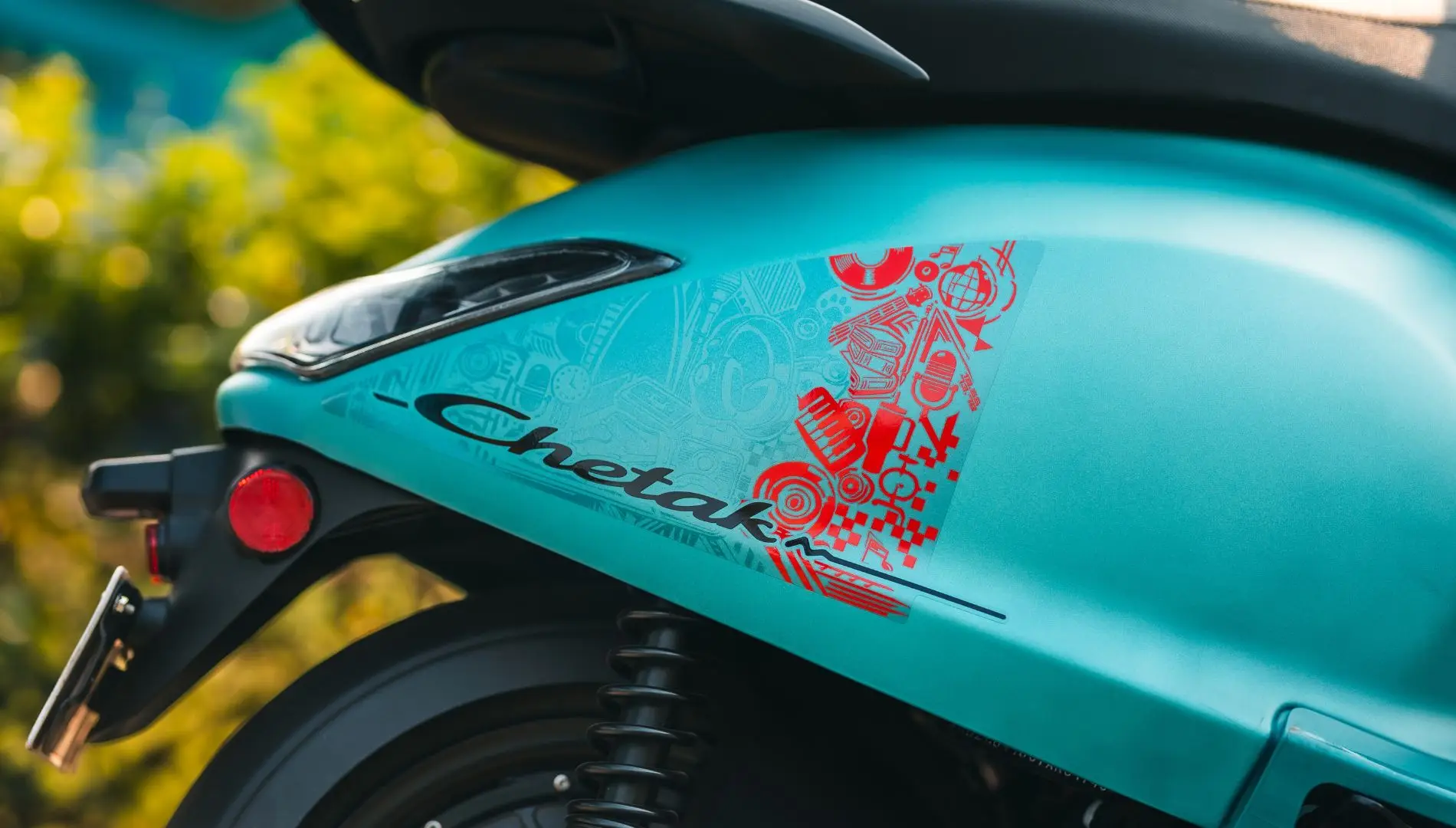
The C25 follows the same neo-retro design language as the original Chetak Electric. As a result, there’s no mistaking it for anything other than a Chetak product, thanks to the familiar round LED headlamp, swooping side panels and a neatly tapered tail section. That said, it also gets a few unique touches of its own, such as a horseshoe-shaped DRL, integrated turn indicators on the handle cowl, ice-cube elements in the tail-lamp and bespoke graphics.
Visually, it’s a good-looking scooter and is also noticeably smaller than its elder sibling, courtesy of a wheelbase that’s around 100mm shorter. The side panels and front apron are made of metal, while the handle cowl and front mudguard are composite bits. Available in six vibrant colours, the C25 enjoys strong road presence overall. Personally, I like the C25, and judging by the attention it drew during my short ride — from curious passers-by both young and old — I suspect many others will too.
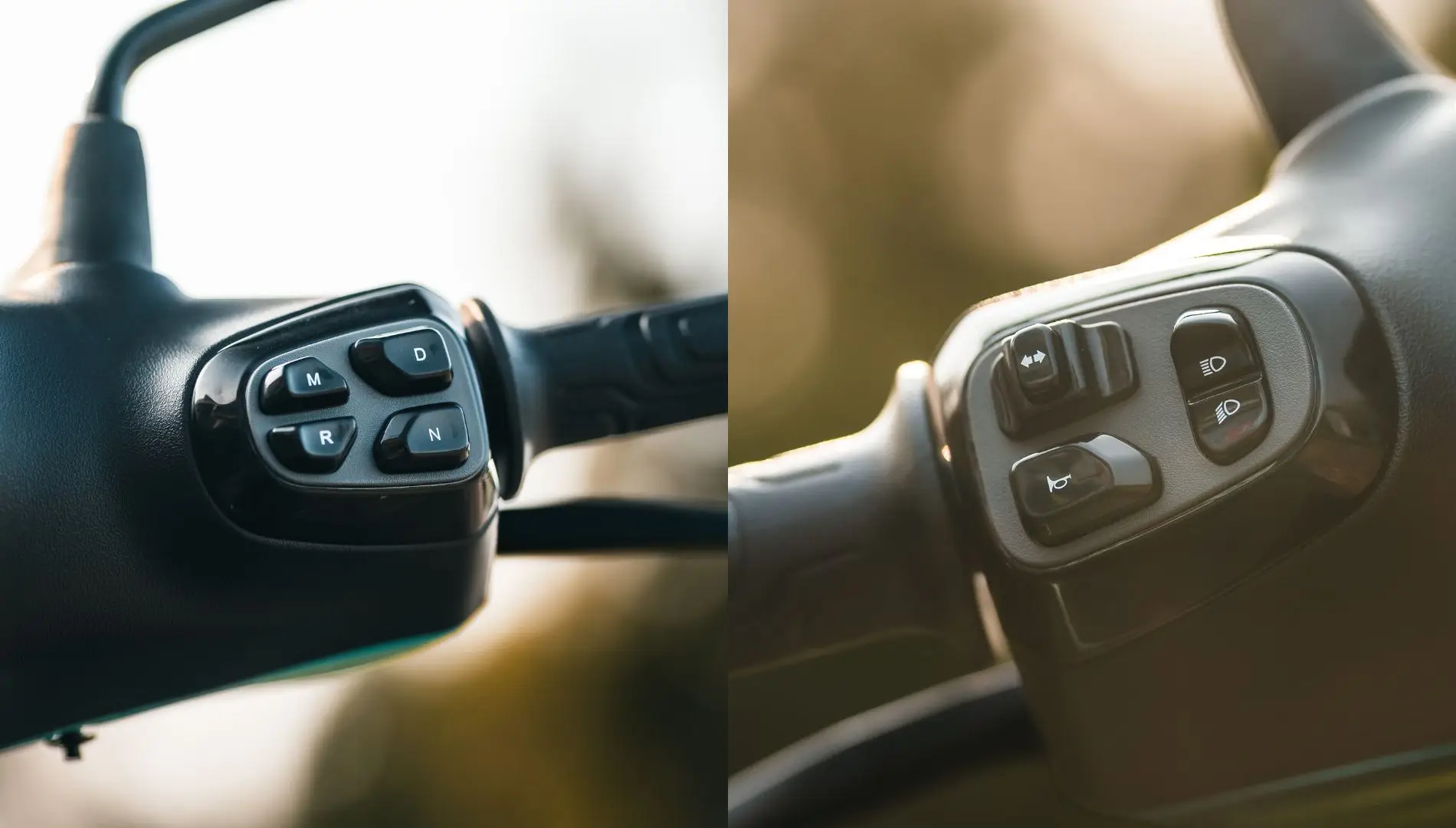
Fit and finish is very good, with consistent panel gaps, very good quality plastics and an overall solid feel; as expected from a Chetak scooter. It has new switchgear, which is far easier and tactile to use than the units on the C35.
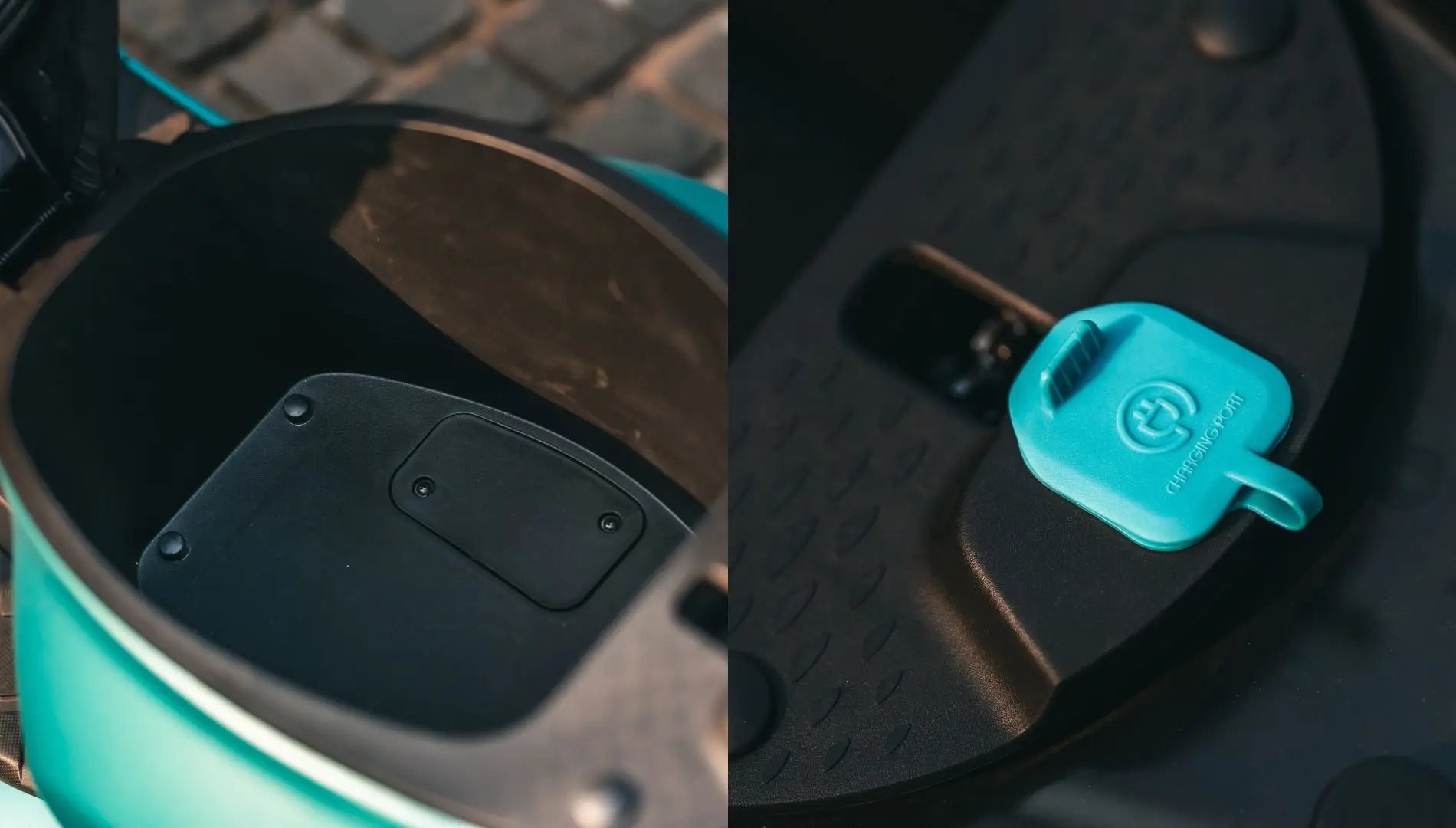
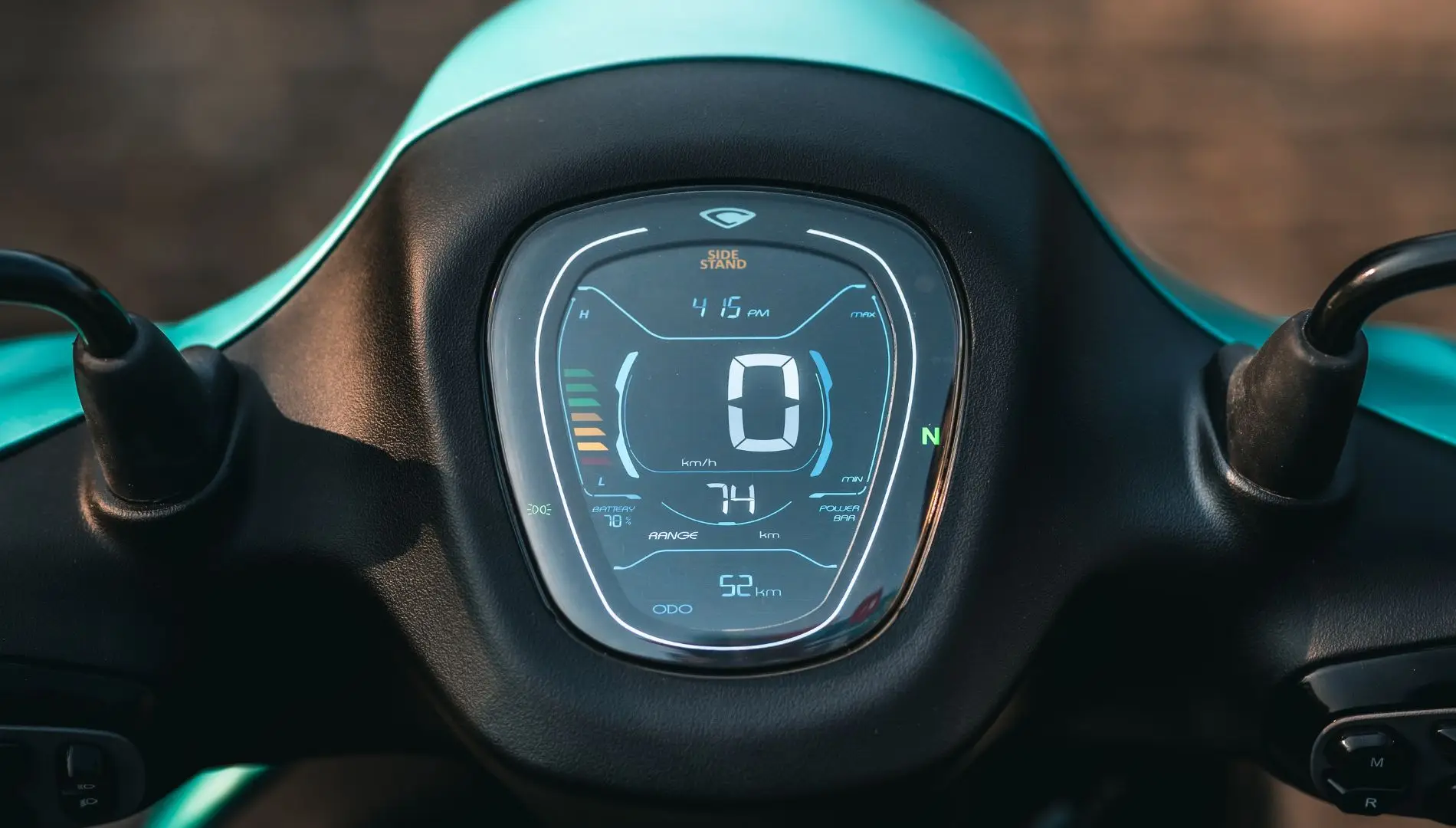
The C25 features LED lighting all around with a guide me home function, reverse assist, and a colour LCD console, which can be upgraded with the TecPac for ₹3,000. This adds hill-hold assist, play and pause functions for music via the switchgear, auto-cancelling indicators, and a tail-lamp flicker under hard braking. The scooter gets a 750W off-board charger which can juice it up from 0 to 80 per cent in 2hr 25 min and from 0 to 100 per cent in a little under 3 and 45 minutes.
In terms of practicality, the C25 offers a 25-litre under-seat boot that can easily swallow a full-face helmet. This is around 10 litres less than the 35 Series, owing to the shorter wheelbase. It also gets two cubbyholes on the front apron, which are handy for storing small items such as a phone. On the accessories front, Bajaj is offering a main stand and a side foot rest with the C25 for ₹917 and ₹690 respectively. It has a 3 year / 50,000km standard warranty.
Chetak C2501 ergonomics, performance and handling
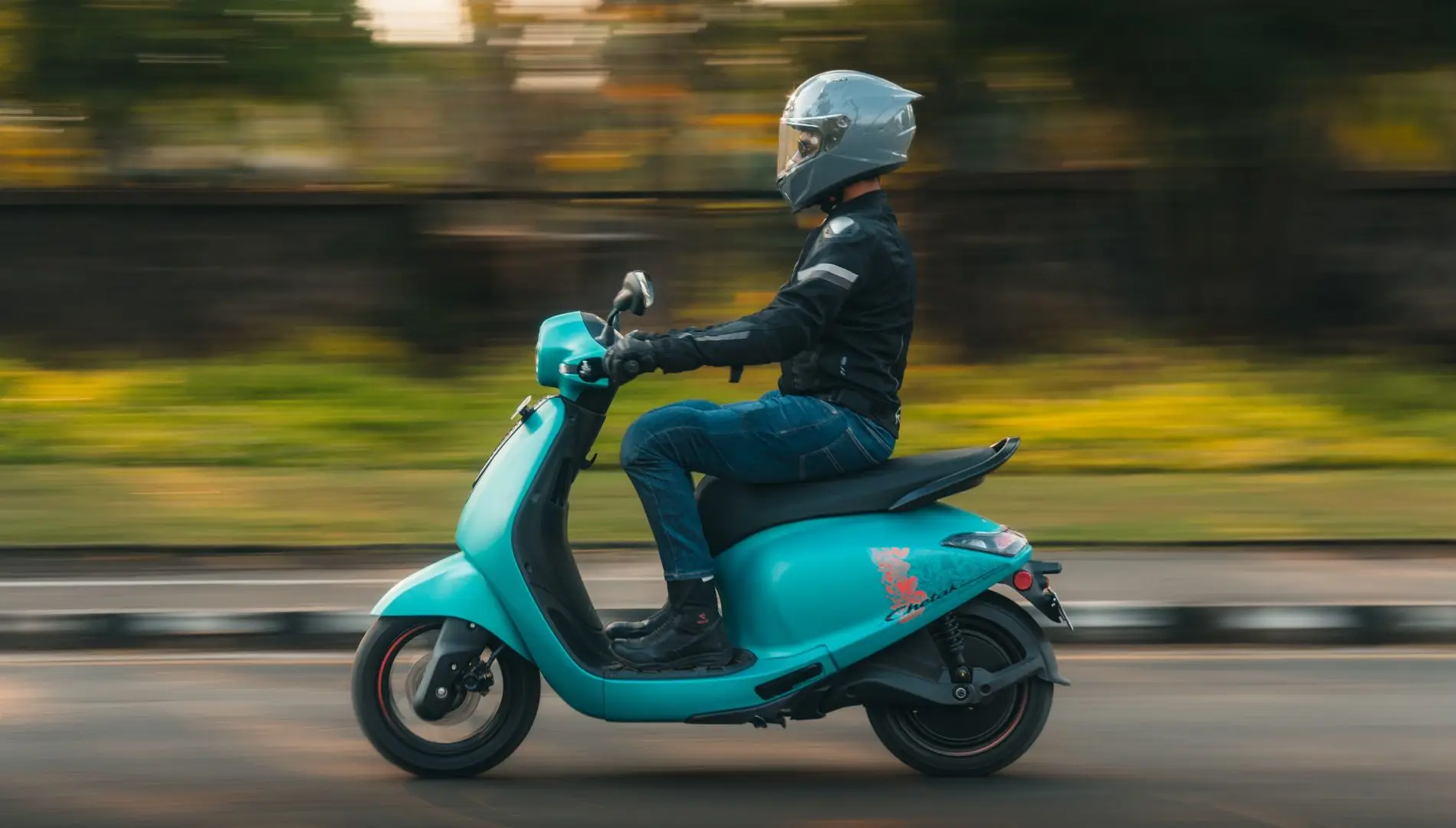
As mentioned earlier, the C25 is a smaller scooter than the C35, and that becomes evident the moment you lay eyes on it. It looks more compact in both length and height, which translates to less space for both the rider and the pillion. Riding solo, however, is an easy affair, with ample room to stretch out. Riders up to 6’2” will be comfortable, with good knee clearance on offer. The handlebar doesn’t foul the knees either, and that’s good for tight turns. With a pillion on board, though, things do get a bit cosy. Both occupants end up sitting rather close to each other, but it isn’t uncomfortable by any means and is perfectly fine for short city rides. That said, the positioning of the pillion’s flush-mounted footpegs can be an irritant for the rider, as they tend to brush against the rider’s calf at crawling speeds when you’re constantly putting a foot down. The short 763mm seat height does make it accessible even for shorter riders though.
The C25 is powered by a hub-mounted BLDC motor that produces 2.2kW of peak power and 1.8kW of continuous output. The scooter I rode was equipped with the optional TecPac, which allowed me to sample the two available ride modes. And honestly, that alone is reason enough to opt for the TecPac, because the performance of this tiny tot is, at best, acceptable. In Eco mode, acceleration is slow but linear up to about 40kmph, after which it tapers off until the capped top speed of 55kmph. Switch to Sport mode and the initial shove improves slightly, making it the better choice when riding with a pillion or when you need that extra bit of urgency. However, throttle calibration in this mode can feel a bit choppy at low speeds, while Eco mode is easier to modulate in slow-moving traffic. All in all the acceleration of the C25 is usable and it can keep up with traffic, but the 55kmph speed cap firmly restricts it to city duties and encourages a laid-back riding style. If you’re in a hurry, or expect quick bursts of pace, this isn’t the scooter for you. In fact, the limited top speed can occasionally feel unsafe when attempting overtakes above around 45kmph, as there simply isn’t enough headroom or shove left to push you past slower-moving traffic. Braking on the Chetak is handled by a disc brake up front and a drum brake at the rear. This setup does a competent job of hauling the scooter down, though in emergency situations you may wish for a stronger initial bite from the front brake.
The ride quality of the C25 leaves a bit to be desired, especially when you’re riding solo. It gets a telescopic fork up front and a dual-shock setup at the rear, but the suspension doesn’t do the best job of damping out rough surfaces. The rear feels better, but that can’t be said about the front. As a result, you have to take it easy over broken patches, as kickback from the front is very evident and even uncomfortable at times.
Ride quality does improve with a pillion on board, with the scooter feeling noticeably more settled. The C25 also boasts a healthy 170mm of ground clearance, which means it clears most speed breakers without scraping its belly — barring the really nasty ones. On the plus side, its light weight makes the C25 feel very nimble in the city. It’s super flickable and makes easy work of filtering through tight gaps in traffic.
Chetak C2501 verdict
The Chetak C25 is a good city runabout for anyone who prefers a relaxed ride. It’s easy to handle, reasonably practical, and feels well built. But it isn’t without its flaws — the most significant being the 55kmph top-speed cap, which can feel unnerving when overtaking at speeds above 40kmph.
At ₹91,400 (ex-showroom), the C25 feels a little pricey, especially once you factor in ₹1,099 annually for Roadside Assistance, ₹3,000 for the TecPac, and ₹5,990 for the extended warranty (covering five years or 70,000km). Add to that the fact that for just around ₹10,000 more you could get the 35 Series, and the C25’s appeal lessens. Had it been priced in the mid-₹80,000 range, it would have made a much stronger case for itself.
I also hope Bajaj considers nudging the top speed up slightly — say, to 75kmph — which would make city riding feel far safer and more confident. As it stands, the C25 is an excellent alternative to the TVS iQube 2.2kWh, Ola S1X, VIDA VX2, and scooters from Ampere and Okinawa, offering far superior build quality and competitive all-round performance.
Motor: BLDC 2.5kW
Top Speed: 55kmph
Price: ₹91,400 (ex-showroom)