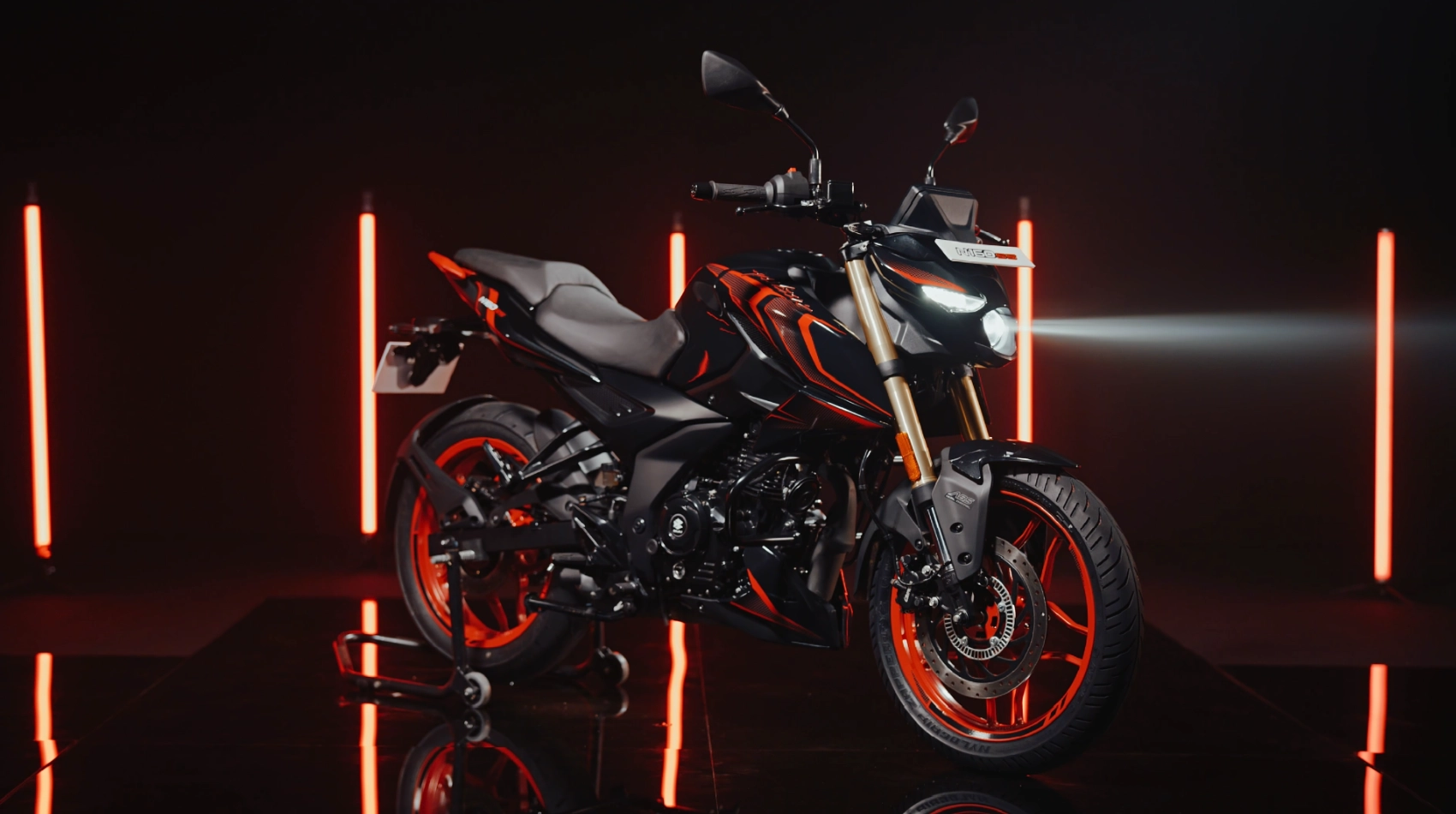
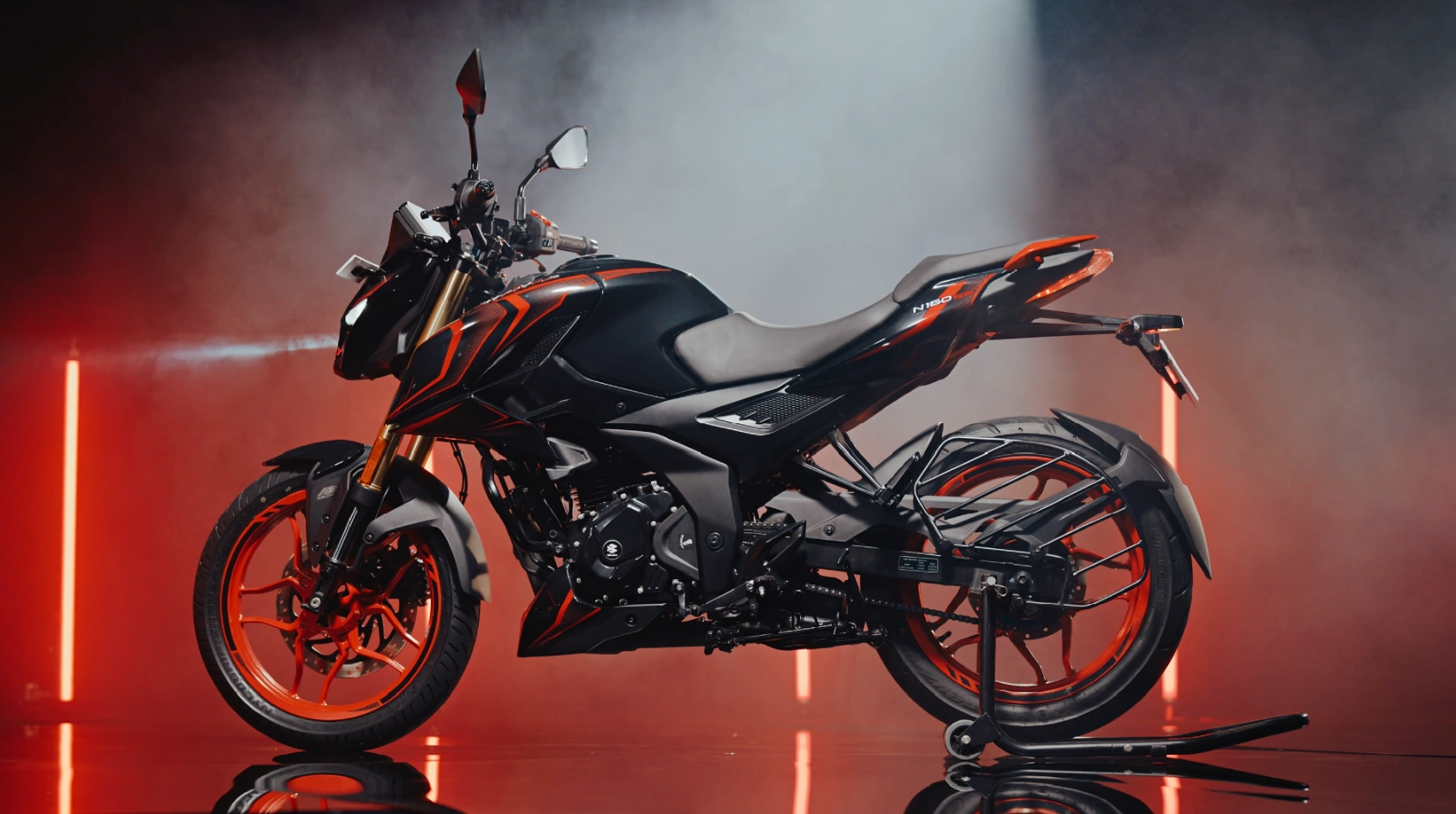
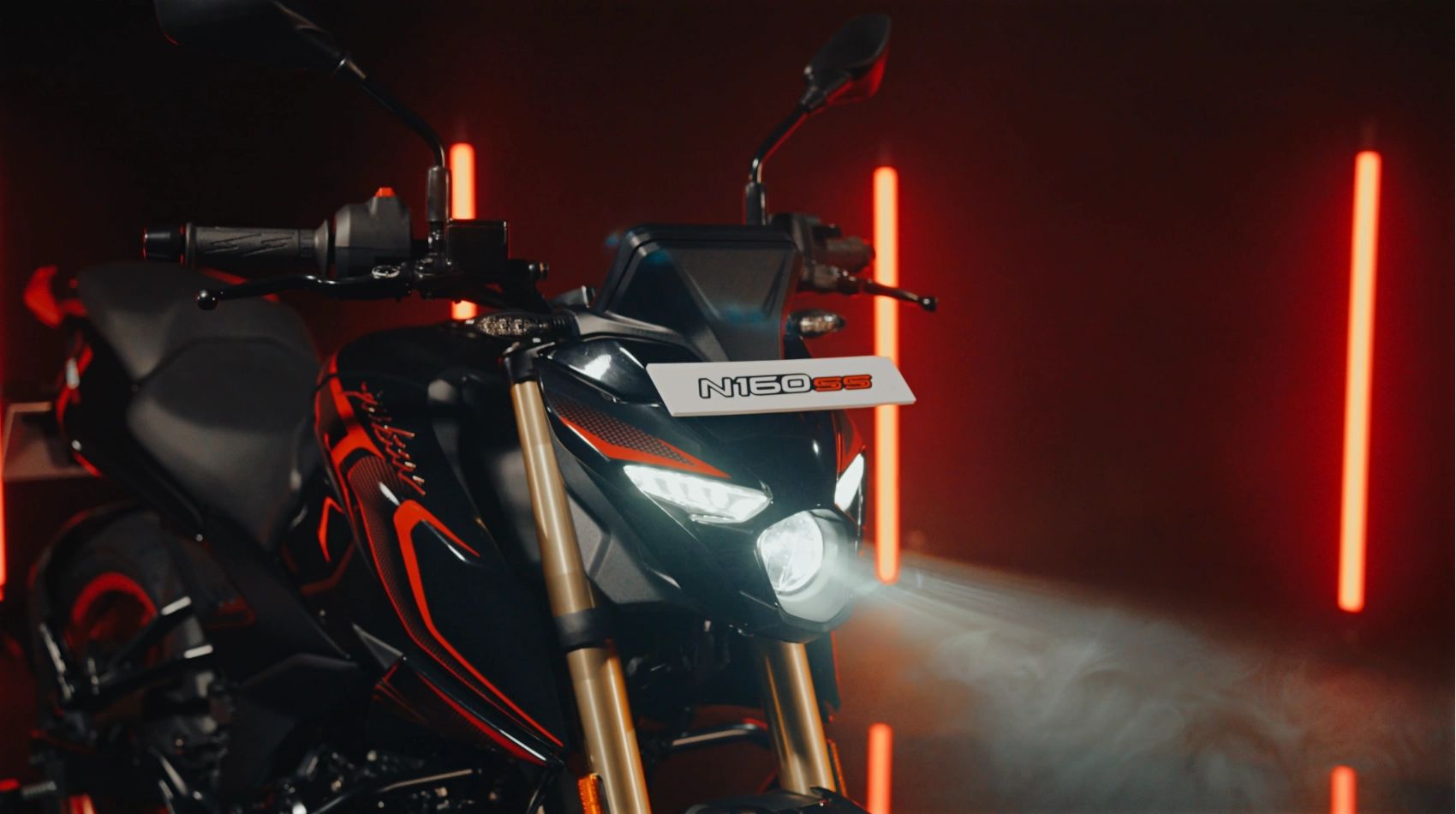
Bajaj has given the Pulsar N160 a fairly substantial update, and this time the changes go beyond a new colour or a few cosmetic tweaks. The updated N160 range now brings a mix of mechanical changes, new electronics and additional technology, making the bike feel like a more complete package than before.
The range is now available in three variants: N160, N160 S and N160 SS. While the standard N160 remains relatively familiar mechanically, the higher variants get a new four-valve engine along with several features that are being introduced to the Pulsar range for the first time.
Engine and Performance
The biggest mechanical change comes on the N160 S and N160 SS. Both variants use a new 164.9cc, four-valve, oil-cooled engine producing 18.2hp at 9500rpm and 14.4Nm at 8000rpm. Bajaj claims that the N160 is currently the fastest 160cc motorcycle in this segment, with a claimed 0-60 km/h time of 4.5 seconds. On paper, the additional power should give the higher-spec variants a noticeably stronger character, particularly when compared with the standard N160.
The standard N160, meanwhile, continues with a 164.82cc, two-valve engine producing 15.7hp at 8750rpm and 14.65Nm at 6,000rpm.
What I find interesting here is that Bajaj has not simply made the same engine available across the entire range. The company seems to be using the S and SS variants to offer a more performance-focused experience, while the standard N160 continues to cater to buyers who want the familiar Pulsar formula without paying for all the additional technology.
Brakes and suspension
The N160 SS gets the most serious setup of the three, with a 300mm front disc and dual-channel ABS. The standard N160 and N160 S, on the other hand, use a 280mm front disc with single-channel ABS.
The suspension setup follows a similar approach. The N160 S and SS get 37mm USD front forks, while the standard N160 uses 33mm USD forks. At the rear, the difference continues. The S and SS get a monoshock with 130mm of travel, while the standard N160 gets a 120mm-travel monoshock. That extra 10mm may not sound like much on paper, but it should help the higher variants deal with broken roads and larger bumps better.
The N160 SS Is Where Things Get Interesting
If there is one variant that really stands out, it is the N160 SS. This is where Bajaj has added most of the new technology, and some of it is being introduced on a Bajaj motorcycle for the first time. The biggest highlight is the new 5-inch TFT display, which gets Bluetooth and Wi-Fi connectivity along with Google Maps integration. This is a significant step up from the displays on the other two variants and gives the N160 SS a much more modern feel.
The standard N160 gets a monochrome LCD display, while the N160 S gets a 5-inch colour LCD unit. Both of these variants offer basic turn-by-turn navigation, but the SS takes things a step further with Google Maps connectivity. The bike also gets four riding modes- Road, Rain, Sport and Off-Road. The SS variant comes with Traction control.
Personally, I think this is one of the more meaningful upgrades on the new N160. A connected TFT display is becoming increasingly common on larger motorcycles, but seeing this level of technology trickle down to a 160cc motorcycle makes the N160 SS feel considerably more upmarket.
Ride-by-Wire and Crawl Tech
The N160 S and N160 SS also get a ride-by-wire throttle, replacing the conventional mechanical throttle. The system is claimed to offer a more precise throttle response and also allows Bajaj to introduce more electronic functions into the motorcycle. One of these is Crawl Tech, which is designed specifically for low-speed riding in heavy traffic. The system is intended to make crawling through bumper-to-bumper traffic smoother, reducing the amount of throttle and clutch input required from the rider. This may sound like a small feature on paper, but it could actually be one of the more useful additions for Indian riding conditions. Most 160cc motorcycles spend a significant amount of their lives negotiating traffic, so anything that makes low-speed riding less tiring has a practical benefit.
Pricing
Price of the Bajaj Pulsar N160 starts at ₹1.22 lakh (ex-showroom) for the base variant and go up to ₹1.42 lakh (ex-showroom) for the top end SS variant.
The Bajaj Pulsar N160 will rival the TVS Apache RTR 160 4V, Ktm Duke 160 and Hero Xtreme 160R 4V in the 160cc segment.