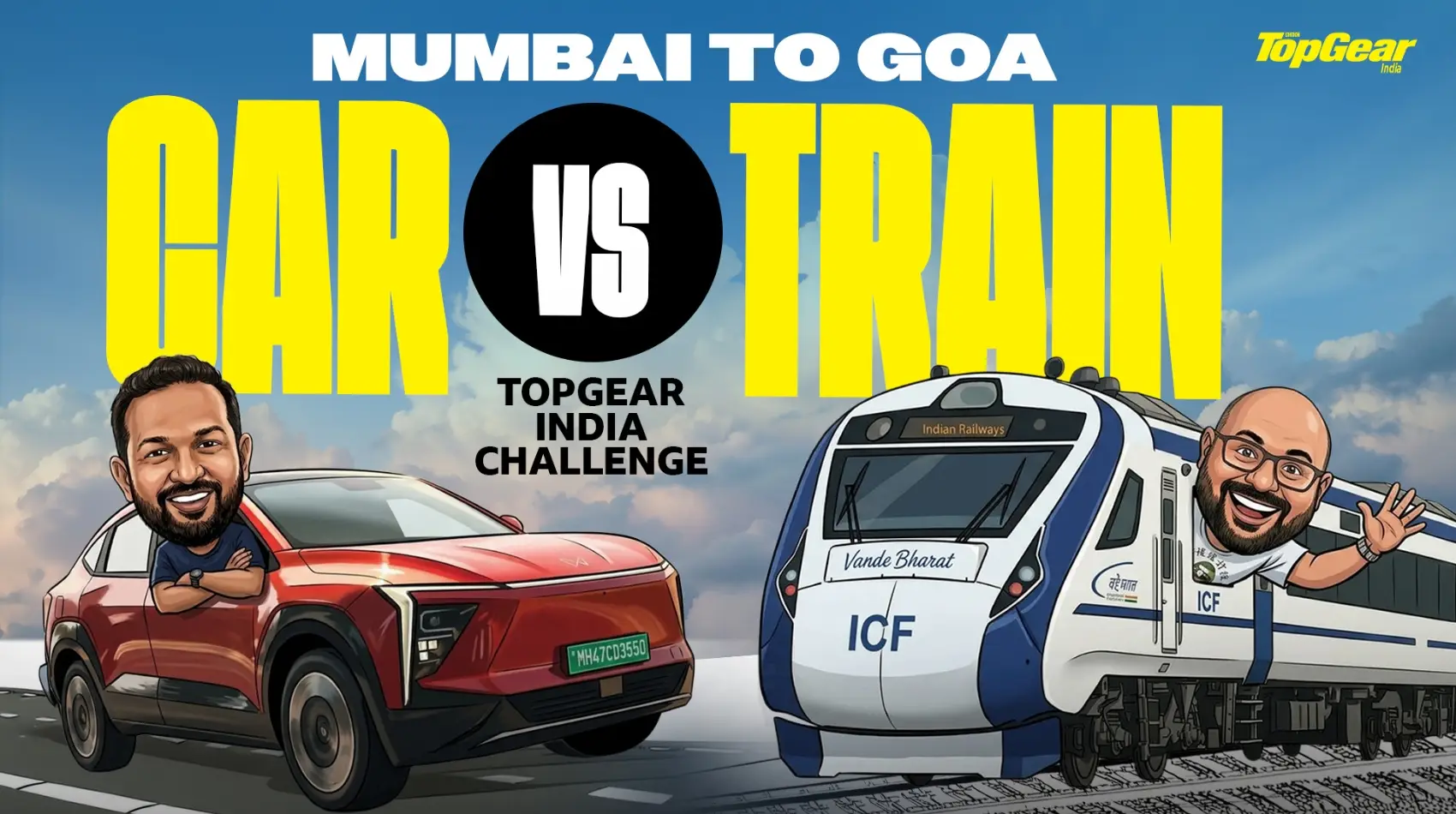
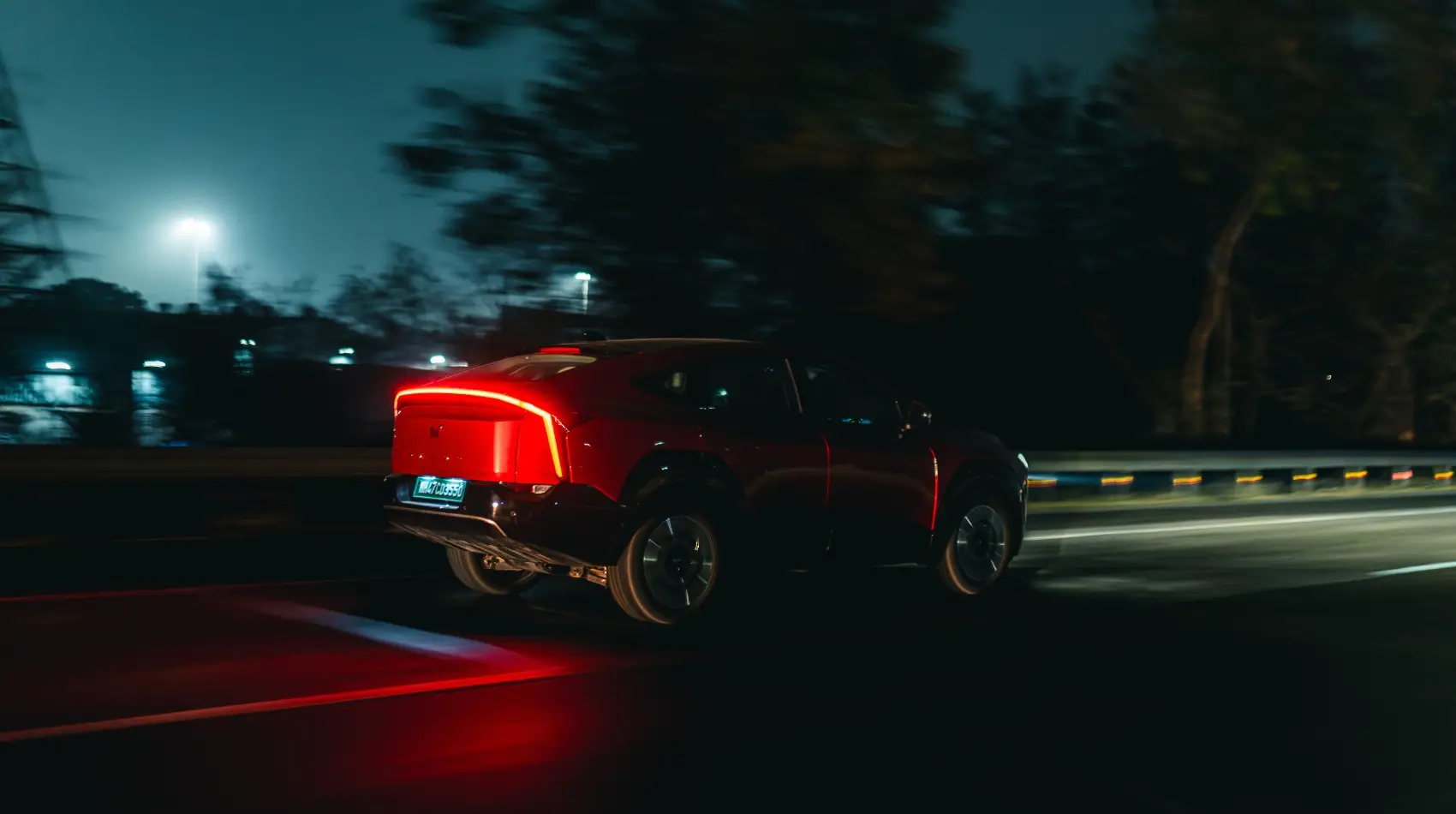
It is 2:55 in the morning and there are only two kinds of people awake in Mumbai. Those coming home from a party. And those about to do something monumentally stupid. We were firmly in the second category.
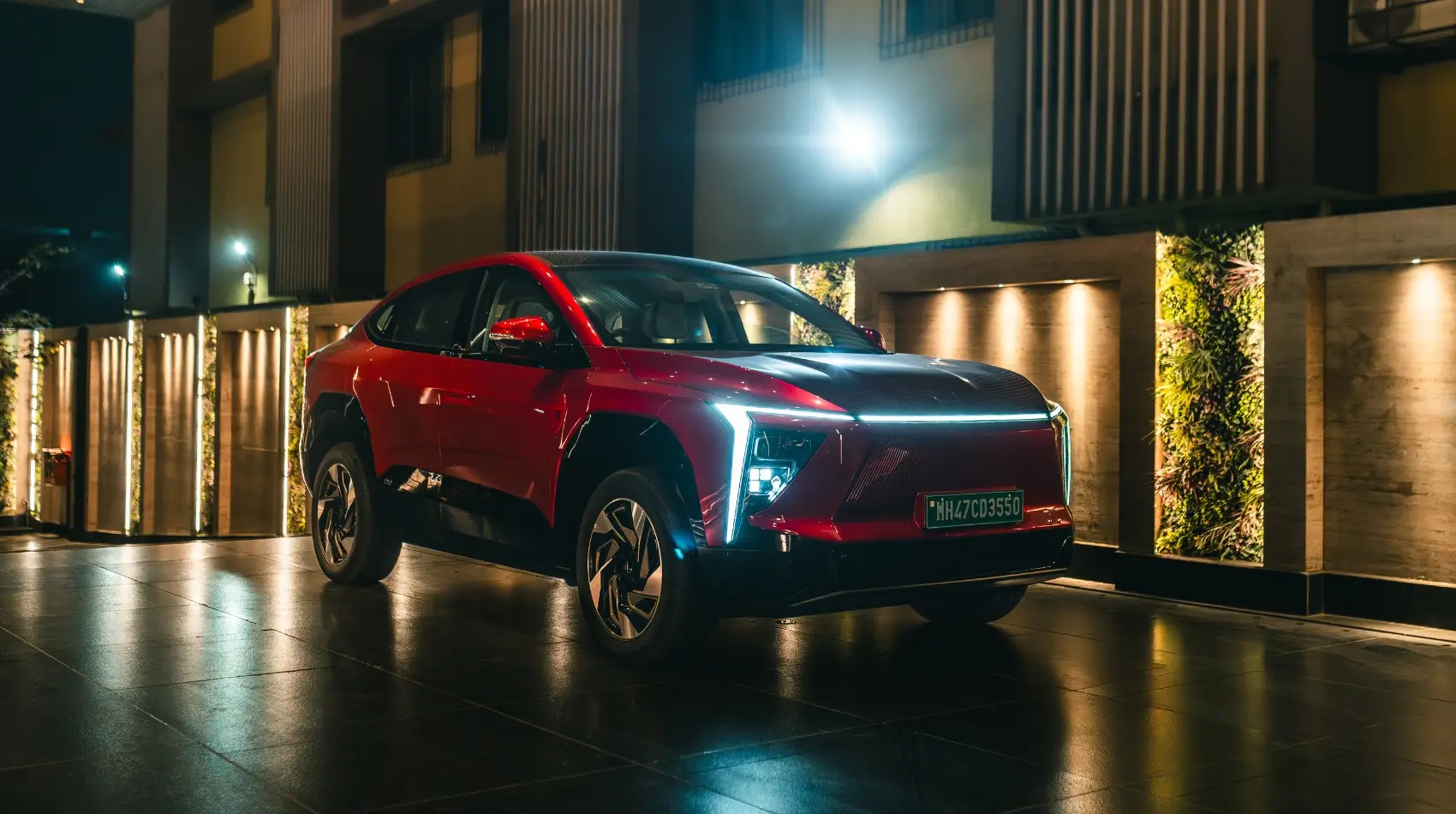
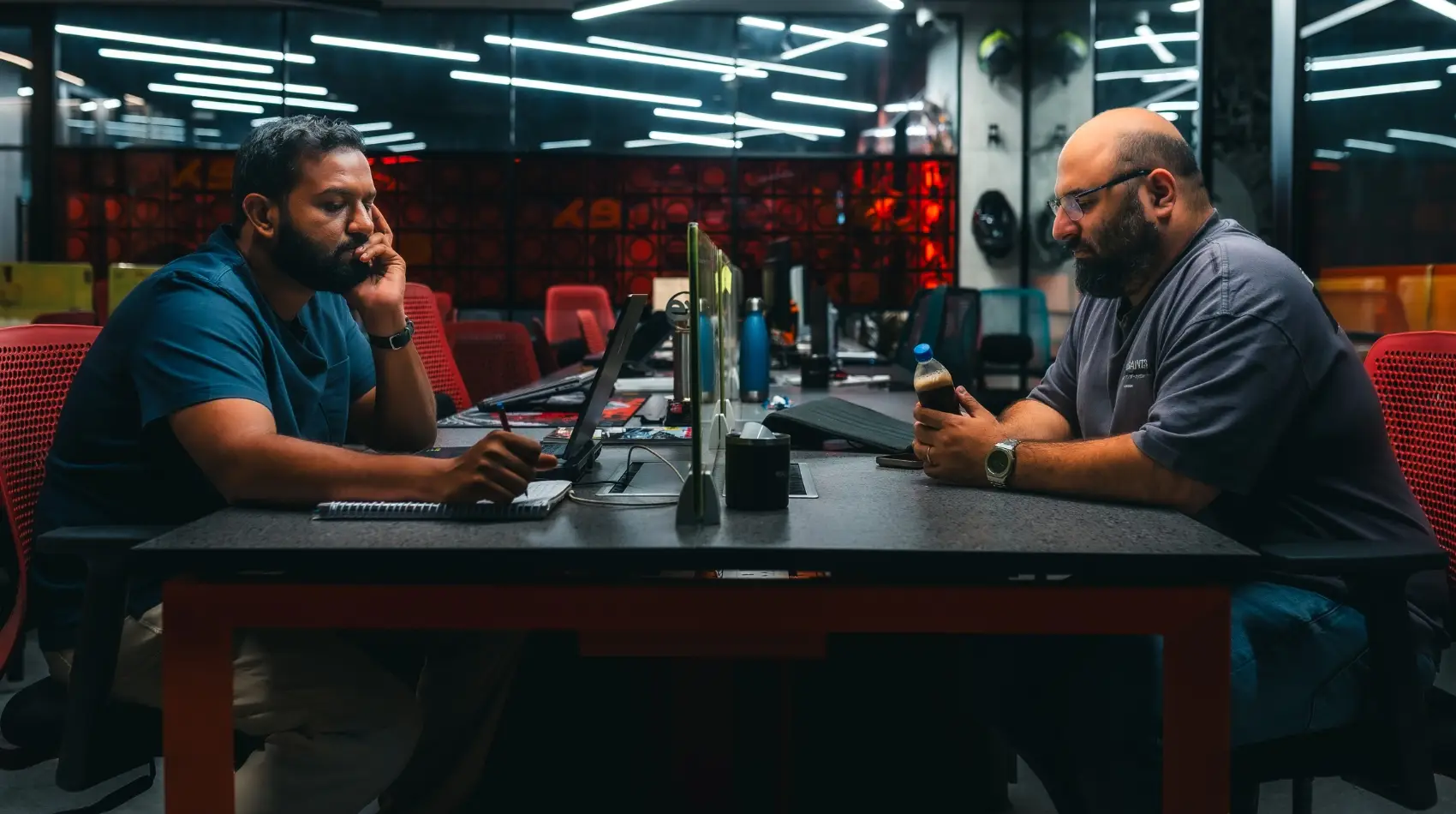
In the parking lot downstairs sat a Mahindra XEV 9e, charging at 93 per cent. Across the table sat our managing editor, Cyrus. And on the table sat a half-empty plastic water bottle that had probably been there since the last financial year.
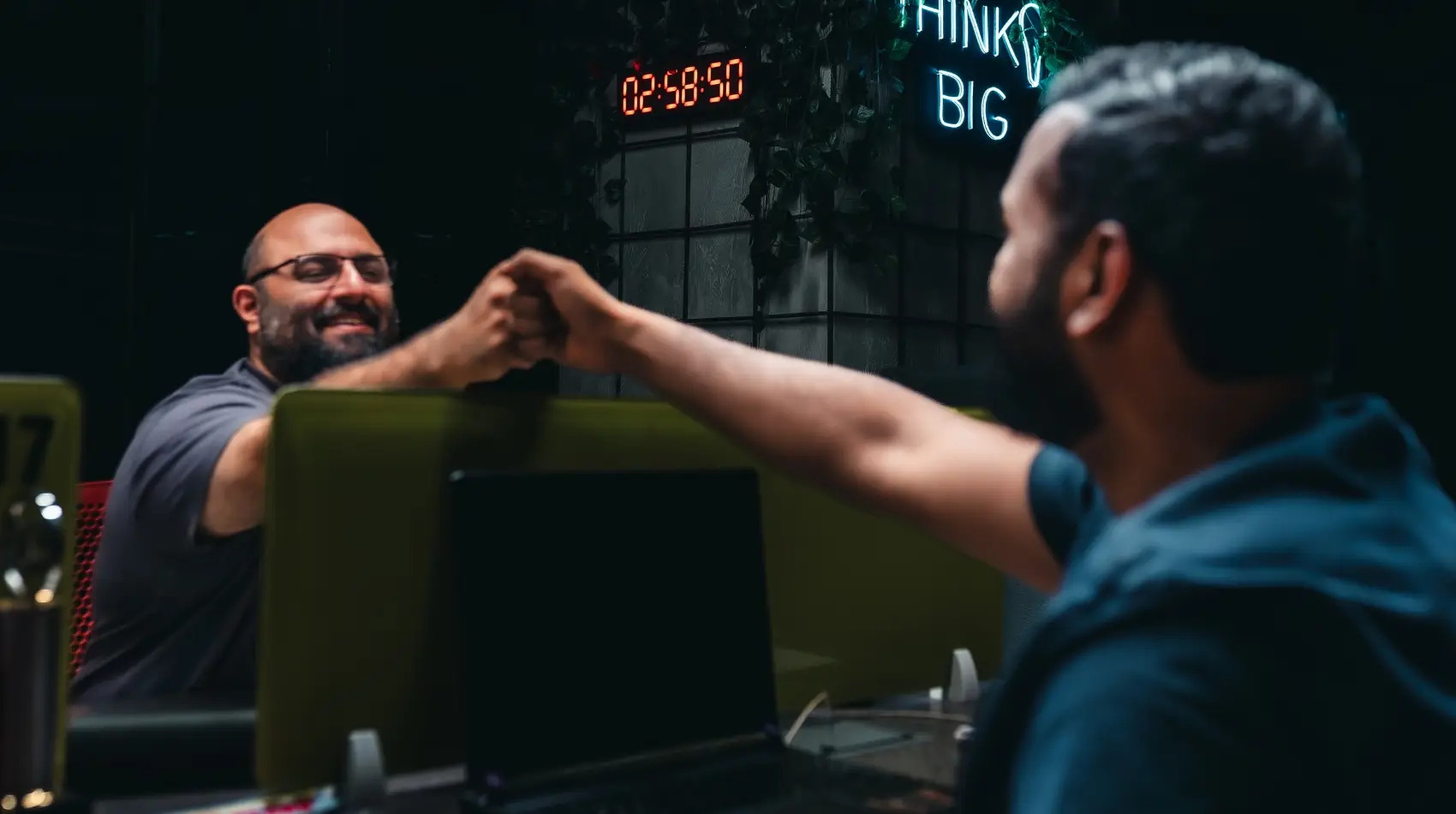
Cyrus flicked the bottle into the air. “If it lands upright,” he said, “we race.” Mumbai to Goa. Car versus train. At three in the morning, this felt like completely sound logic.
The bottle spun, wobbled, and landed upright on the very first attempt. Which kind of makes you question physics, probability and your life choices all at the same time. But a deal is a deal.
We would both leave the office at 3:00 am. Cyrus would take the 5:25 am Vande Bharat from Chhatrapati Shivaji Maharaj Terminus to Madgaon. Air-conditioned comfort. Tea service. And a timetable that doesn’t care about traffic jams, potholes or existential dread.
I would leave in the Mahindra XEV 9e and drive the entire distance. No speeding. No breaking traffic laws. No editing later to cheat.
Cyrus wasn’t getting away easy either. No cab-hailing apps. No pre-booked taxis. To the CST station from the office and even once he reached Madgaon, he had to step outside the station and negotiate with whatever black-and-yellow Goa happened to offer. Meanwhile, I had toll plazas, roadworks, truck drag races and the Western Ghats to deal with.
The finish line wasn’t Madgaon station. That would have been too simple. It was a villa twenty minutes away with an infinity pool. First one in wins.
On paper, the train had the advantage. It departs at 05:25 a.m. and arrives at 01.10 p.m. That is a comforting amount of time. During the day, it was a neat rectangle. A Mahindra XEV 9e departing Mumbai at 3 a.m. does not have that level of luxury. It includes uncertainty. It has infrastructure that is still being built in spirit, if not in reality. Diversions emerge unexpectedly, and trucks!
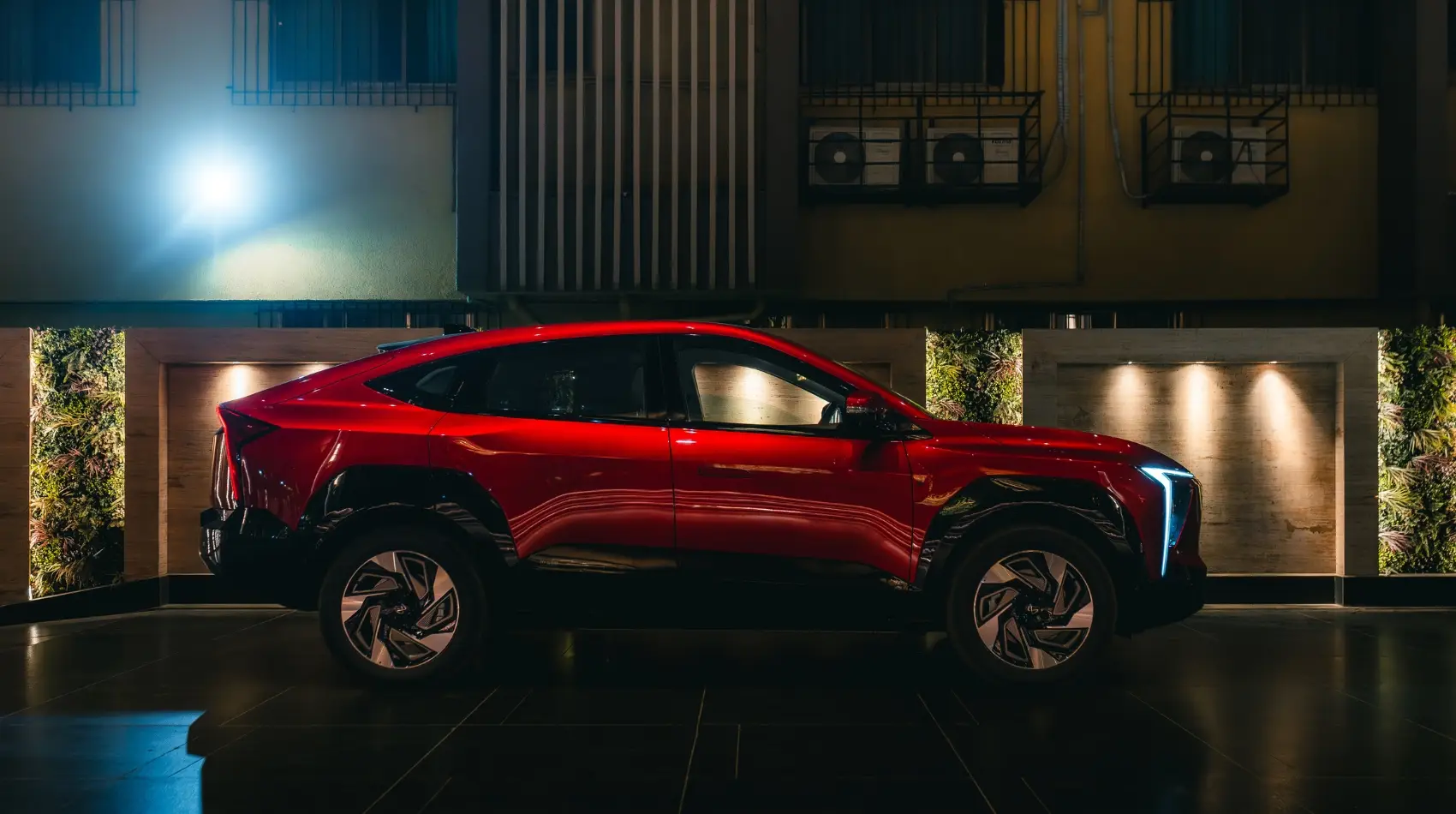
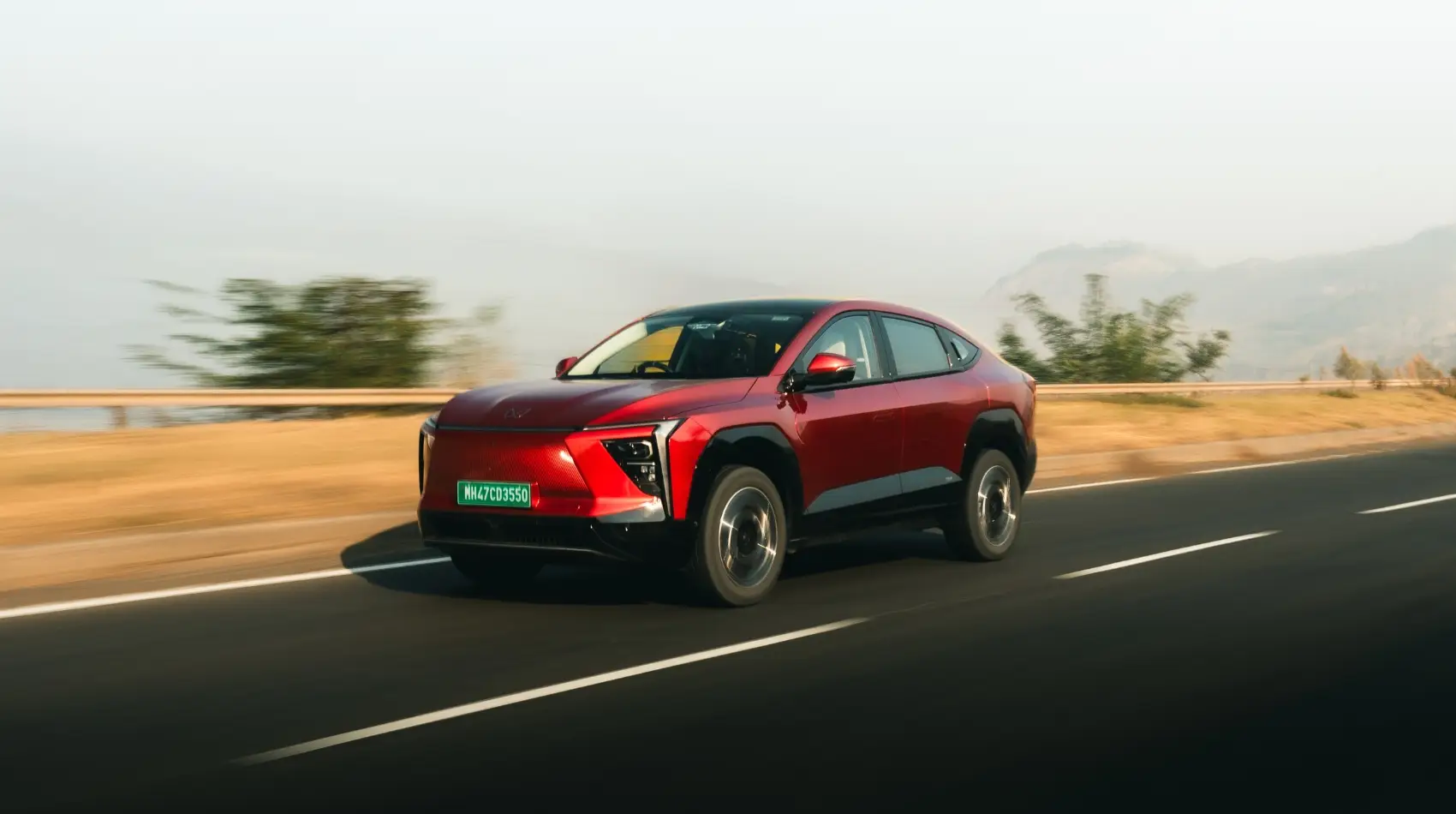
The Mahindra XEV 9e is an Electric Origin SUV. Ours had a 93 per cent charge and a claimed range that suggested Mumbai to Goa could be done in one clean, uninterrupted run. That was assuming everything went perfectly. This is India. Things rarely do.
At three in the morning, it felt heroic. The Mahindra XEV 9e versus public transport. Freedom versus timetable.
The Mahindra XEV 9e was packed in a way only an Electric Origin SUV can. Camera bags, tripods and duffels disappeared into the deep rear boot without so much as a complaint. Charging cables, batteries and the smaller bits of kit went into the frunk under the bonnet. It is deeply satisfying to lift a bonnet and find storage instead of an engine. Forty-five to one hundred and fifty litres of bonus space, depending on the version and in our case, it meant delicate gear was separated from heavy luggage. If we wanted to, we could have filled it with ice and used it as a cooler, thanks to the drain plug. Tempting for Goa, but first we had to get there.
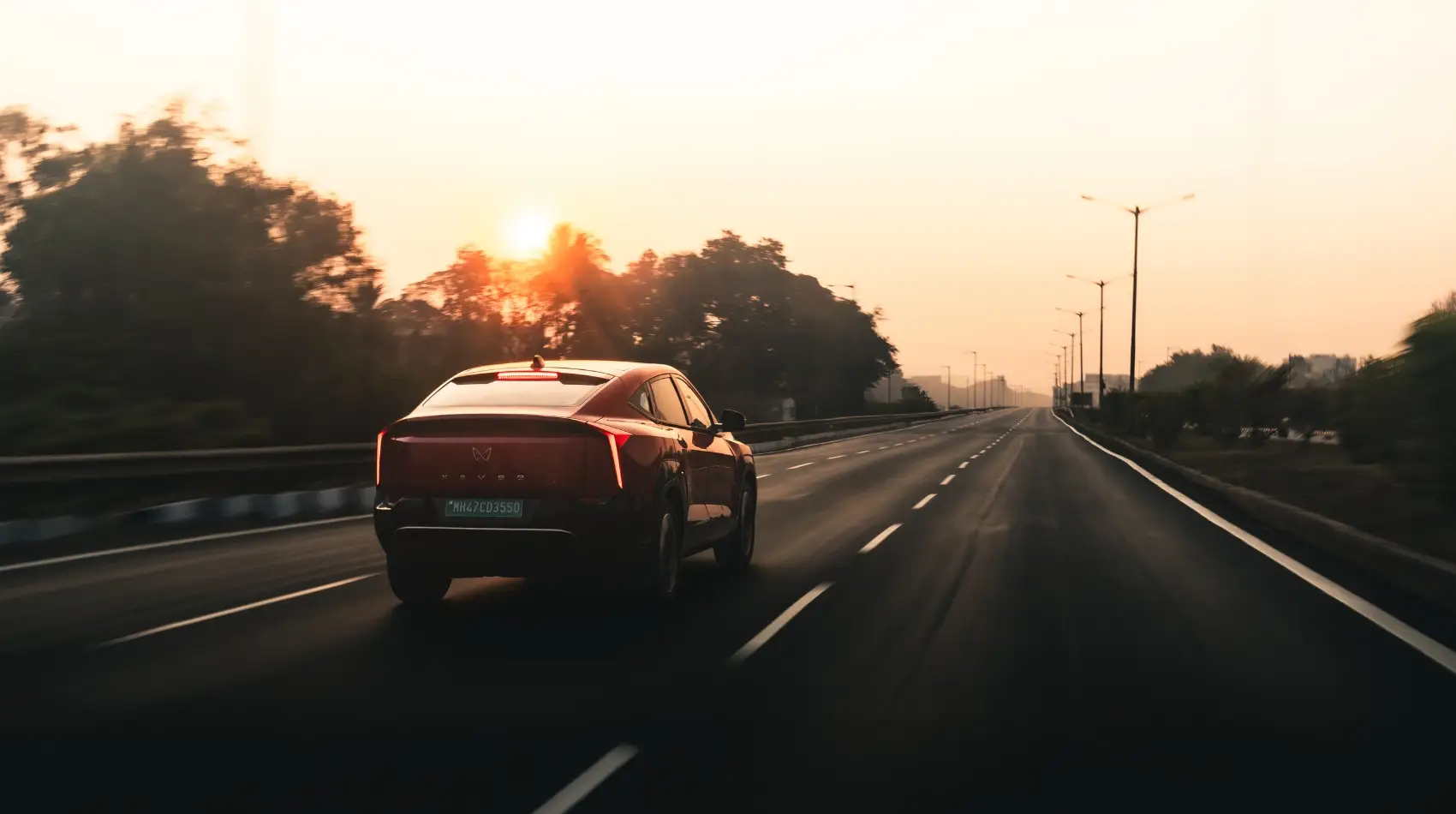
Five, four, three, two, one and I ran. Cyrus was on his way to Jogeshwari, where he planned to snag a local who would feed him CST. I rolled out of the parking lot and was immediately stopped by the Mumbai Police for a normal check. Breathalyser, paperwork, and the usual. At 3 a.m. in Mumbai, you're either a suspect or a journalist. Sometimes both. We got over that hurdle and joined the Western Express Highway just as the city rubbed its eyes.
This is where the XEV 9e begins to make sense. You press the little shoe icon on the steering wheel and single-pedal mode engages. Lift off the accelerator and the regen kicks in hard, harvesting energy while gently slowing the car. In crawling traffic and at signals, it is a gift. The other button, the lightning bolt, is boost mode. Hold it down and you get instant torque with a sharper throttle. Two diametrically opposite philosophies on either side of the wheel. Sensible and silly. I would use both in equal measure.
Mumbai at that hour is a strange place. Metro work half done, barricades shoved to one side, the occasional rickshaw driver attempting a wrong-way manoeuvre with supreme confidence. The XEV’s steering with a variable ratio meant that darting around detours did not feel like wrestling an SUV. The turning circle of just ten metres came in handy more than once when a diversion spat us into a dead end and a quick U-turn was the only way out. Tall, wide and yet surprisingly nimble.
By the time we hit the Mumbai Pune Expressway, the sky was still black and the road was finally opening up. Adaptive Cruise Control was set just under the limit. This is part of the Level-2 plus ADAS suite, twelve sensors and five radars orchestrated by Mahindra’s MAIA architecture running on a Qualcomm Snapdragon 8295 chip. The numbers are absurd. Two hundred thousand DMIPS, forty-six trillion operations per second, three thousand GFLOPS. What matters at four in the morning is that it keeps a safe distance, brakes if needed and can even assist with lane changes. In the long run, when you are mile-munching, it reduces fatigue.
The AR head-up display projected navigation arrows that grew larger as turns approached, speed limits, and even the song playing through the 1400-watt sixteen-speaker Harman Kardon system. With Dolby Atmos and the Venuescapes feature, you can simulate the acoustics of the Royal Opera House in Mumbai or Wembley Stadium. At that hour, it was a podcast rather than A R Rahman, but the clarity was absurd. For a while, the XEV felt less like transport and more like a rolling studio apartment. And then Lonavala happened.
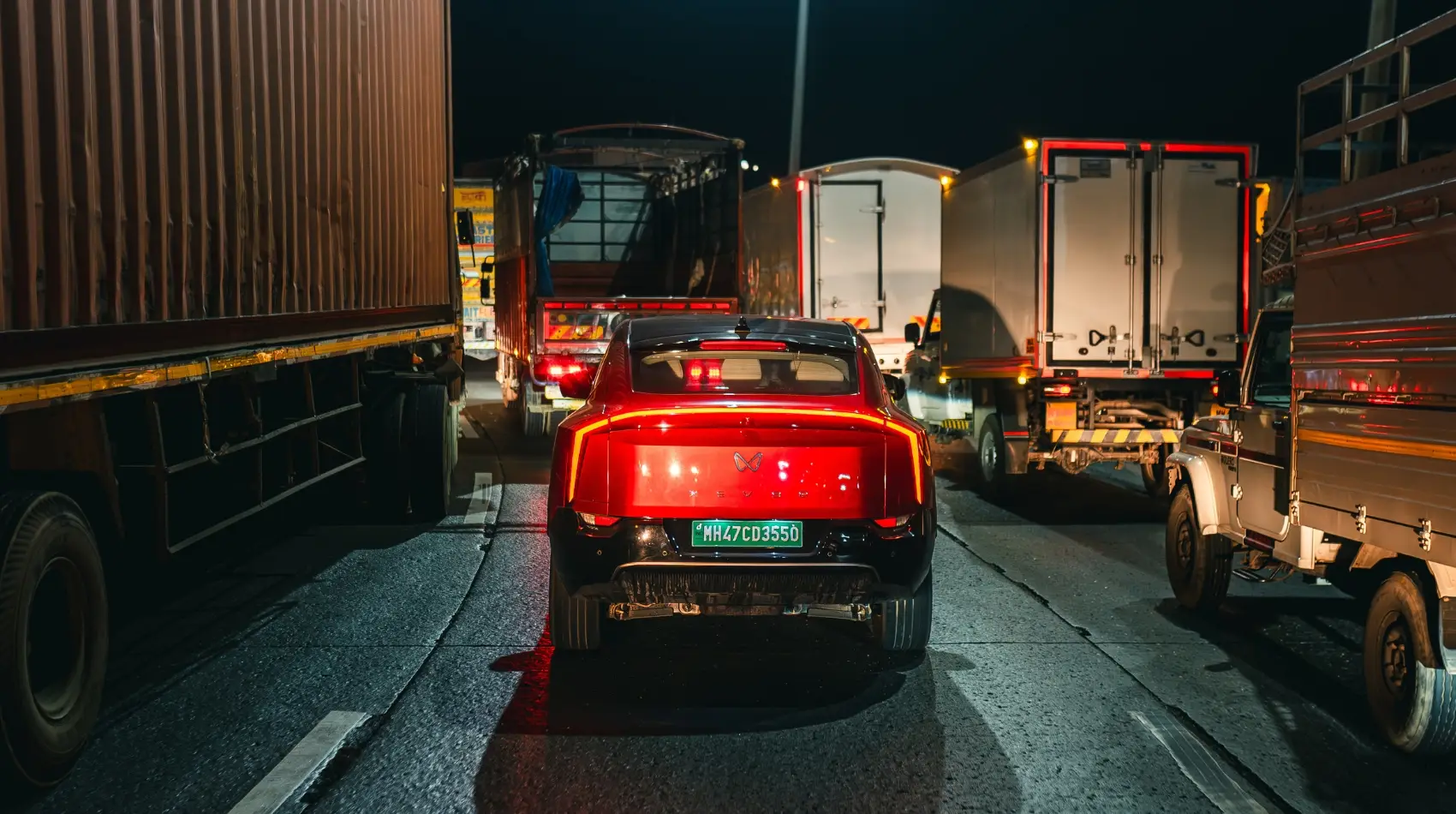
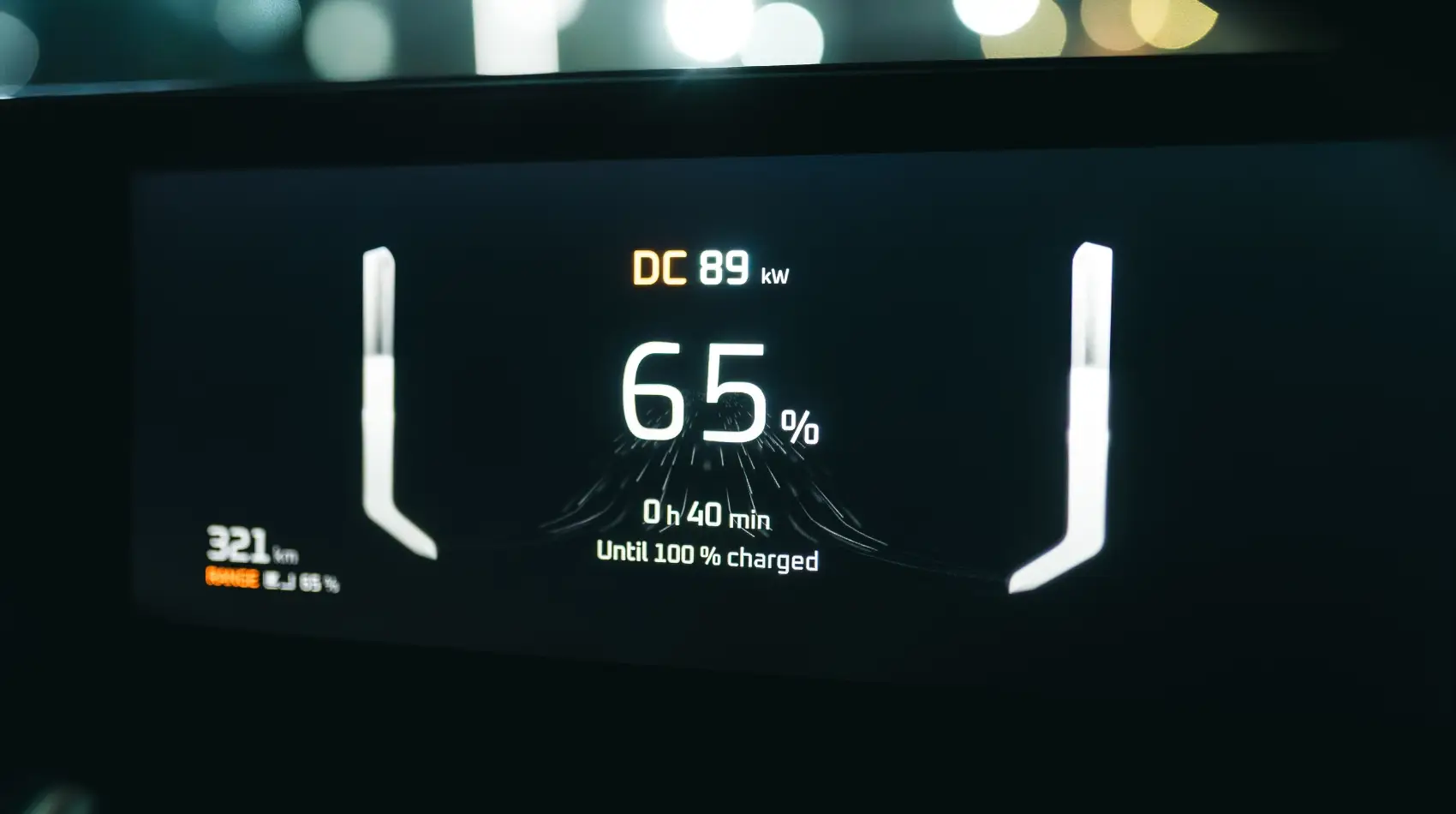
Twenty minutes of nothing. Trucks three abreast on an incline, a bus attempting to overtake a tanker, a tanker attempting to overtake common sense. No accident nor any visible obstruction, just the uniquely Indian art of blocking all lanes for motorsport. Single pedal regen was working overtime, clawing back charge while we crawled. The range indicated on the digital driver’s display dropped, but not alarmingly. We had started with an indicated 471 kilometres, and even after the climb towards Khandala, the real-world numbers tracked closely with the display. So much for range anxiety.
First toll plaza and the FASTag lanes were predictably clogged by someone whose tag had not been recharged since the last IPL season. The irony of the word fast was not lost on anyone. Electric vehicles, however, currently benefit from toll exemptions on certain stretches and breeze through. Small victories matter in a race that would eventually be decided by minutes.
By now, Cyrus was comfortably seated in the Vande Bharat, sipping tea and texting smug updates. He was on time. We were emerging from the Lonavala mess bruised but not beaten. Pune would be our first proper test.
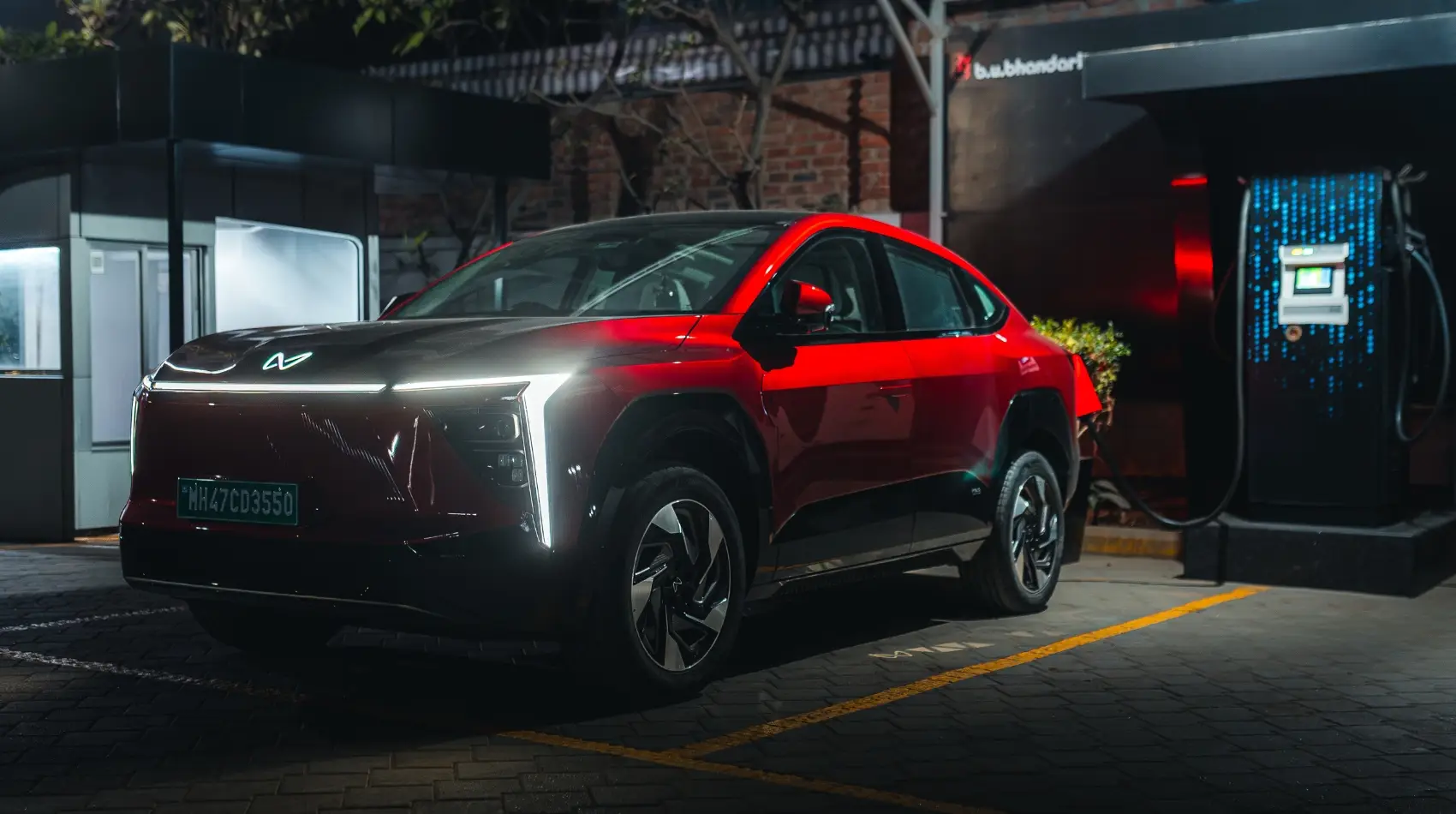
We rolled into a charging station in Pune. The XEV 9e can accept up to 180kW and we have found a compatible 180kW charger. Plug in, grab coffee, watch the numbers climb. Twenty to eighty per cent in around twenty minutes is bliss when the infrastructure cooperates. The last twenty per cent slows down as always, but in half an hour we were back on the road with ninety-nine per cent and renewed optimism.
Daylight brings traffic. Buses, tractors and two-wheelers materialising from side roads without warning. The ADAS was constantly working in the background, gently nudging if we drifted, alerting if a vehicle appeared in the blind spot. The Driver Occupant Monitoring System, with its in-cabin camera above the mirror, flashed a gentle reminder at one point when my blink rate suggested fatigue. It is mildly unsettling to have your car tell you to stay sharp, but on a twelve-hour run, it is also reassuring.
Somewhere near Kolhapur, the highway turned into a construction site masquerading as a road. Diversions every few kilometres, contra-flow sections where traffic was herded into a single lane and asked to behave. It did not. Trucks began another impromptu drag race, three abreast again, as if choreographed. Boost mode became my ally. Hold the lightning bolt, feel the instant shove and dart into the smallest of gaps before common sense closes it. The Rear Wheel Drive layout gave the car a balance that belied its size. Turn in, feel the rear help rotate, power out cleanly. For a big battery car, it felt improbably agile.
The original plan was to enter Goa via Nippani. Google Maps, however, suggested a faster route through Anuskura Ghat, saving ten minutes. Naturally, that meant it was going to be the next hurdle. Narrow, steep, picturesque and unforgiving. Climbing it drained the buffer we had so carefully built. The range and the distance to the destination began to converge uncomfortably. This is where you appreciate the low-mounted battery lowering the centre of gravity. An SUV that does not lurch in tight hairpins is an underrated pleasure.
The incline section is what EV sceptics love to bring up. Battery-heavy SUVs climbing ghats under load. Yes, the consumption spikes. You can see the kilometres tick down faster than you would like. But what goes up must come down. On the descent, the regen clawed back a shocking amount of range. From 220km at the crest to 255km plus by the time we were at the bottom. Gravity is the best charging station in the Western Ghats.
We dropped into Sindhudurg for a quick final top-up. Another 120-kilowatt unit and this time it delivered properly. Fifteen minutes was all it took to build a comfortable buffer before the final push to Goa.
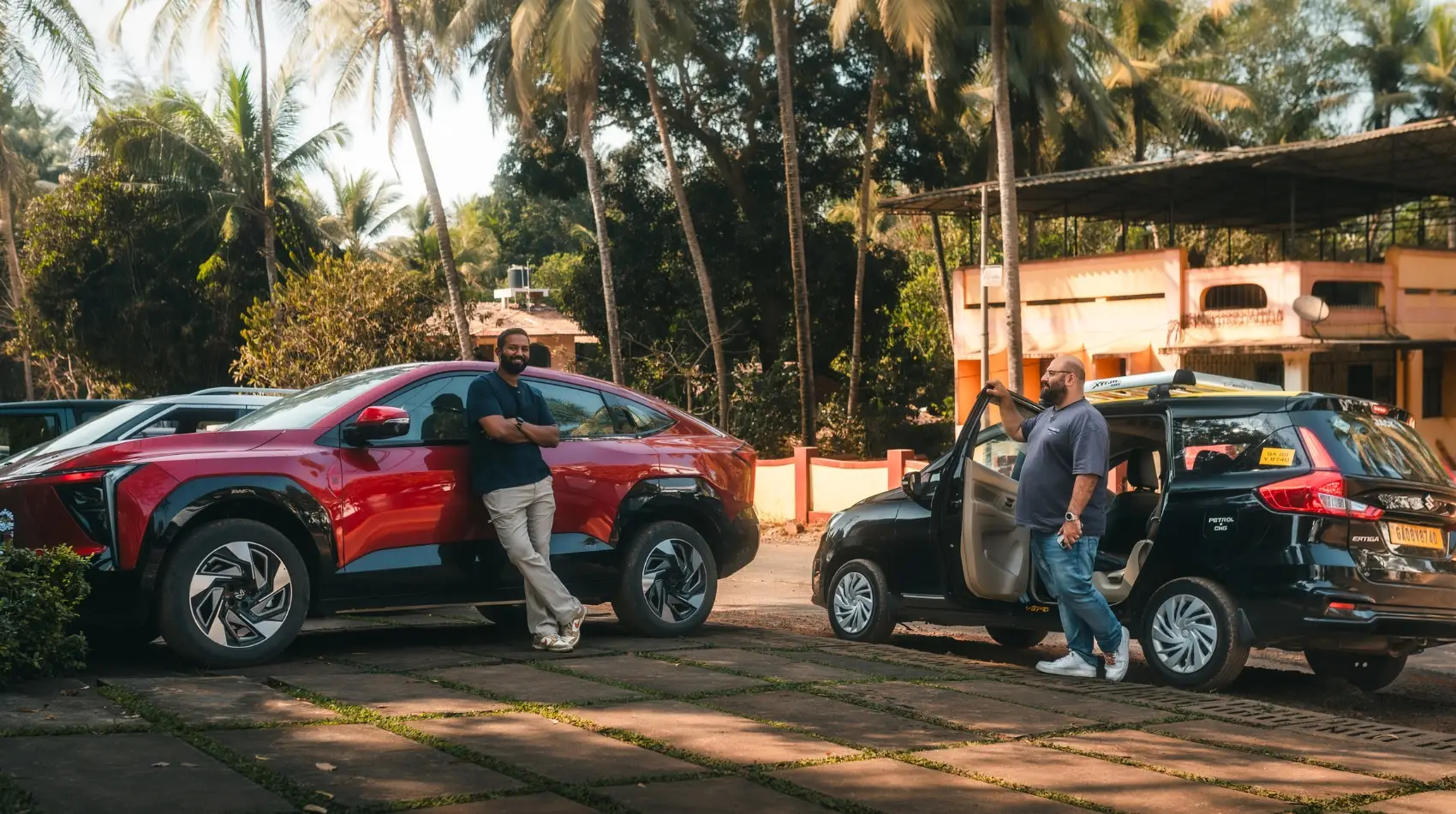
Cyrus called from somewhere between Madgaon and the villa. He had caught a black and yellow taxi within seconds of exiting the station. No app, just old-school hand-raised and deal done. His ETA was now alarmingly close to mine. The train had done its job. The last mile would decide it. But as opposed to the train, the Mahindra XEV 9e would directly take me to the destination.
Entering Goa should feel triumphant. Instead, it felt like an exam hall. One hundred and thirty-eight kilometres of indicated range for one hundred and thirty-eight kilometres of actual distance at one point. Perfect symmetry and perfect stress. Regen level three on every downhill. Feather the throttle on flats. No cruise control now. It was man, machine and mathematics.
Goa’s roads were quieter but not empty. Tourists meandering, scooters without mirrors and the occasional cow contemplating existence in the middle of the lane. Less than twenty kilometres to go and we hit another jam. A single lane road, narrowed by roadworks, a bus wedged at an angle that suggested civic sense had been optional in driving school. Minutes ticked away. The AR HUD displayed the next turn.
When the road finally opened up, it was less than a kilometre to the villa. I was half-expecting to see a black-and-yellow taxi already parked outside. Instead, the driveway was empty. The XEV 9e rolled in just under twelve hours after leaving Mumbai. Three charging stops, countless traffic snarls, contra flows, truck drag races and toll plaza theatrics later, we had done it. Twenty minutes passed before Cyrus arrived, mildly flustered, mildly amused and undeniably second.
What did this prove? Cars are better than public transport. Despite being electric! Even the fact that electric SUVs can make the Mumbai-to-Goa run without drama. That Indian road infrastructure remains our biggest adversary. Perhaps all of the above.
The XEV 9e covered the distance with more than five hundred kilometres of real world capability when driven sensibly, fast charging that genuinely adds usable range in coffee break time when the charger cooperates, ADAS that reduces fatigue on endless highways, a cabin that can morph from nightclub to monk cell with ambient lighting and screen settings, steering that shrinks a big SUV into something city friendly and a frunk that swallows the odds and ends of modern travel.
It also highlighted the realities. Not every 120-kilowatt charger will deliver 120. Traffic jams can erase the most careful planning. Uphill sections will test your nerve if you are watching the range counter too closely. Yet at no point did the car feel out of its depth. It felt like it belonged on that road, in that chaos, dealing with that unpredictability.
As I finally slid into the infinity pool, the sun high over Goa and the XEV cooling quietly in the driveway, there was a sense that this was less about beating a train and more about understanding the shape of things to come. Public transport will always have its place. But so will the personal car, especially one that combines performance, practicality and a degree of intelligence that genuinely makes long-distance travel less taxing.
At three in the morning, it had seemed like a reckless idea. By three in the afternoon, it felt like a benchmark. Mumbai to Goa, car versus train, electrons versus timetable. This time, the car won, not by breaking rules or bending physics but by working with both. And somewhere between the ghats and the coast and between fast chargers and frustrating ones, the future of the Indian road trip felt not just possible but inevitable.