At the qualifying rounds of the F1 Sim Racing India Open, there was something quite special about the atmosphere. The room was buzzing with excitement, filled with young racers taking their shot at the leaderboard, parents leaning in to watch their kids compete, and friends cheering them on from the sidelines. And if you looked closely enough, you could see it in their eyes. These weren't just kids having a go at a video game. They were kids with big dreams, some of them dreaming of racing professionally, and perhaps even making it to Formula 1 one day.
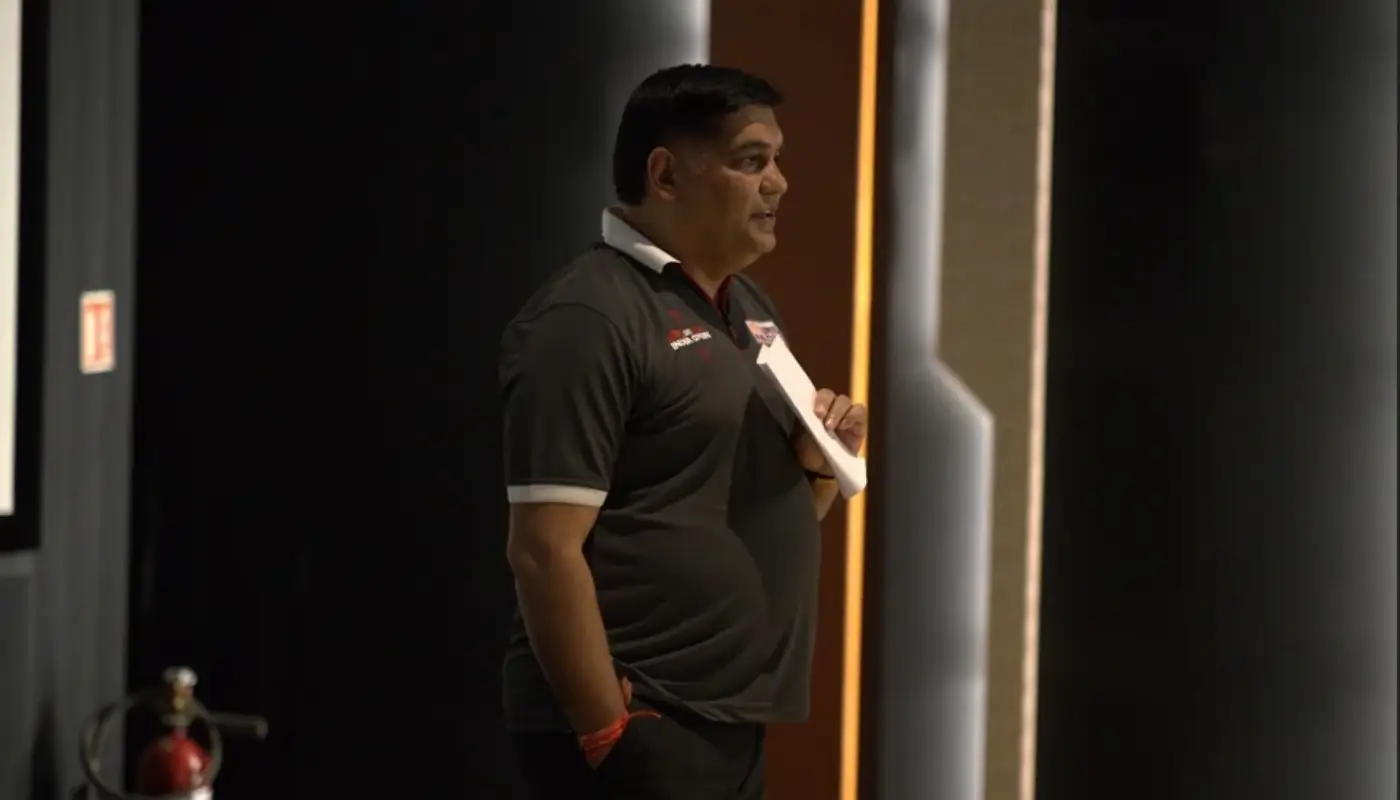
For Ameet Gadhoke, that's precisely what makes this space so exciting. Through Mumbai Falcons and its association with the F1 Sim Racing India Open, he is looking at sim racing as a starting point for something much bigger: a structured pathway that could help discover and nurture India's next generation of racing talent. The ambition is pretty clear. Find the young drivers who have the instinct, the racecraft and the hunger to compete, give them the right opportunities to develop, and eventually help them make the leap from virtual racing to the real thing.
And it isn't going to be limited to a handful of cities or kids who already have access to motorsport. Alongside the India Open, Gadhoke is working on a programme in partnership with schools across the country, with the aim of bringing sim racing into the grassroots and making it a more accessible entry point for aspiring racers. The idea is to cast a wider net, identify talent early and create a system where young drivers can progress from school-level competition to national events, and eventually into karting and other forms of real-world racing. Of course, getting from a virtual cockpit to a real racing car is no small feat. There's physical conditioning, track experience, understanding the machinery and the ability to deal with the unpredictability of racing in the real world. Gadhoke knows that sim racing alone can't prepare someone for all of that. But it can help identify the raw talent, sharpen racecraft and give young drivers a chance to prove themselves before the considerably more expensive business of real-world motorsport begins.
I caught up with Ameet Gadhoke to discuss the future of sim racing in India, the school programme, how the transition to real-world racing could work.
SN: For you and Mumbai Falcons, with all that is being done in the sim racing space, what would success look like over the next 5 to 10 years?
AG: For us, success means creating a sustainable pathway for Indian talent into motorsport. Putting an Indian driver on the Formula 1 grid is our long-term ambition, but we also recognise that this is a journey that takes time and requires several stages of development.
We would like to see sim racing become a recognised entry point for young Indians who aspire to pursue motorsport. We want to encourage participation across different age groups and regions and provide those who demonstrate potential an opportunity to explore the next stages of racing.
The real measure of success would be seeing more Indian drivers progress through karting and other categories, with a stronger grassroots ecosystem supporting them. If we can help make motorsport more accessible and create opportunities for talent that may otherwise have gone undiscovered, we would consider that meaningful progress.
SN: You have brought Track Titan on board to train the finalists, but sim racing and real-world racing demand different skills. Beyond this training, how do you plan to bridge that gap and prepare promising sim racers for the realities of competitive motorsport?
AG: Sim racing can help develop important aspects of racing, including racecraft, reflexes, strategy, and an understanding of racing lines. However, driving a real car brings in an entirely different set of demands, including physical conditioning, understanding the machinery and responding to conditions on track. Our association with Track Titan is an important part of the sim racing development process. It allows participants to receive structured feedback and improve their performance using data and AI-powered software. But we see this as a starting point rather than the complete development process. By introducing promising sim racers to karting, we can evaluate them in a practical racing environment and understand their potential.
SN: How do you plan to make the transition from sim racing to real-world motorsport financially accessible for talented racers, particularly those who may not have the resources to pursue traditional racing pathways?
AG: Sim racing offers a more accessible starting point, allowing aspiring racers to demonstrate their ability without the immediate costs of traditional racing. The F1 Sim Racing India Open ties into MFRL’s One in a Billion Hunt initiative. Through the ₹3 crore Driver Development Fund, the initiative seeks to create a pathway from sim racing to real-world motorsport, with the top-performing participants at the F1 Sim Racing India Open progressing into MFRL’s karting programme. This will allow us to assess their abilities in an actual racing environment and provide a foundation for their further development.
SN: How important are Tier 2 and Tier 3 cities to your talent identification strategy, and what steps are you taking to reach aspiring racers in these markets?
AG: They are extremely important because talent can come from anywhere in the country. Sim racing allows us to widen the talent pool, as aspiring racers don't need access to a physical track to get started. Alongside online competitions, we have also taken the initiative to different parts of the country through on-ground time trials, including Nagaland and Bihar, with support from the respective state governments. The India Open, with participants from 21 cities across India, reflects the diversity of interest in the sport. Our objective is to ensure that talent is not restricted by geography or access to traditional motorsport infrastructure.
SN: You are partnering with schools across India. How do you plan to scale this grassroots initiative and develop it into a sustainable talent pipeline for Indian motorsport?
AG: We see schools as an important starting point for building a grassroots motorsport ecosystem. Our aim is to integrate sim racing into sports and co-curricular activities, introducing students to the technology and competitive aspects of motorsport. The initiative involves creating simulator infrastructure in schools, student assessments, and a progression from school level to state and national level competitions. The focus is on developing a sustainable framework that schools can adopt and that can help identify promising talent over time.
SN: How does your Dubai track fit into this broader vision, and could it serve as a training ground for India's emerging racing talent?
AG: Our Dubai facility is an additional resource within the broader motorsport ecosystem. As drivers progress beyond sim racing and karting, access to different track environments can become valuable to their development. However, the foundation of this pathway remains identifying talent and giving aspiring racers the opportunity to gain real-world experience, with karting serving as an important first step.
SN: What changes are needed across India's motorsport ecosystem for sim racing to become a genuine grassroots talent pipeline and a recognised pathway into professional racing?
AG: The first step is recognising sim racing as a complementary part of motorsport rather than viewing it only as gaming or entertainment. Collaboration between motorsport organisations, schools, sponsors, and government authorities is also crucial. We need accessible entry-level opportunities for racers, coaching, and structured competitions that allow talent to progress from simulators to karting and beyond. Ultimately, building this ecosystem will require a collective effort and a long-term approach.